


分析方法 · 基礎ガイド
HPLC ペプチド純度:98% の結果を読み解く
そのパーセンテージが何を測定しているのかを学び、次にピークがどのように数えられたかを確認しましょう。
Two peptide reports both say 98%. One includes a complete graph and area table; the other shows only a cropped main peak. The headline number is the same, but the information you can check is different.
We will calculate a result, change one calculation choice and then separate chromatographic purity from the amount of peptide in a vial. You do not need to operate an HPLC instrument to follow the lesson.
1。HPLCは何を分離しますか?
HPLC passes a sample through a column and records a detector signal over time. Components that behave differently in the method can appear as separate peaks. Imagine several runners reaching a finish line at different times: the instrument records their arrival rather than photographing the whole starting group.

The horizontal axis is time. The vertical axis is detector response. In a UV method, the selected wavelength matters. A component that responds weakly or does not appear as a separate peak may not be represented fairly by its apparent area.
2。面積表から98%を計算してください
Assume the target peak has already been assigned, every listed peak is included and no response-factor correction is applied. Read the area table rather than estimating from the picture.
| ピーク | Area | Share |
|---|---|---|
| ターゲット | 980 | 98% |
| Other peak A | 12 | 1.2% |
| Other peak B | 8 | 0.8% |
| 合計 | 1,000 | 100% |
Add the included areas: 980 + 12 + 8 = 1,000. Divide the target area by that total.
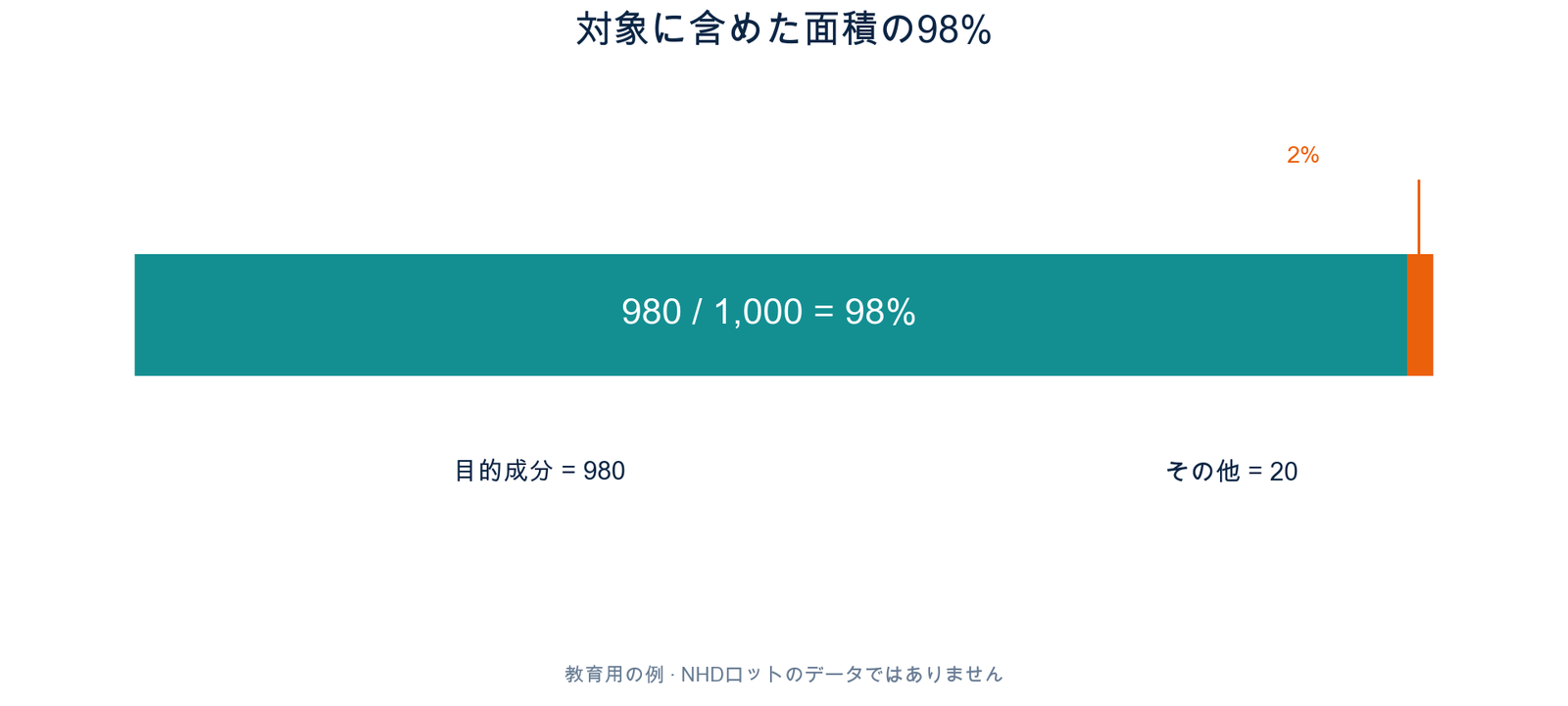
980 ÷ 1,000 × 100% = 98%
This result means 98% of the included detector area belongs to the assigned target peak. It is not a direct weighing of the powder.
3。ピークを除外すると、なぜ数値が変わるのですか?
Suppose the peak with area 12 is left out. The new total is 988, so 980 ÷ 988 × 100% is about 99.19%. The sample has not changed. The denominator has.
An exclusion can be justified when the analytical procedure identifies a solvent or system signal that should not be counted. It should have an explanation. Agilent describes how integration settings affect peak handling; this is why the processing method deserves attention alongside the graph.

4. A larger number is not the whole comparison
Before comparing 98% with 99%, ask whether both tests used an equivalent method and reporting basis. Check detection wavelength, separation, target assignment and integration rules. A shoulder may hide an unresolved component; a smooth-looking peak alone cannot rule that out.
HPLC also does not answer every other quality question. Identity, water, residual solvents and endotoxin need evidence appropriate to those questions. Do not substitute the purity figure for a test that was not performed.
5. Do not turn area purity into milligrams
A vial labeled 10 mg with 98% HPLC area purity does not establish 9.8 mg of target peptide. The weighed powder may contain non-peptide material, and area response is a different measurement. If your assay needs a known target concentration, request a suitable content or assay result and its basis.
答えを確認する
475 ÷ (475 + 25) × 100% = 95%. This is an area percentage, not a mass percentage.
6. Read an HPLC report in this order
First match the sample and lot. Then find the method, full graph, target assignment and area table. Recalculate the percentage. Finally ask about shoulders, omitted signals and unavailable tests. If an item is missing, describe the missing item rather than deciding from a cropped image that the material is good or bad.
このガイドを製品に関するお問い合わせでご利用ください
以下のような材料については GHK-Cu、LL-37、まず正確な形態、数量、研究上の疑問点を特定してください。次に、該当ロットについて利用可能な記録を尋ねてください。製品名が一致していても、異なる仕様が互換性を持つわけではありません。
製品および文書要件についてNHDにご相談ください。学習を続ける: クロマトグラムの読み方 / 純度と含量.