


 Packaging mockup
Cosmetic & Skin · Copper tripeptide research
GHK-Cu
Scientific Product Dossier
Packaging mockup
Cosmetic & Skin · Copper tripeptide research
GHK-Cu
Scientific Product Dossier
Cosmetic, Skin & Pigmentation Research Families
This center covers copper peptides, signaling peptides, melanocortin-related materials and other compounds studied in skin, pigmentation or formulation models. Evidence must remain route- and formulation-specific.
5 families found for “Cosmetic & Skin”
Clear filterPackaging mockup
Cosmetic & Skin · Copper tripeptide research
GHK-Cu
Scientific Product Dossier
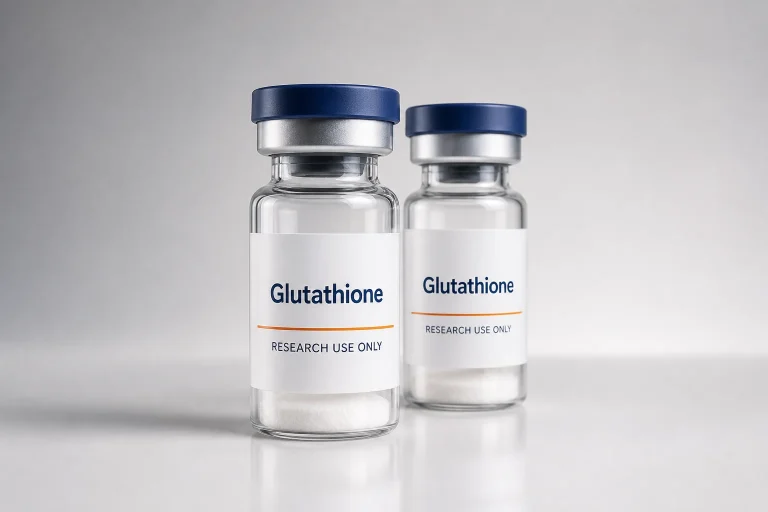 Packaging mockup
Cosmetic & Skin · Source-reviewed dossier
Glutathione
Source-Reviewed Research Dossier
Packaging mockup
Cosmetic & Skin · Source-reviewed dossier
Glutathione
Source-Reviewed Research Dossier
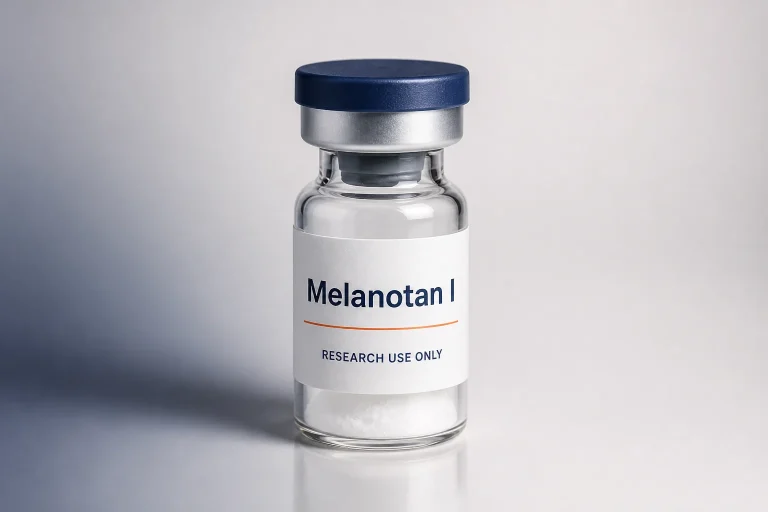 Packaging mockup
Cosmetic & Skin · Source-reviewed dossier
Melanotan I
Source-Reviewed Research Dossier
Packaging mockup
Cosmetic & Skin · Source-reviewed dossier
Melanotan I
Source-Reviewed Research Dossier
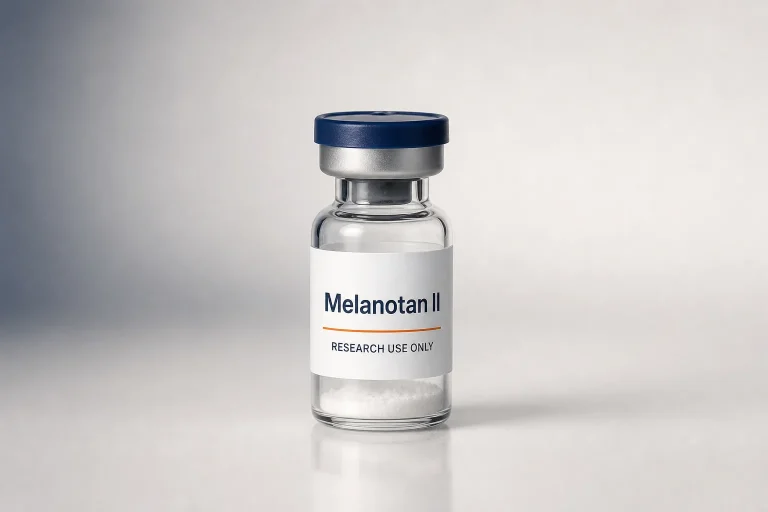 Packaging mockup
Cosmetic & Skin · Source-reviewed dossier
Melanotan II
Source-Reviewed Research Dossier
Packaging mockup
Cosmetic & Skin · Source-reviewed dossier
Melanotan II
Source-Reviewed Research Dossier
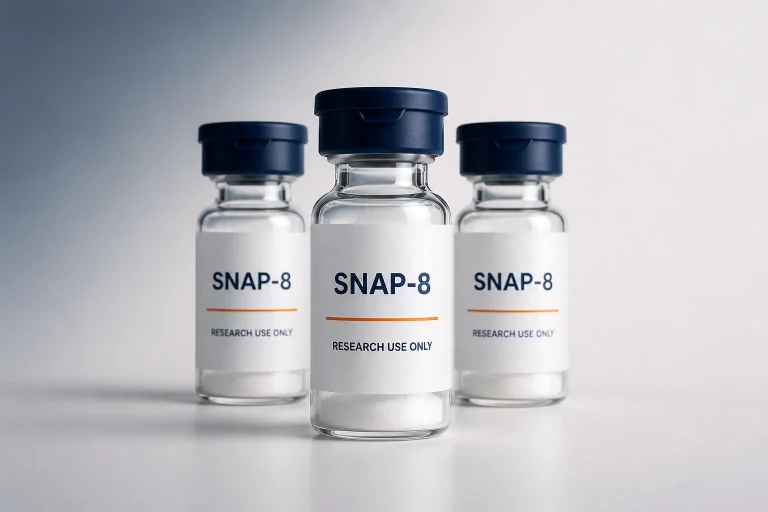 Packaging mockup
Cosmetic & Skin · Source-reviewed dossier
SNAP-8
Source-Reviewed Research Dossier
Packaging mockup
Cosmetic & Skin · Source-reviewed dossier
SNAP-8
Source-Reviewed Research Dossier
Category knowledge center
How to evaluate this research category
This hub separates molecular identity, study design and lot documentation so related families can be explored without turning unlike evidence into a single claim.
- 5
- canonical families
- 7
- catalog variants
- 5
- reviewed dossiers
- 10
- linked source records
What this category includes
- Copper and carrier peptide research families
- Skin-signaling and barrier-research peptides
- Pigmentation and melanocortin research compounds
- Topical, cell, analytical and other route-specific evidence
Identity and interpretation checks
- A cell-culture collagen signal is not a demonstrated cosmetic outcome.
- Copper-peptide evidence depends on the actual complex and formulation.
- Pigmentation research carries route-specific safety and regulatory questions.
Route and formulation
Topical formulation evidence cannot be transferred to injectable or unrelated delivery routes.
Complex identity
Metal complexes such as GHK-Cu require confirmation of complex, stoichiometry and analytical basis.
Cosmetic documentation
INCI naming, grade, solubility and stability support must be confirmed per product.
Continue the research
Comparisons and editorial analysis
Use fixed, reviewed comparison pages for defined questions and articles for deeper source context. Product dossiers remain the source for catalog identity and variants.
Melanotan II: Human Pilot Data, Toxicity and Regulatory Status
Melanotan II has limited early human exposure data and documented harms from unregulated use. A three-person tanning pilot cannot outweigh later toxicity reports or…
Read analysis →Melanotan II Identity Guide: Cyclic Sequence and Quality Risks
Melanotan II is a cyclic heptapeptide analogue of α-MSH. Its lactam ring, D-phenylalanine and terminal modifications are identity-defining.
Read analysis →Glutathione for Skin Pigmentation: What the 2025 Review Found
A 2025 systematic review found signals for some topical and oral glutathione studies, but it also documented heterogeneous methods, mixed risk of bias, unsustained…
Read analysis →Glutathione Identity: Reduced GSH vs Oxidized GSSG
Reduced glutathione (GSH) and glutathione disulfide (GSSG) are a redox pair, not interchangeable names. Sampling and storage can convert one into the other and…
Read analysis →GHK-Cu After Laser Resurfacing: What the Randomized Study’s 13 Completers Showed
The most directly relevant randomized topical GHK-Cu study was small: 13 patients completed it. Objective assessments did not find significant differences in erythema resolution,…
Read analysis →GHK-Cu Topical vs Injectable Evidence: A Route-Specific Quality Boundary
Route is not a footnote in GHK-Cu evidence. A topical skin-care study and an injectable compounded preparation have different exposure, sterility, aggregation and safety…
Read analysis →Category questions
Evidence and identity FAQ
These answers define how the category is organized. They do not replace the product specification, lot documents or the cited study record.
Can topical GHK-Cu evidence support another route?
No. Formulation, exposure and safety differ by route, so evidence should stay attached to the tested preparation.
Does an INCI name verify a supplied lot?
No. It supports naming context; identity, purity, composition and release status require product and lot records.
Why separate pigmentation from general skin claims?
They involve different targets, endpoints and safety considerations and should not be grouped into a vague cosmetic benefit.