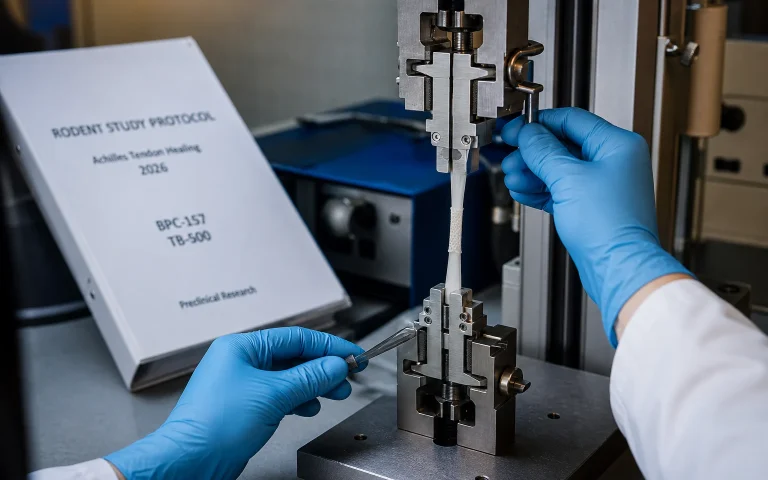
Online descriptions often move directly from animal wound-healing studies to human recovery claims. The current evidence does not support that jump. A useful review must separate BPC-157 from the TB-500 fragment, distinguish preclinical from human evidence, and include FDA’s current safety-information gaps.
Key takeaways
- A 2025 systematic review found overwhelmingly preclinical BPC-157 literature and no clinical safety dataset.
- FDA states that BPC-157 has limited safety-related information and that no human exposure data were identified for the TB-500 fragment it assessed.
- A blend adds component-ratio, impurity, aggregation and analytical-separation questions; it does not automatically add evidence.
What the human evidence looks like
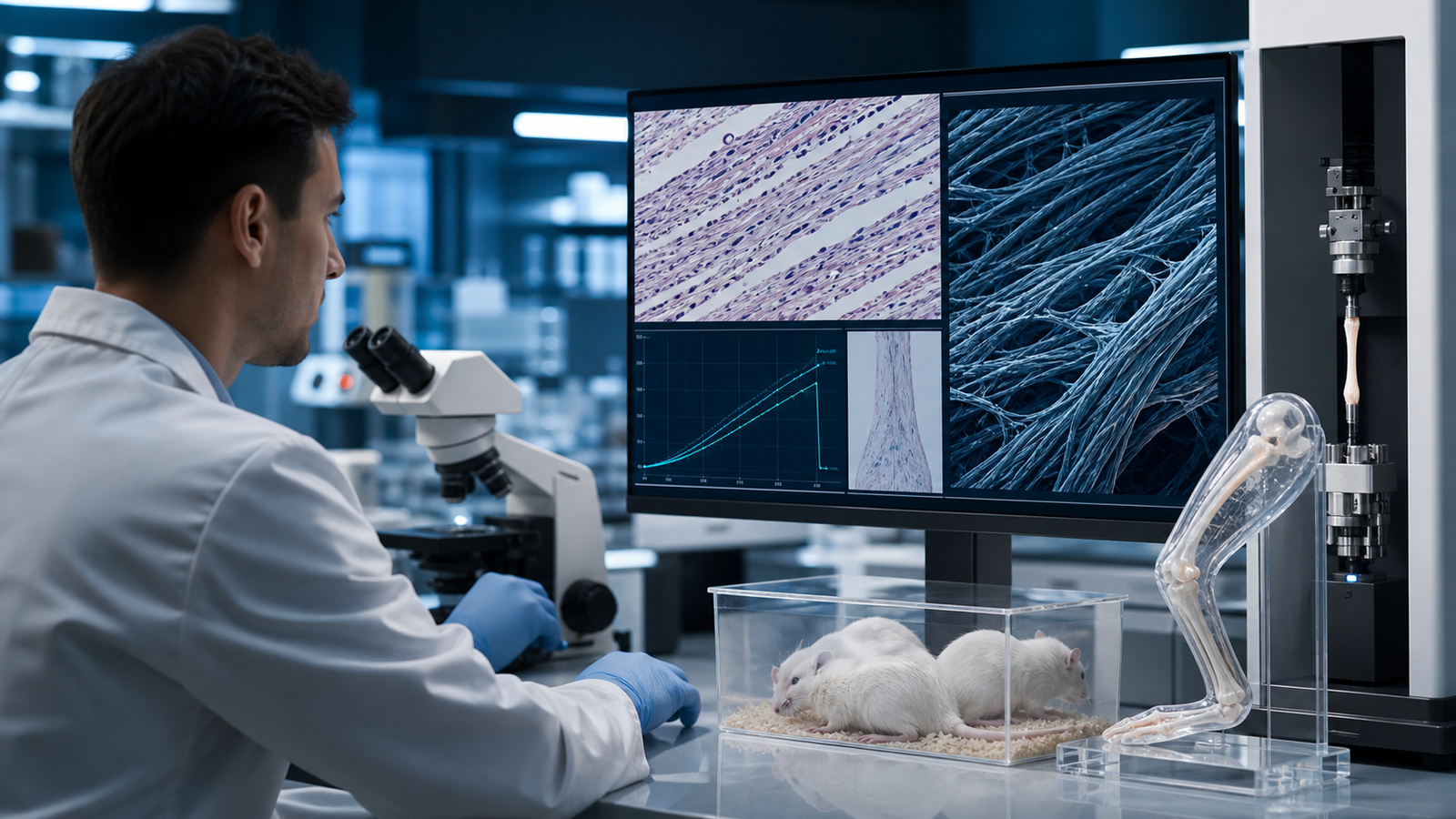
A systematic review of musculoskeletal BPC-157 literature identified 36 included studies, of which 35 were preclinical and one was a small retrospective human report. The review found no clinical safety data. That distribution means the evidence base is useful for hypothesis generation but too limited for confident clinical benefit-risk conclusions.
For the thymosin beta-4 fragment commonly called TB-500, FDA’s current compounding safety page states that it had not identified human exposure data for drug products containing the assessed fragment.
FDA-identified concerns
FDA lists potential immunogenicity and peptide-impurity concerns for compounded BPC-157 and describes important missing safety information. For the TB-500 fragment, FDA also notes potential aggregation and impurity concerns. These statements do not evaluate a particular catalog lot, but they identify the categories of uncertainty that marketing summaries often omit.
Why a blend needs more—not less—analytical clarity
A blend certificate should identify both components, their target ratio, the method used to distinguish them and the basis for the reported purity or assay. A single undifferentiated purity percentage may not show whether each component meets its intended specification.
None of those tests demonstrates clinical safety or efficacy. They answer the narrower but essential question of what is in the research material and whether it meets the stated analytical specification.
Sources & editorial method
The editorial workflow starts with linked peer-reviewed papers, trial registries or regulatory records; extracts the population or model, endpoints, numerical results and limitations; and separates the studied intervention from catalog material. AI-assisted drafting was used to structure the first version. Claims, figures, evidence labels and limitations were checked against the linked records in the site editorial workflow. This is not independent peer review.
5 linked records are listed in the references below. Read the editorial and AI-assistance policy.
How to interpret this article
Source-checked against the linked primary or authoritative records on 2026-08-27. This is an evidence summary, not independent peer review, medical advice or validation of a catalog lot.
Research-use boundary: Catalog materials discussed on this website are for laboratory research, development and manufacturing use only, not for human or veterinary use. This content is not medical advice and does not provide administration instructions.
Primary records and authoritative sources
- Emerging Use of BPC-157 in Orthopaedic Sports MedicineSystematic review. 2025. PMID 40756949.
- Certain Bulk Drug Substances That May Present Significant Safety RisksU.S. FDA. Current compounding safety-information page.
- Effects of BPC-157 and TB-500 on Achilles tendon healing in ratsBiçer O, et al. Jt Dis Relat Surg. 2026;37:822–837. PMID 42542926.
- ICH Q2(R2): Validation of Analytical ProceduresOfficial analytical-validation framework; not evidence that a specific catalog lot has been tested.
- ICH Q14: Analytical Procedure DevelopmentOfficial analytical-development framework; included as general method guidance only.
Continue with structured records
Move from this editorial analysis to the product identity, filtered evidence and controlled terminology behind it.