


Buying Peptides? Here Is How to Read the Documents
A supplier sends a certificate of analysis saying “99% purity.” Before focusing on that number, check whether the report covers the batch you are buying, what was tested, and whether the documents answer your experiment's questions.
Work through a simple example, then use the delivery checklist and the message template below.

Three documents you may receive
COA: what was tested for this batch
A certificate of analysis usually brings together the material name, lot number, tests and results. Match its lot number to the vial label before reading further.
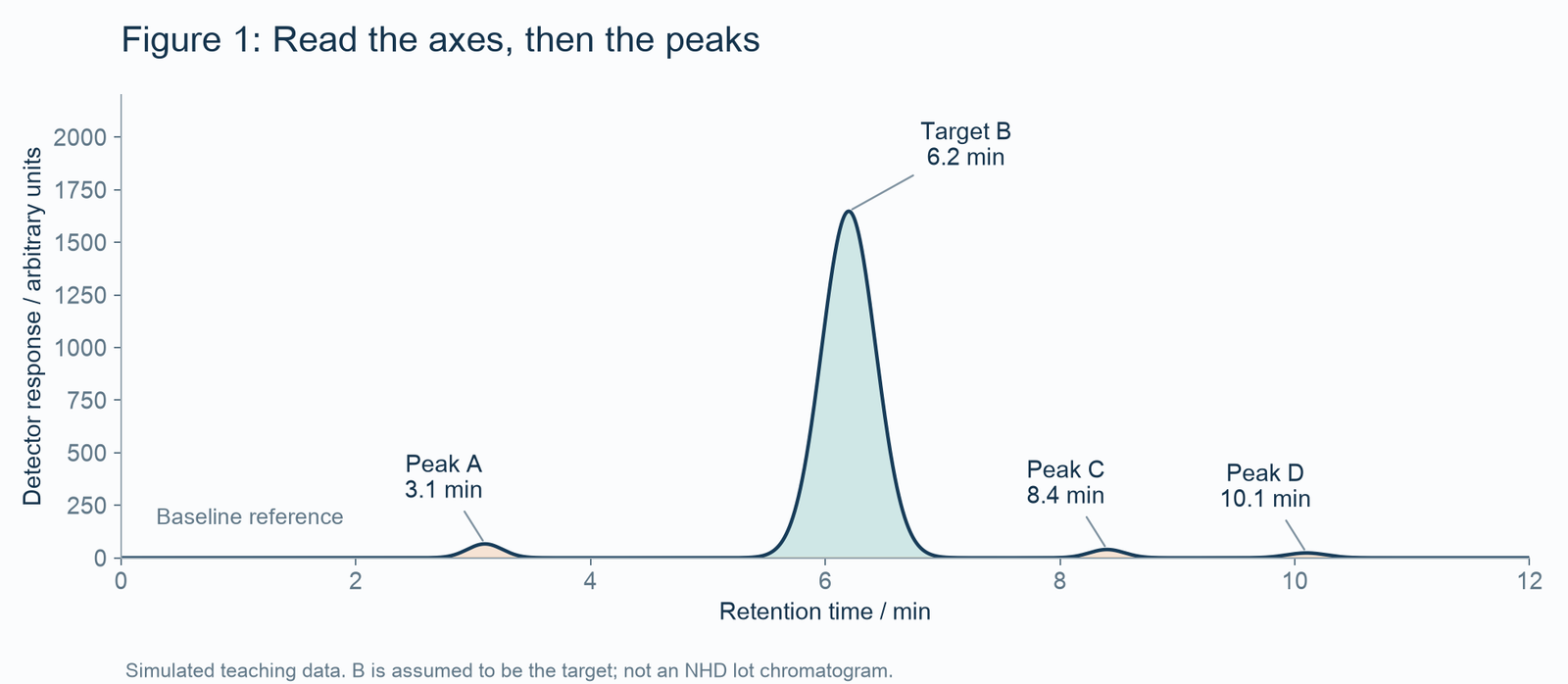
Chromatogram: where the purity number comes from
HPLC separates and detects sample components. Reported peak-area purity is usually calculated from the areas in a chromatogram. Read the plot alongside the test conditions.
Mass spectrum: checking molecular mass
Mass spectrometry provides information such as molecular mass to help check identity. A matching mass is useful. If you need confirmation of the complete sequence, ask about the additional evidence available.
How do the results reach the report?
These licensed laboratory photographs show analytical equipment and sample vials. They illustrate the process and are not photographs of NHD facilities or products.
The instrument separates components and records signals
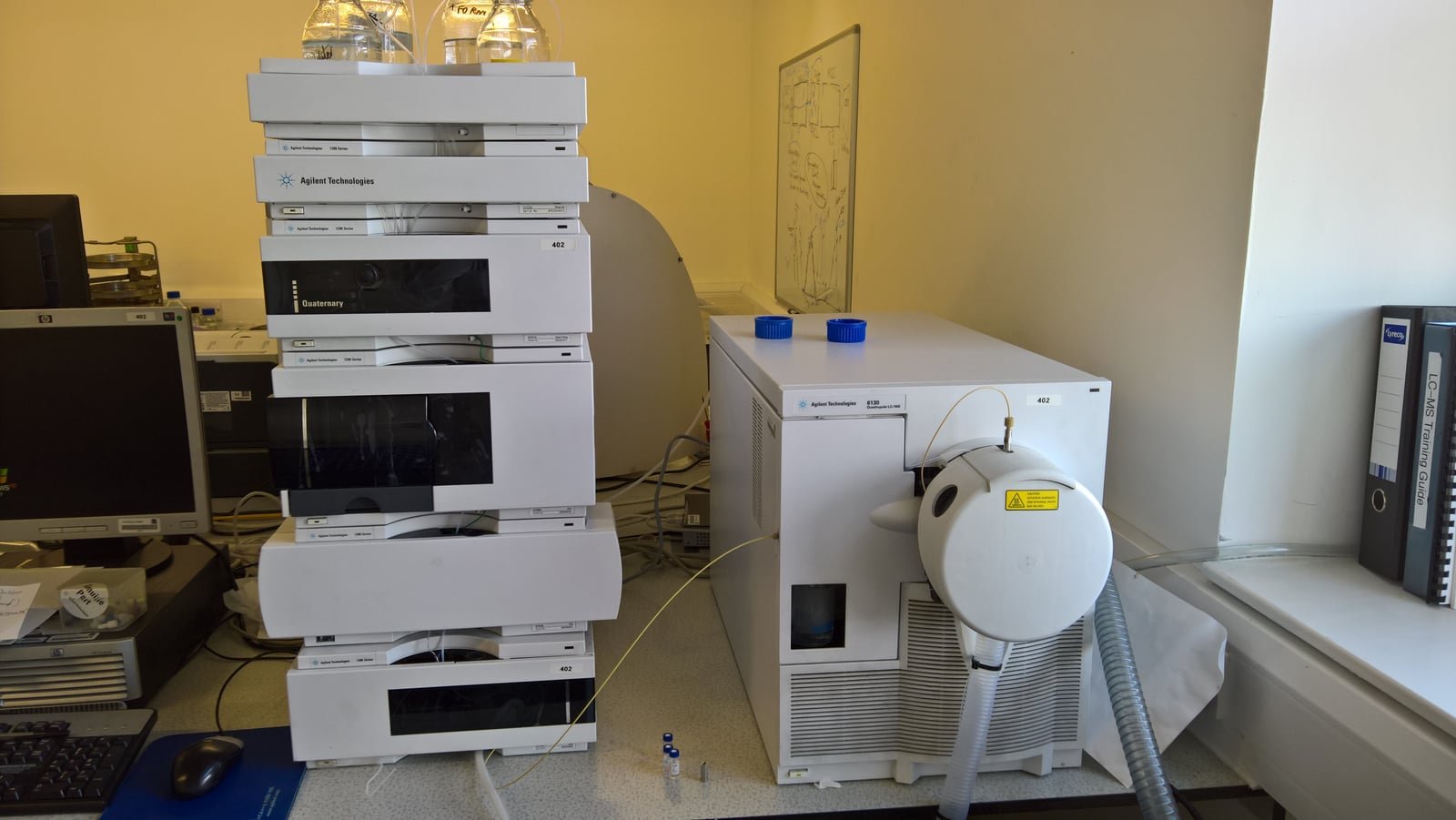
Liquid chromatography separates sample components; mass spectrometry helps check molecular mass. A purity chromatogram and a mass spectrum therefore answer different questions.
The sample vial holds a solution prepared for analysis

The laboratory prepares the sample according to the test method and puts the solution in a suitable vial. Use the records to check the material lot and sample preparation; a photograph cannot establish purity.
Read a COA in this order
This is a simplified teaching example. Its entries are not NHD batch results, and real certificates do not necessarily contain the same tests.
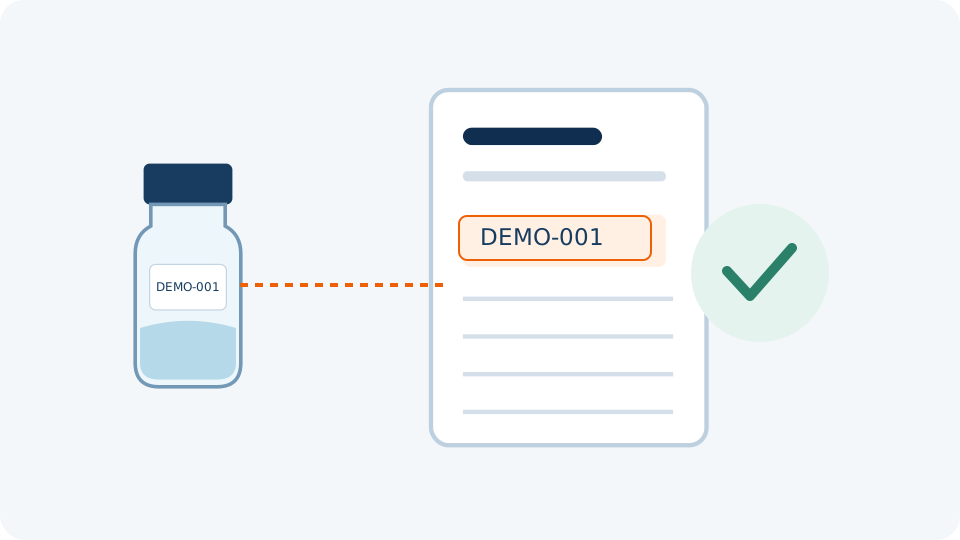
First check that the information matches, then compare each result with the agreed specification.
Method: HPLC peak areaThis result meets the example's requirement. However, 99.1% is a chromatographic area proportion, not automatically the target peptide's share of the total powder mass.
A “10 mg” label still needs a clear amount basis
It may refer to the mass of the supplied powder or another agreed basis. The powder may include water and counterions. For accurate laboratory solution preparation, clarify the amount, content and molecular-mass basis. Do not simply multiply 10 mg by the HPLC purity.
Look at a chromatogram before reading its purity result
The horizontal axis shows retention time: when a component leaves the column. The vertical axis shows detector response. A taller peak does not necessarily have a larger area. If the report gives peak-area purity, read the area calculation.
Four questions to ask when a document is unclear
“Does this report cover the lot I received?”
Send the supplier a label photograph and the report. Ask them to confirm the form, specification and lot number.
“Can you provide the chromatogram and test method?”
The plot, test conditions and area calculation help explain a purity result more clearly than a percentage alone.
“What does the labelled mass represent? Is content measured?”
Confirm the content method and whether the result includes other peptidic material. Do not automatically read “net peptide content” as target-peptide content.
“Is this specific test available?”
For example, endotoxin, sterility or particular residual-contaminant tests need to be specified separately. Routine HPLC purity cannot answer these questions. Confirm the testing and documents before ordering.
Want to see how HPLC works?
These two official Shimadzu videos introduce general analytical principles. Both are in English. The notes below suggest what to look for; start with the first video if you only need a basic introduction.

First: What is HPLC?
For readers meeting chromatography for the first time: follow the sample through the column to the detector signal.
- Look for the components the sample passes through.
- Notice that separation and detection are different steps.
- Return to the teaching plot and identify the axes and peaks.

Next: Introduction to Liquid Chromatography
Approximately 23 minutes, for readers who want to understand more about separation.
- Identify the mobile phase flowing through the column and the stationary phase inside it.
- Consider why components emerge at different times.
- Think about why comparing plots also requires comparing test conditions.
The YouTube player loads after you press play. If playback is unavailable, use the official source links. Instruments in these videos are not presented as NHD equipment.
Use this checklist when the order arrives
Check the material and documents before storing it according to the product instructions. Keep photographs and shipping records if you notice a problem.
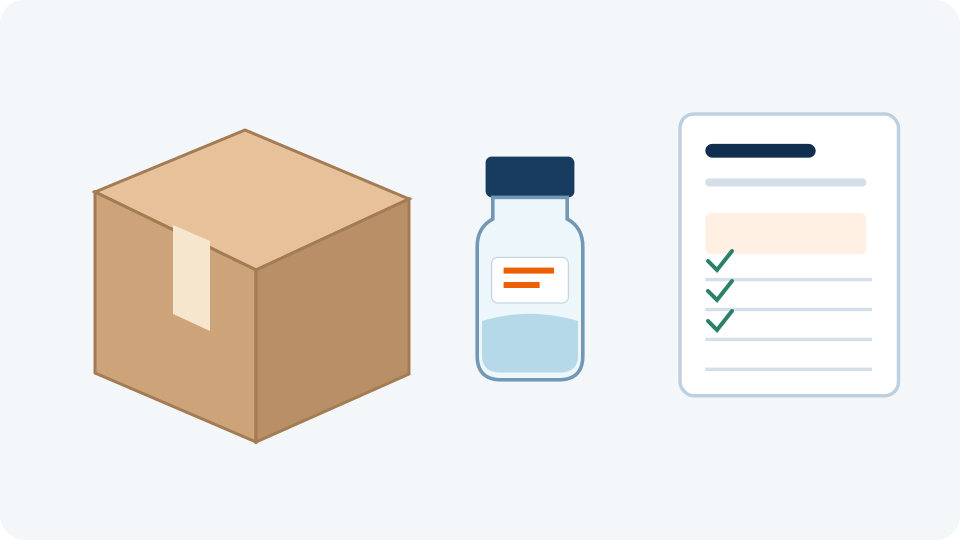
- Name, form and specification: compare with the order, including vial count and labelled amount per vial.
- Lot number: check that the vial, outer packaging and COA agree.
- Packaging: look for damage, loose caps, broken seals or leaks.
- Shipping records: if temperature conditions were agreed, check the records available. A melted ice pack alone cannot tell you whether a sample has failed.
- Storage instructions: confirm conditions for unopened material. Storage after dissolution may differ and needs separate confirmation.
- Documents: compare what you received with the records agreed before ordering, then ask about missing items.
A message you can use to request documents
We plan to order [material name, exact form or sequence], supplied as [total amount, vial count and amount per vial], for [laboratory purpose]. Please confirm the available specifications and provide the matching lot COA. If available, please also include the HPLC chromatogram, mass-spectrometry records and storage instructions. We additionally require [content / endotoxin / other test]: please state whether it is tested, how results are reported, and which items require separate arrangements. Please also confirm the basis of the labelled amount per vial.
Choose a tutorial for your question
What does each COA entry mean?
Check the lot number, method, specification and actual result.
Read the COA guide →Why is 99% purity different from 99% content?
Separate peak-area percentage, powder mass and peptide content.
Read the purity and content guide →How do I read the peaks in a chromatogram?
Use worked diagrams to learn retention time, peak area and smaller peaks.
Open the chromatogram lesson →Does a matching mass confirm the sequence?
Learn the difference between intact mass and further sequence evidence.
Read the mass-spectrometry guide →What should I check for TFA and acetate salts?
Understand salt form, counterions and content reporting.
Read the material-form guide →What if shipping temperatures change?
Check storage instructions, shipping records and applicable stability information.
Read the shipping and storage guide →Choose the product, then confirm its documents
Available records may differ by material, specification and lot. Share your requested specification and laboratory requirements when enquiring.
GHK-Cu
Confirm the copper-complex form, specification and available identity, purity and content records.
View GHK-Cu →
Retatrutide
Check the specification, amount basis per vial, and lot-specific testing and storage records.
View Retatrutide →Card images are packaging illustrations. Catalogue materials are for laboratory research, not human or veterinary use.
References
Bachem peptide quality-control guideBachem analytical documentation FAQ
These sources explain analytical concepts, not NHD lot results. Confirm product records for the actual batch.


 BPC-157
 KPV