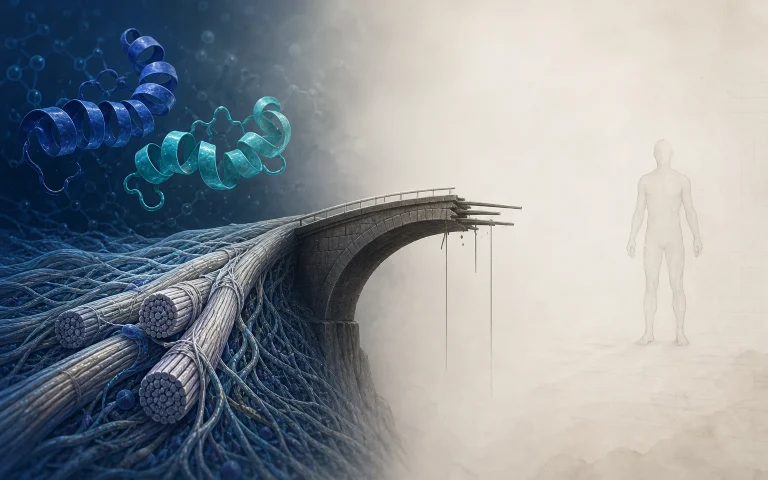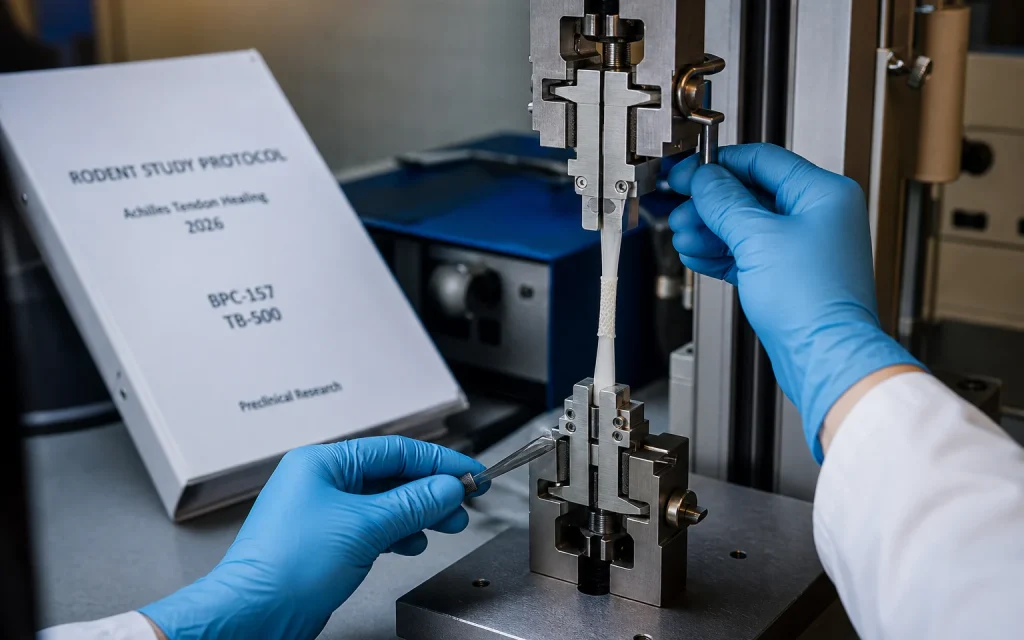
A 2026 paper evaluated BPC-157, TB-500 and their combination in a repaired Achilles tendon model in rats. It is directly relevant to the blend’s research context, but it remains an exploratory animal study and should not be presented as evidence of clinical healing in people.
Key takeaways
- The study used 32 male rats divided into control, BPC-157, TB-500 and combination groups.
- TB-500 showed a statistically significant biomechanical advantage versus control for maximum load to failure in this model.
- The combination did not provide additional benefit over either component alone in the reported analysis.
Study design in plain language
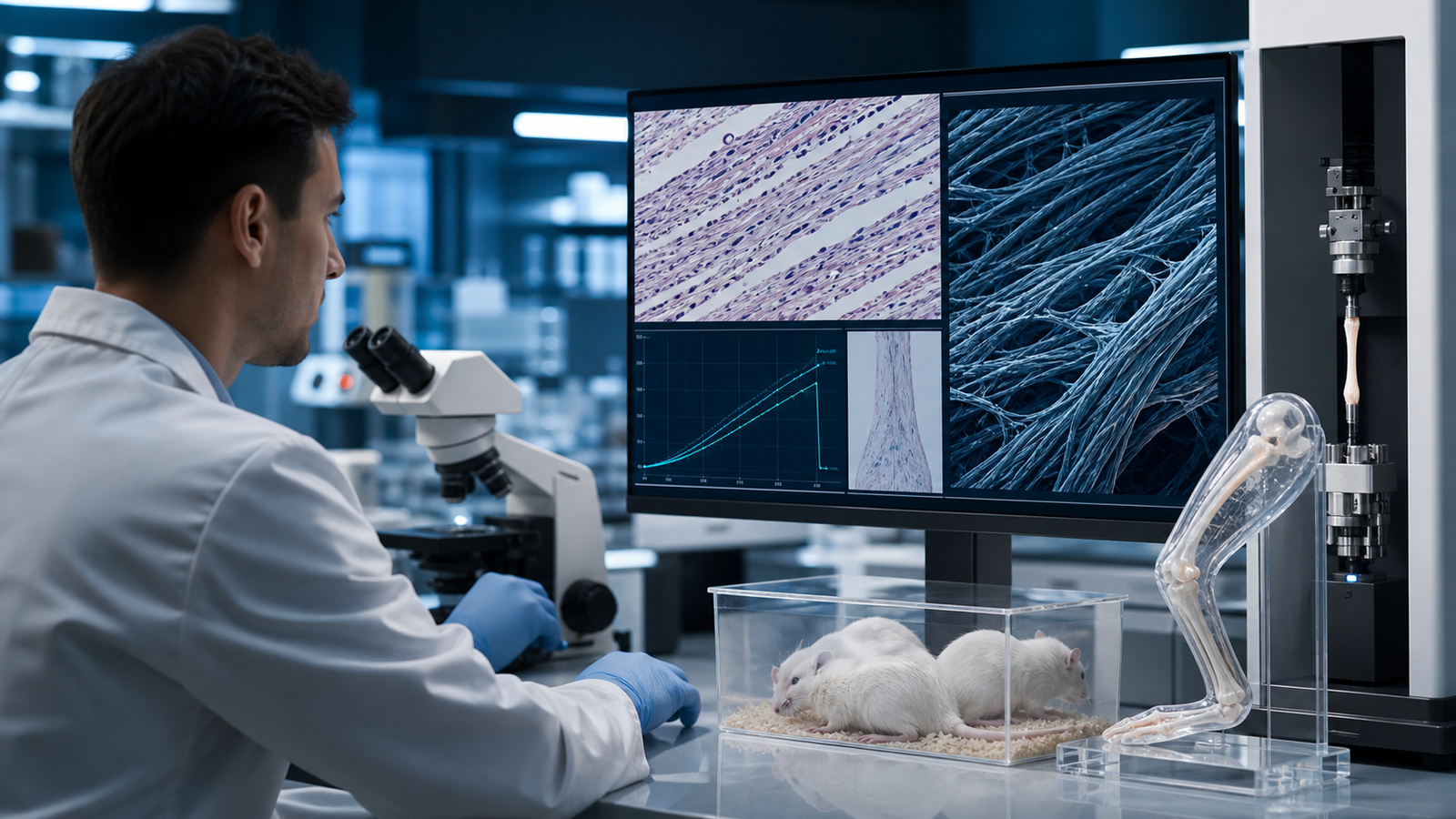
The investigators created a standardized Achilles tendon transection and repair model in 32 male Sprague-Dawley rats. Eight animals were assigned to each of four groups: control, BPC-157, TB-500, or the combination. After four weeks, tendons were assessed with biomechanical testing or histological methods.
This design can compare group-level observations under controlled experimental conditions. It cannot answer questions about human diagnosis, clinical dosing, long-term safety or functional recovery in patients.
Biomechanical and histological findings
Maximum load to failure was higher in the BPC-157 and TB-500 groups than in controls, but statistical significance for that comparison was reported for the TB-500 group. Histopathology scores suggested improved tendon architecture and matrix organization in parts of the TB-500 and combination analyses. Collagen staining patterns were interpreted as consistent with matrix maturation.
The important negative result is that the combined group did not show additional benefit over either agent alone. That finding argues against describing the blend as synergistic on the basis of this paper.
What this paper cannot establish
Animal tendon repair is biologically informative but does not establish a therapeutic effect in people. The study was small, used one sex and species, evaluated an early time point and did not provide a clinical safety dataset. Replication and broader translational work would be necessary before clinical conclusions.
It also does not validate any independently supplied catalog blend. Identity, component ratio, purity and lot quality remain separate analytical questions.
Sources & editorial method
The editorial workflow starts with linked peer-reviewed papers, trial registries or regulatory records; extracts the population or model, endpoints, numerical results and limitations; and separates the studied intervention from catalog material. AI-assisted drafting was used to structure the first version. Claims, figures, evidence labels and limitations were checked against the linked records in the site editorial workflow. This is not independent peer review.
2 linked records are listed in the references below. Read the editorial and AI-assistance policy.
How to interpret this article
Source-checked against the linked primary or authoritative records on 2026-08-27. This is an evidence summary, not independent peer review, medical advice or validation of a catalog lot.
Research-use boundary: Catalog materials discussed on this website are for laboratory research, development and manufacturing use only, not for human or veterinary use. This content is not medical advice and does not provide administration instructions.
Primary records and authoritative sources
- Effects of BPC-157 and TB-500 on Achilles tendon healing in ratsBiçer O, et al. Jt Dis Relat Surg. 2026;37:822–837. PMID 42542926.
- BPC-157 Achilles tendon study in rats and cultured tendocytesEarlier component-specific preclinical context; PMID 14554208.
Continue with structured records
Move from this editorial analysis to the product identity, filtered evidence and controlled terminology behind it.