Kisspeptin-10 is the C-terminal decapeptide YNWNSFGLRF-amide. It shares an active C-terminal region with longer kisspeptins but is not the same material as kisspeptin-54.
Evidence at a glance
- PubChem lists kisspeptin-10 as a 10-residue C-terminally amidated peptide with molecular weight 1302.4 g/mol.
- Full-length kisspeptin-54 is a 54-residue peptide with a different molecular record.
- The “human” qualifier usually denotes the referenced sequence, not human-source isolation or permission for human use.
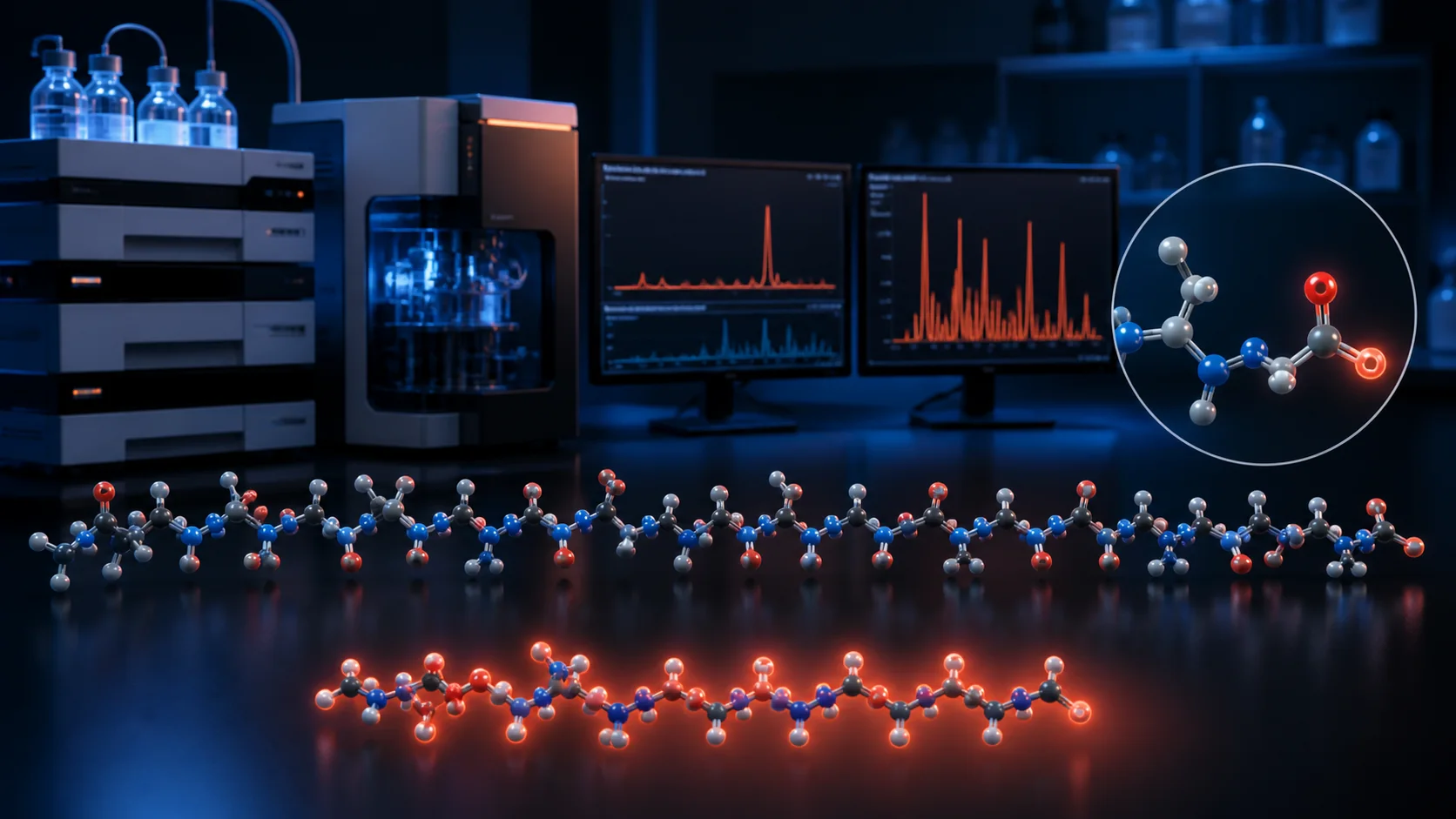
Identity record
C-terminal amidation is part of the reference identity. A free-acid decapeptide has a different mass and can behave differently, so the terminal form belongs in the product name and certificate.
Analytical and evidence boundary
Search pages often merge kisspeptin, metastin, KP-10 and KP-54. A family page should define synonyms while keeping each length-specific material and its direct evidence separate.
For evidence copy, report the population, study size, sampling window and hormone endpoint. Do not turn an acute LH response into a promise about fertility, libido or long-term endocrine outcomes.
Editorial rule
State the exact material, form, model or population and endpoint supported by the cited record. Do not convert mechanistic plausibility, an animal result, a finished-drug label or an analytical test into a claim about an unrelated catalog lot.
Sources & editorial method
The editorial workflow began with linked PubMed primary papers, systematic reviews, PubChem identity records and FDA/DailyMed regulatory records. Population or model, denominators, endpoints, numerical results, null findings, limitations and conflicts were extracted before drafting. AI-assisted drafting and original image generation were used; the final facts and evidence boundaries were checked against the linked records on 2026-09-02. This is not independent peer review.
4 linked records are listed in the references below. Read the editorial and AI-assistance policy.
How to interpret this article
Source-checked on 2026-09-02. Null results, study size, model/population limits and relevant conflicts are retained. This is not medical advice, a customer case or validation of a catalog lot.
Research-use boundary: Catalog materials discussed on this website are for laboratory research, development and manufacturing use only, not for human or veterinary use. This content is not medical advice and does not provide administration instructions.
Primary records and authoritative sources
- Kisspeptin-10 is a potent stimulator of LH release in menHuman study. 2011. PMID 21632807.
- Kisspeptin-10 response in men with type 2 diabetesSmall human pathway-response study; PMID 23153270.
- PubChem Kisspeptin-10 recordSequence, formula and mass; CID 25240297.
- PubChem Kisspeptin-54 recordLonger peptide identity; CID 71306396.
Continue with structured records
Move from this editorial analysis to the product identity, filtered evidence and controlled terminology behind it.