5-Amino-1MQ is commonly discussed as a small-molecule inhibitor of nicotinamide N-methyltransferase (NNMT). The useful scientific question is not whether the compound is “powerful,” but what experiments were performed, what changed in those models, and where translation to people remains unproven.
Key takeaways
- Published work supports NNMT inhibition and downstream metabolic effects in defined laboratory models.
- The frequently cited body-composition findings came from mouse studies, not controlled human trials.
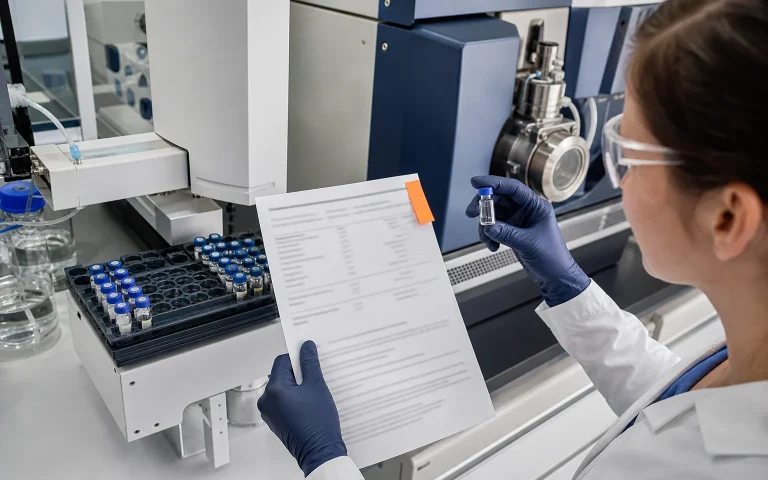
- A catalog material cannot be assumed equivalent to the material used in a paper without identity and lot-specific analytical data.

What NNMT does
NNMT transfers a methyl group from S-adenosylmethionine to nicotinamide, producing 1-methylnicotinamide and S-adenosylhomocysteine. That reaction connects nicotinamide handling with cellular methyl-donor balance. Because NNMT expression varies by tissue and disease context, inhibiting the enzyme can produce model-dependent effects rather than one universal outcome.
The 2017 Journal of Medicinal Chemistry paper reported the structure–activity work, biochemical inhibition and a docked binding orientation for this inhibitor series. The diet-induced-obesity mouse experiment was reported separately in Biochemical Pharmacology (online in 2017; 2018 volume, PMID 29155147). Keeping those records separate prevents discovery chemistry from being mistaken for an animal efficacy study.
What the mouse studies reported
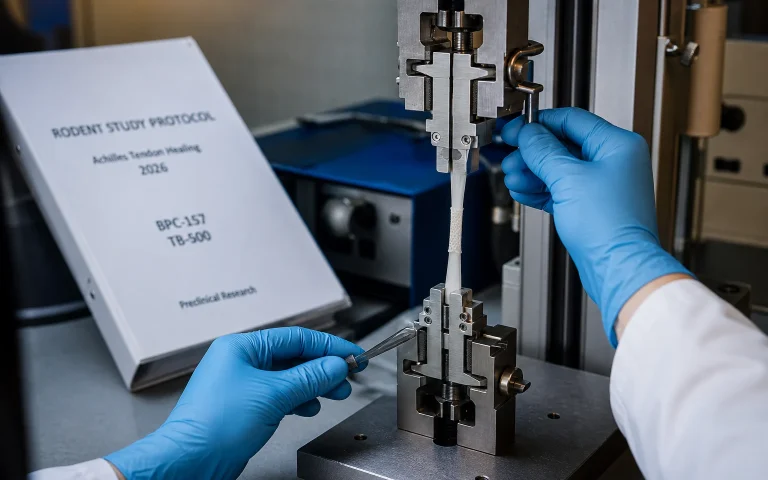
In diet-induced obese mice, investigators reported reduced adiposity-related measures and changes consistent with altered energy metabolism after experimental NNMT inhibition (the authors report n=9 per group for the cited Figure 5 comparisons). A separate study in 24-month-old mice examined injury-induced skeletal-muscle regeneration, not a general anti-aging or weight-loss outcome. Those findings are hypotheses for further research; they do not demonstrate that a research chemical causes the same outcomes in people.
Endpoints, animal strain, diet, exposure conditions and study duration all matter. A result in one mouse model should not be generalized to unrelated conditions or converted into a consumer efficacy statement.
The translation gap
As of this source review, the linked records do not establish an approved clinical use for 5-Amino-1MQ. Human pharmacokinetics, dose-ranging, controlled efficacy, interaction data and long-term safety would all be needed before clinical conclusions could be drawn.
That gap is not a minor disclaimer; it is the central evidence boundary. A scientifically accurate page should therefore describe 5-Amino-1MQ as an investigational NNMT inhibitor used in laboratory research, not as a proven weight-loss or metabolic treatment.
Sources & editorial method
The editorial workflow starts with linked peer-reviewed papers, trial registries or regulatory records; extracts the population or model, endpoints, numerical results and limitations; and separates the studied intervention from catalog material. AI-assisted drafting was used to structure the first version. Claims, figures, evidence labels and limitations were checked against the linked records in the site editorial workflow. This is not independent peer review.
4 linked records are listed in the references below. Read the editorial and AI-assistance policy.
How to interpret this article
Source-checked against the linked primary or authoritative records on 2026-08-27. This is an evidence summary, not independent peer review, medical advice or validation of a catalog lot.
Research-use boundary: Catalog materials discussed on this website are for laboratory research, development and manufacturing use only, not for human or veterinary use. This content is not medical advice and does not provide administration instructions.
Primary records and authoritative sources
- Selective and membrane-permeable small molecule inhibitors of nicotinamide N-methyltransferase reverse high fat diet-induced obesity in miceNeelakantan H, et al. Biochemical Pharmacology. 2018;147:141–152. PMID 29155147 · DOI 10.1016/j.bcp.2017.11.007
- Small molecule nicotinamide N-methyltransferase inhibitor activates senescent muscle stem cells and improves regenerative capacity of aged skeletal muscleNeelakantan H, et al. Biochemical Pharmacology. 2019. PMID 30753815 · DOI 10.1016/j.bcp.2019.02.008
- PubChem Compound Summary for CID 950107: 5-Amino-1-methylquinoliniumNational Center for Biotechnology Information. PubChem CID 950107; record modified July 25, 2026.
- Small-molecule inhibitors of nicotinamide N-methyltransferaseJ. Med. Chem. 2017. PMID 28548833 · DOI 10.1021/acs.jmedchem.7b00389.
Continue with structured records
Move from this editorial analysis to the product identity, filtered evidence and controlled terminology behind it.