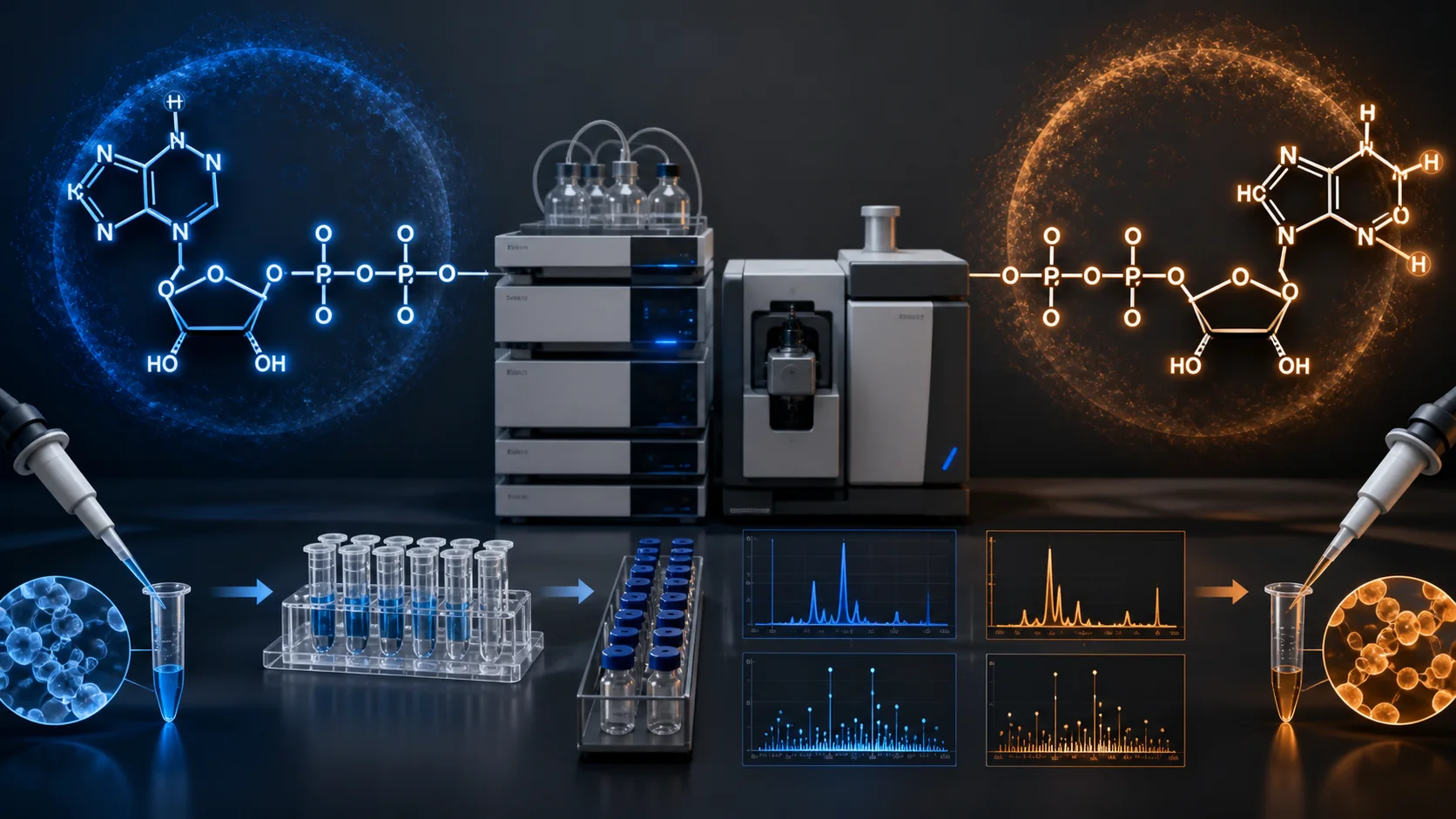
The plus sign is not decorative: NAD+ is the oxidized form and NADH is the reduced form. Their formulas, spectra, redox behavior and assay handling are different.
Evidence at a glance
- PubChem records oxidized nicotinamide adenine dinucleotide as nadide, CID 5892.
- NADH is the reduced redox partner, PubChem CID 439153.
- Results depend on whether a method measures NAD+, NADH, total NAD(H) or an NAD+/NADH ratio.
Identity record
Product copy should state the supplied redox form and any counterion or hydrate used for formula-weight calculations. “NAD” without that detail can make concentration and molar conversions ambiguous.
Analytical and evidence boundary
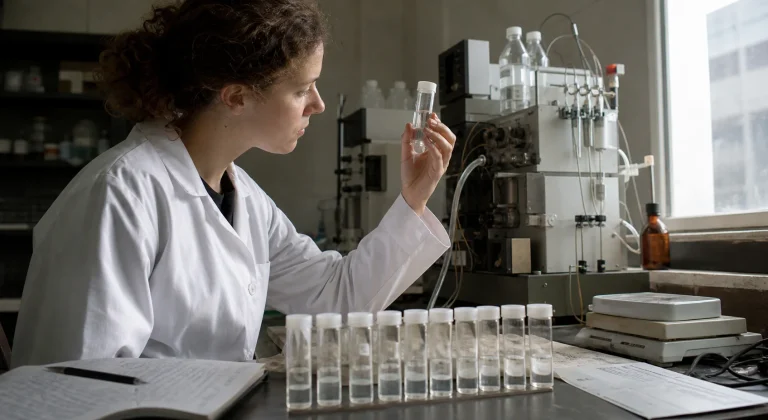
NADH is readily oxidized, and acidic or alkaline extraction choices can favor one member of the redox pair. A defensible assay record therefore documents collection time, temperature, quenching, extraction, calibration and recovery.
Chromatographic purity, spectrophotometric ratio and quantitative content are separate outputs. Report each by its method rather than presenting one large percentage as a universal quality score.
Editorial rule
State the exact material, form, model or population and endpoint supported by the cited record. Do not convert mechanistic plausibility, an animal result, a finished-drug label or an analytical test into a claim about an unrelated catalog lot.
Sources & editorial method
The editorial workflow began with linked PubMed primary papers, systematic reviews, PubChem identity records and FDA/DailyMed regulatory records. Population or model, denominators, endpoints, numerical results, null findings, limitations and conflicts were extracted before drafting. AI-assisted drafting and original image generation were used; the final facts and evidence boundaries were checked against the linked records on 2026-09-02. This is not independent peer review.
4 linked records are listed in the references below. Read the editorial and AI-assistance policy.
How to interpret this article
Source-checked on 2026-09-02. Null results, study size, model/population limits and relevant conflicts are retained. This is not medical advice, a customer case or validation of a catalog lot.
Research-use boundary: Catalog materials discussed on this website are for laboratory research, development and manufacturing use only, not for human or veterinary use. This content is not medical advice and does not provide administration instructions.
Primary records and authoritative sources
- NAD+ metabolism and energy homeostasisMechanistic review; PMID 26118927.
- NAD+ metabolism and metabolic health translationReview emphasizing the preclinical-to-human boundary; PMID 30772929.
- PubChem oxidized NAD recordNadide identity; CID 5892.
- PubChem NADH recordReduced-form identity; CID 439153.
Continue with structured records
Move from this editorial analysis to the product identity, filtered evidence and controlled terminology behind it.