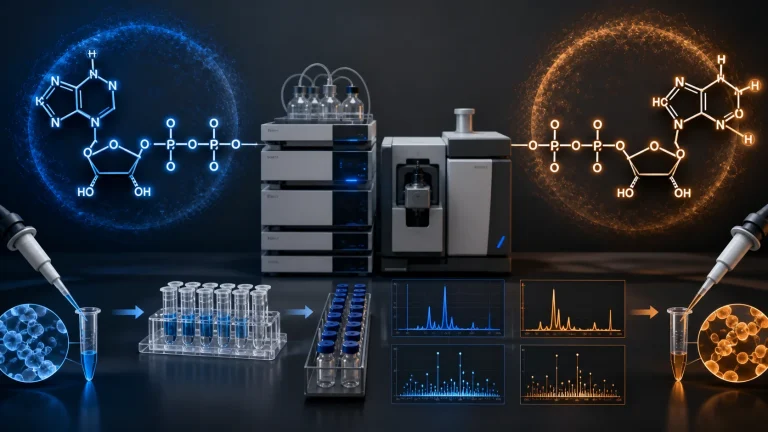
NAD+ is both a redox cofactor and a consumed substrate for signaling enzymes. That broad biology is well established, but it does not make every “NAD-boosting” intervention or health claim clinically proven.
Evidence at a glance
- NAD+ participates in redox metabolism and is consumed by enzymes including sirtuins, PARPs and CD38.
- Nuclear, cytosolic and mitochondrial pools are regulated and measured differently.
- A human-translation review noted that most metabolic-intervention evidence was in vitro or in organisms such as worms and rodents.
Study record
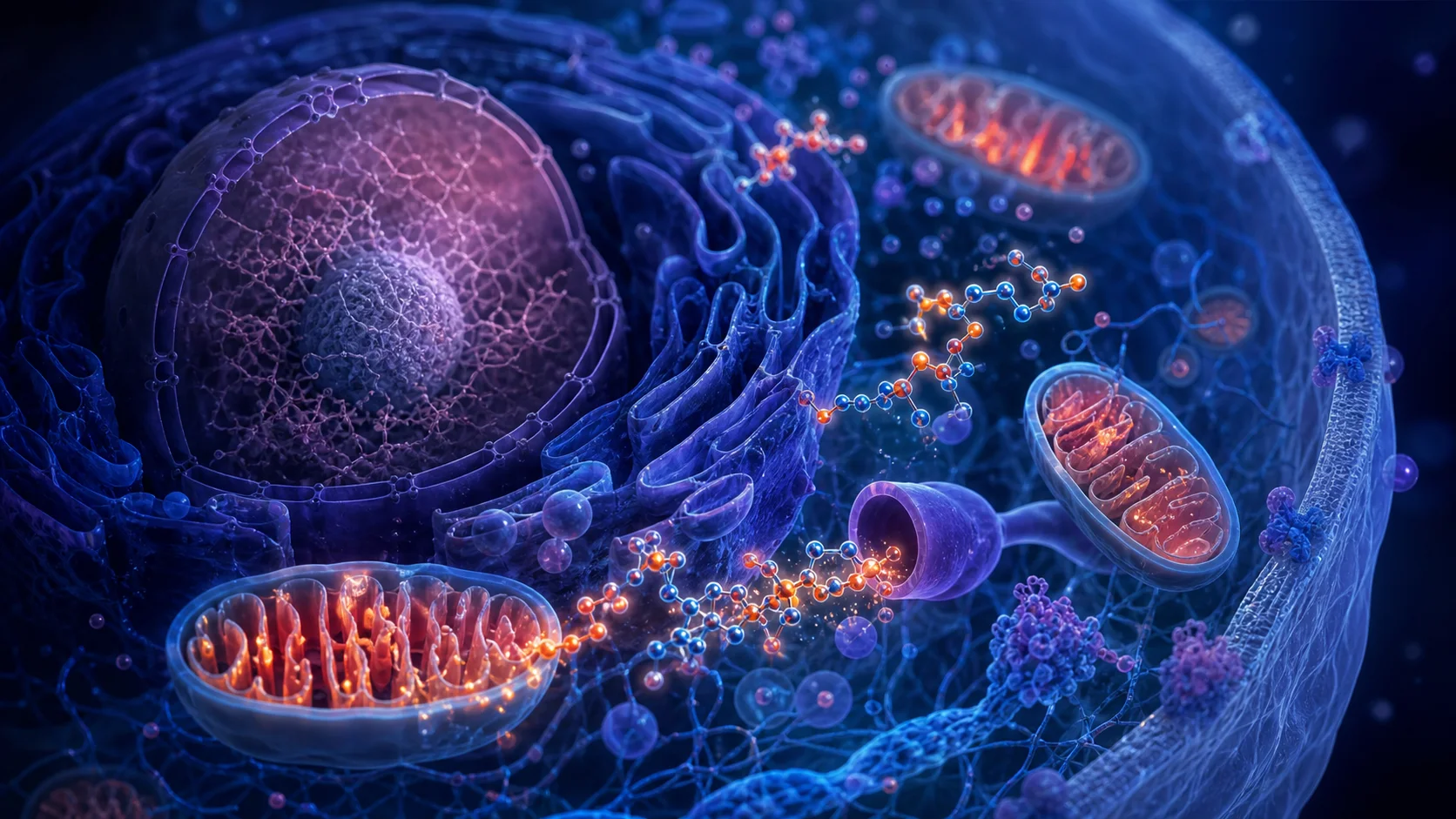
NAD+ links oxidation-reduction reactions with DNA repair, protein deacylation and calcium-related signaling. Cells continually synthesize, recycle and consume it, so a single concentration is a snapshot of a dynamic network rather than a universal measure of “cellular energy.”
Results in context
Compartmentalization matters. Mitochondrial, nuclear and cytosolic NAD pools can respond differently, and sample processing can change the apparent NAD+/NADH ratio. Studies using total tissue extracts cannot automatically answer an organelle-specific question.
A 2019 review of metabolic-health interventions cautioned that much of the field had been built on in-vitro work and animal models. Human precursor studies and disease-specific trials should be read individually rather than combined into a generic longevity claim.
What the evidence cannot establish
Reviews synthesize heterogeneous models and interventions; they are not proof for a specific product.
NAD+, NADH, NR, NMN and nicotinamide are related but not interchangeable interventions.
No cellular pathway diagram validates the purity, stability or biological availability of a catalog lot.
Sources & editorial method
The editorial workflow began with linked PubMed primary papers, systematic reviews, PubChem identity records and FDA/DailyMed regulatory records. Population or model, denominators, endpoints, numerical results, null findings, limitations and conflicts were extracted before drafting. AI-assisted drafting and original image generation were used; the final facts and evidence boundaries were checked against the linked records on 2026-09-02. This is not independent peer review.
4 linked records are listed in the references below. Read the editorial and AI-assistance policy.
How to interpret this article
Source-checked on 2026-09-02. Null results, study size, model/population limits and relevant conflicts are retained. This is not medical advice, a customer case or validation of a catalog lot.
Research-use boundary: Catalog materials discussed on this website are for laboratory research, development and manufacturing use only, not for human or veterinary use. This content is not medical advice and does not provide administration instructions.
Primary records and authoritative sources
- NAD+ metabolism and energy homeostasisMechanistic review; PMID 26118927.
- NAD+ metabolism and metabolic health translationReview emphasizing the preclinical-to-human boundary; PMID 30772929.
- PubChem oxidized NAD recordNadide identity; CID 5892.
- PubChem NADH recordReduced-form identity; CID 439153.
Continue with structured records
Move from this editorial analysis to the product identity, filtered evidence and controlled terminology behind it.