FOXO4-DRI is an experimental senolytic design supported by cultured-cell and mouse studies. Reports of restored fitness, renal function, testosterone or vascular function remain preclinical.
Evidence at a glance
- The 2017 Cell paper disrupted FOXO4–p53 interaction and reported selective apoptosis in susceptible senescent cells.
- In chemotherapy-exposed, fast-aging and naturally aged mice, the study reported changes in fitness, fur density and renal-function measures.
- A 2020 Leydig-cell paper and a 2026 endothelial paper added mouse-model findings, but neither established human benefit or long-term safety.
Study record
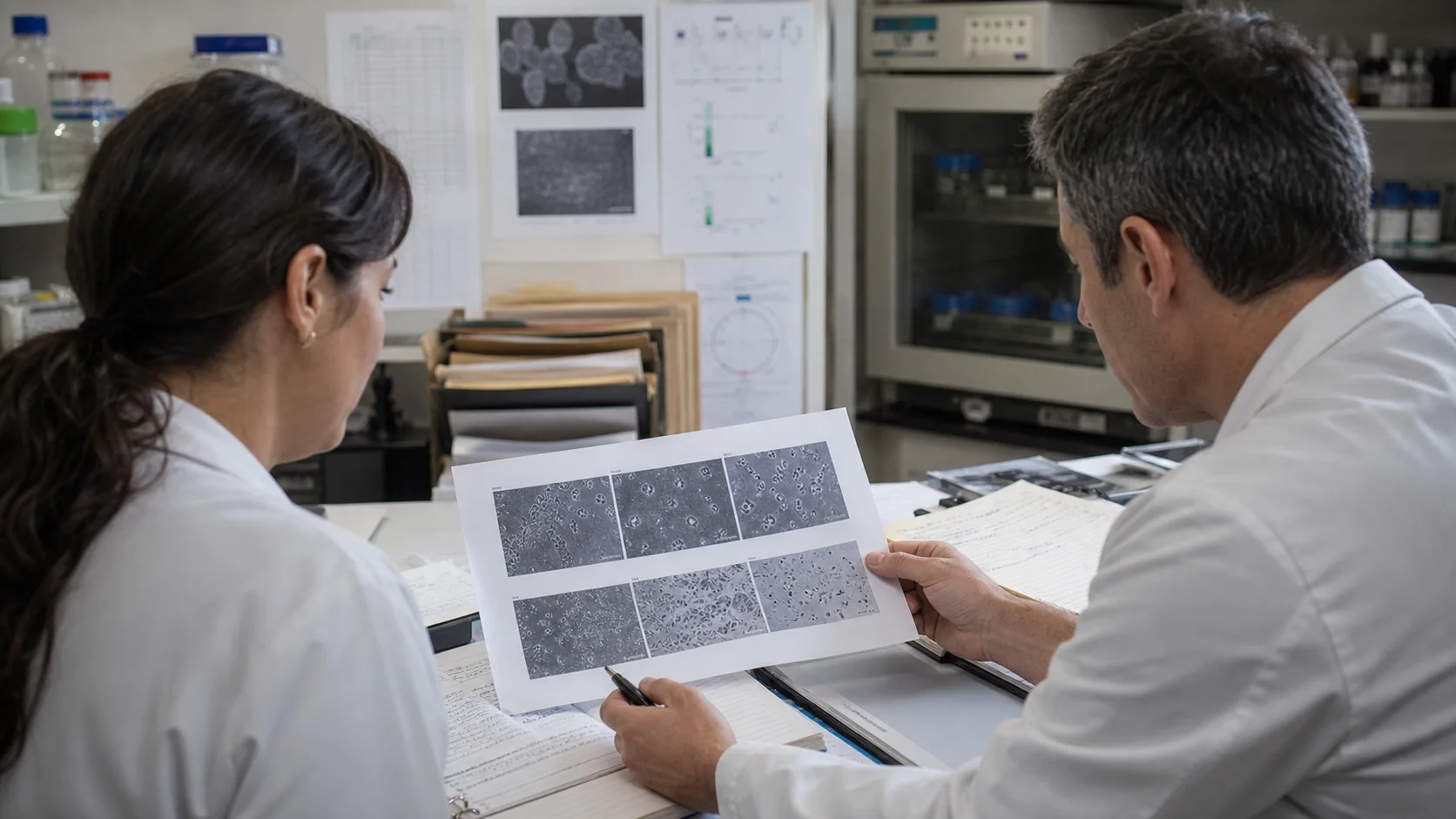
The 2017 experiment supplied a mechanistic rationale: disrupting FOXO4-associated p53 retention promoted apoptosis in selected senescent cells. The in-vivo outcomes were exploratory tissue-homeostasis measures in mice, not a human longevity trial.
Results in context
The 2020 study linked FOXO4-DRI to changes in senescent Leydig-cell survival and testosterone-related markers in aged mice. The 2026 endothelial study reported vascular-function and senescence-pathway findings in multiple mouse aging models.
Later preclinical publication does not automatically provide independent clinical confirmation. Translation requires defined pharmacokinetics, biodistribution, off-target effects, immunogenicity, dose-ranging and controlled human outcomes.
What the evidence cannot establish
Mouse fitness, fur, renal, endocrine and vascular endpoints cannot establish human rejuvenation.
Selective toxicity in a cell model does not prove organism-wide senescent-cell selectivity.
No catalog lot is validated by the research papers unless analytical linkage is demonstrated.
Sources & editorial method
This article discusses the source records listed below, with the study models and limitations stated alongside the findings. AI-assisted drafting and image generation were used. The reference list identifies the records behind this article; it is not an independent peer review or verification of a supplied catalog lot.
3 linked records are listed in the references below. Read the editorial and AI-assistance policy.
How to interpret this article
Source-checked on 2026-09-02. Null results, sample size, model/population limits, finished-drug scope, regulatory status and product-evidence boundaries are retained. This is not medical advice, a customer case or validation of a catalog lot.
Research-use boundary: Catalog materials discussed on this website are for laboratory research, development and manufacturing use only, not for human or veterinary use. This content is not medical advice and does not provide administration instructions.
Primary records and authoritative sources
- Targeted apoptosis of senescent cells restores tissue homeostasisBaar MP, et al. Cell. 2017. PMID 28340339.
- FOXO4-DRI and age-related Leydig-cell dysfunctionPreclinical study. 2020. PMID 31959736.
- FOXO4-DRI and endothelial-cell senescence2026 endothelial and mouse-aging-model study; PMID 41625068.
Continue with structured records
Move from this editorial analysis to the product identity, filtered evidence and controlled terminology behind it.