A six-month study measured glutathione in several body compartments. It helps answer a biomarker question, while leaving broader benefit claims to other studies.
What is glutathione?
Glutathione, often shortened to GSH, is a small peptide made from three amino-acid building blocks. It participates in the body’s antioxidant systems. In research, measuring how much is present is one question; measuring whether a particular health outcome improves is another. Those questions should be kept separate when describing a product.
What the trial measured
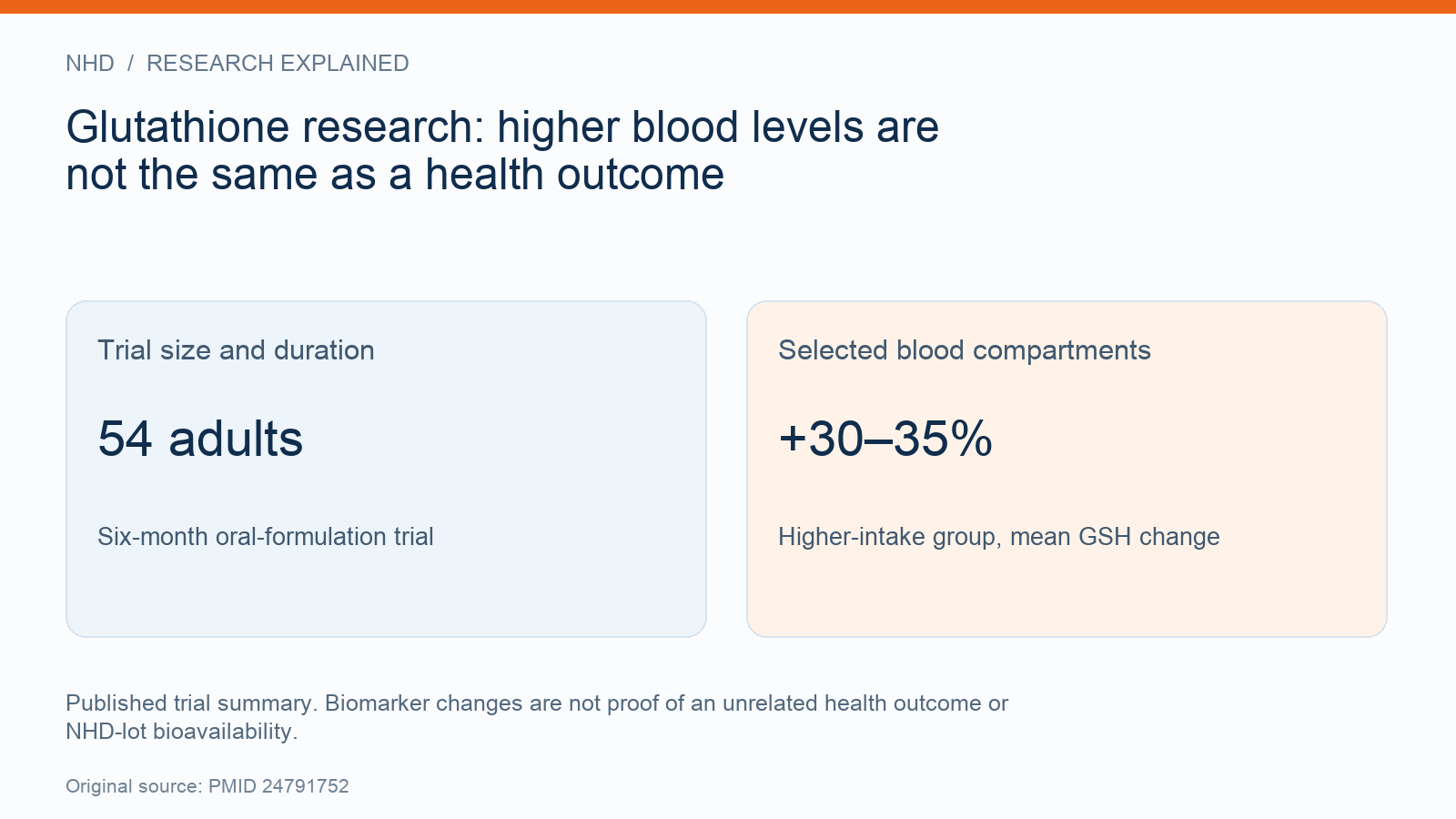
The 2015 randomized study included 54 non-smoking adults and followed an oral formulation for six months. It measured glutathione in blood-related compartments and cells from the mouth lining. The study therefore examined body stores and related laboratory markers, rather than using a skin-tone or disease-treatment endpoint as its main question.
The reported increase
At six months, the higher-intake group showed mean increases of approximately 30–35% in erythrocytes, plasma and lymphocytes. Erythrocytes are red blood cells; plasma is the liquid portion of blood; lymphocytes are immune cells. These are distinct sample types. The range is the authors’ reported summary, not a precise identical increase in every compartment or participant.
Why a biomarker is useful—but limited
A biomarker can show that a biological measurement changed. It does not automatically show how much healthier a person became. Higher GSH levels are not the same measurement as skin appearance, infection rates, exercise performance or disease outcomes. Each of those claims requires evidence that actually tests the relevant outcome.
Formulation belongs beside the result
This was an oral-formulation trial. Its result should not be assigned to a different route or an untested preparation simply because both contain a molecule called glutathione. For comparisons, look at chemical form, formulation, duration, sample type and assay. Otherwise, two apparently contradictory headlines may concern different interventions and different measurements.
Related NHD product and enquiry
The Glutathione product page is the relevant research catalogue entry. For analytical or formulation work, specify the required form, quantity and supporting identity records. The oral trial provides research context; it does not demonstrate bioavailability or clinical benefit for an NHD research lot. A focused enquiry should explain the endpoint your project plans to measure.
Related products and enquiries
Ask NHD about the required material, quantity and analytical documents. Stock, price and available batch records need confirmation.
Original research
Sources checked 6 October 2026. AI-assisted editorial review covered source attribution, numerical accuracy and readability; this is not independent peer review. NHD catalogue materials are for qualified laboratory research, development and manufacturing, not human or veterinary use.
Sources & editorial method
AI-assisted writing and deterministic explanatory figure
1 linked records are listed in the references below. Read the editorial and AI-assistance policy.
How to interpret this article
AI-assisted editorial review, not independent peer review.
Research-use boundary: Catalog materials discussed on this website are for laboratory research, development and manufacturing use only, not for human or veterinary use. This content is not medical advice and does not provide administration instructions.
Primary records and authoritative sources
- Original publication PMID 24791752Checked 2026-10-06; original study, not NHD batch evidence.
Continue with structured records
Move from this editorial analysis to the product identity, filtered evidence and controlled terminology behind it.