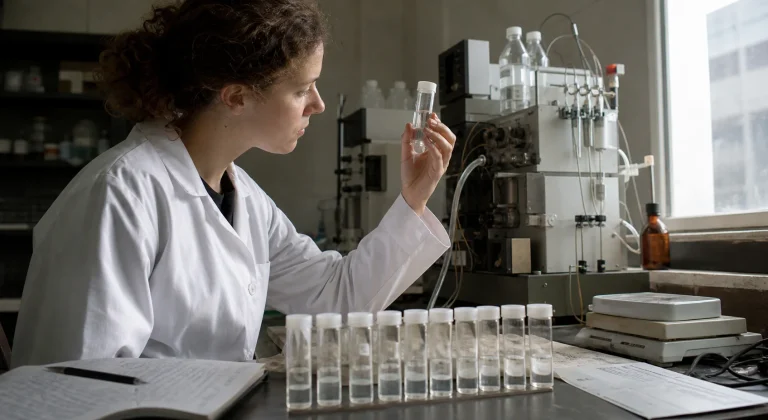
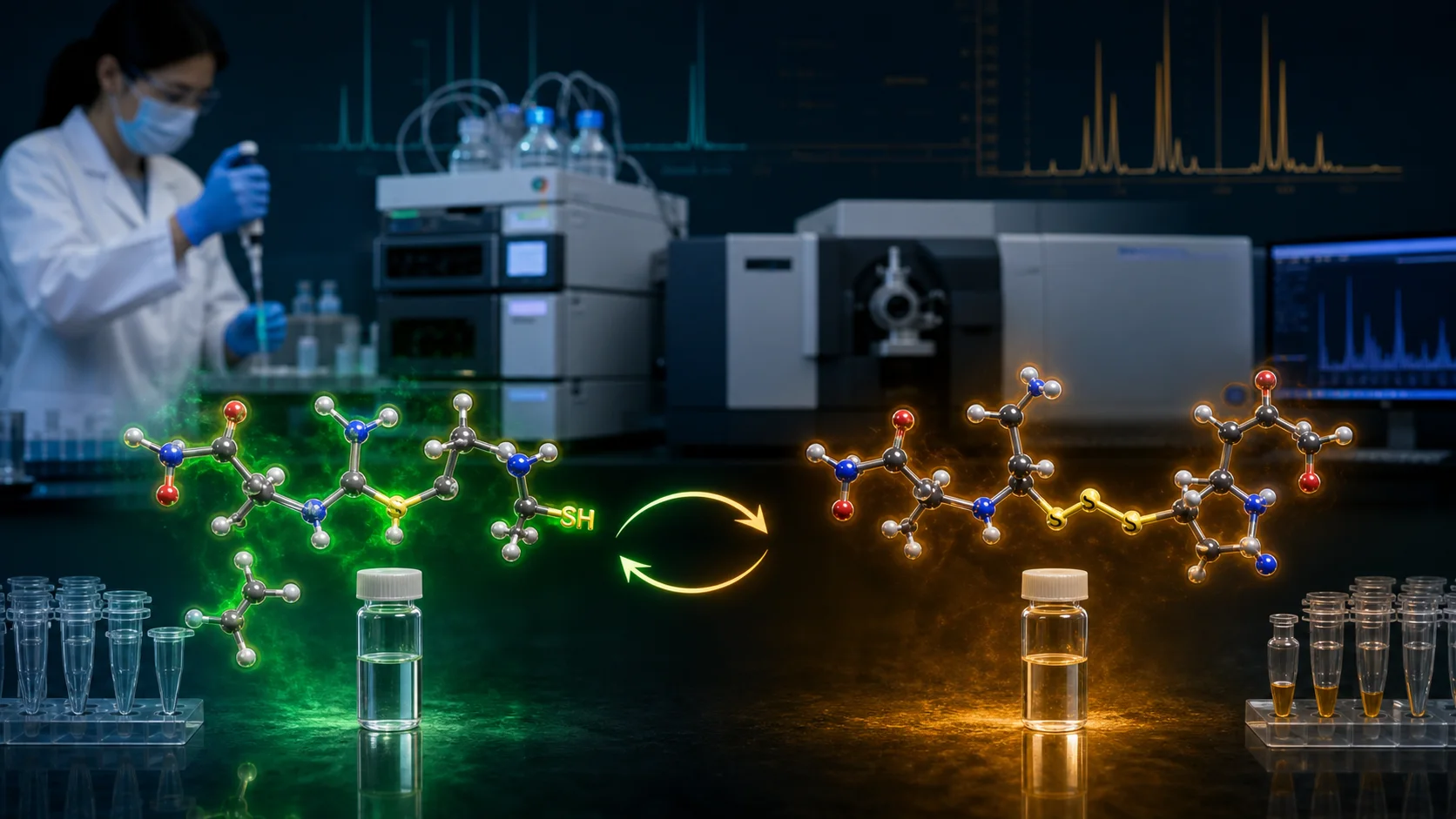
Reduced glutathione (GSH) and glutathione disulfide (GSSG) are a redox pair, not interchangeable names. Sampling and storage can convert one into the other and change the reported ratio.
Evidence at a glance
- PubChem records reduced glutathione as γ-L-glutamyl-L-cysteinyl-glycine, molecular weight 307.33 g/mol.
- Glutathione peroxidase couples peroxide reduction to GSH oxidation; glutathione reductase converts GSSG back to GSH using NADPH.
- An assay must state whether it measures GSH, GSSG, total glutathione or a calculated ratio.
Identity record
GSH contains a reactive cysteine thiol. Exposure to air, transition metals, unsuitable pH or delayed processing can increase apparent GSSG before the sample reaches the instrument.
Analytical and evidence boundary
Total-glutathione assays commonly reduce GSSG and then measure the combined pool. They cannot be relabeled as direct GSH measurements unless the method separately resolves the redox forms.
For a material record, distinguish chemical identity, chromatographic purity and quantitative content. For a biological sample, add collection, quench, storage and matrix-recovery details. These are different quality layers.
Editorial rule
State the exact material, form, model or population and endpoint supported by the cited record. Do not convert mechanistic plausibility, an animal result, a finished-drug label or an analytical test into a claim about an unrelated catalog lot.
Sources & editorial method
The editorial workflow began with linked PubMed primary papers, systematic reviews, PubChem identity records and FDA/DailyMed regulatory records. Population or model, denominators, endpoints, numerical results, null findings, limitations and conflicts were extracted before drafting. AI-assisted drafting and original image generation were used; the final facts and evidence boundaries were checked against the linked records on 2026-09-02. This is not independent peer review.
4 linked records are listed in the references below. Read the editorial and AI-assistance policy.
How to interpret this article
Source-checked on 2026-09-02. Null results, study size, model/population limits and relevant conflicts are retained. This is not medical advice, a customer case or validation of a catalog lot.
Research-use boundary: Catalog materials discussed on this website are for laboratory research, development and manufacturing use only, not for human or veterinary use. This content is not medical advice and does not provide administration instructions.
Primary records and authoritative sources
- Glutathione for skin health: systematic reviewSystematic review. 2024. PMID 39444151.
- 2019 systematic review of glutathione skin outcomesEarlier review documenting limited and inconsistent evidence; PMID 30895708.
- Glutathione biology and homeostasisReview. 2023. PMID 36707132.
- PubChem reduced glutathione recordSequence, formula and mass; CID 124886.
Continue with structured records
Move from this editorial analysis to the product identity, filtered evidence and controlled terminology behind it.