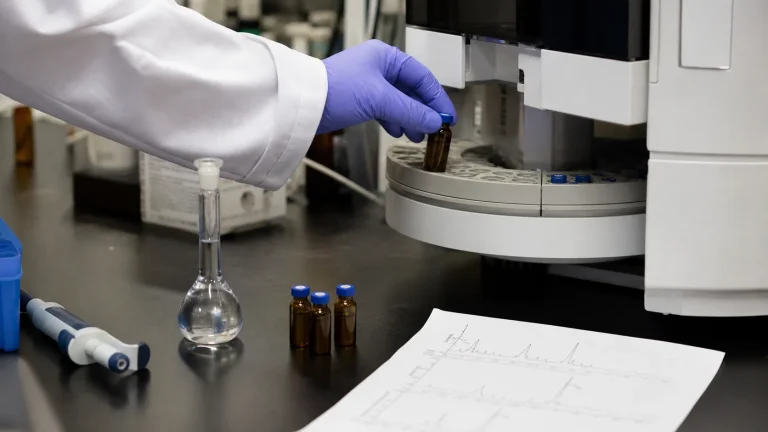
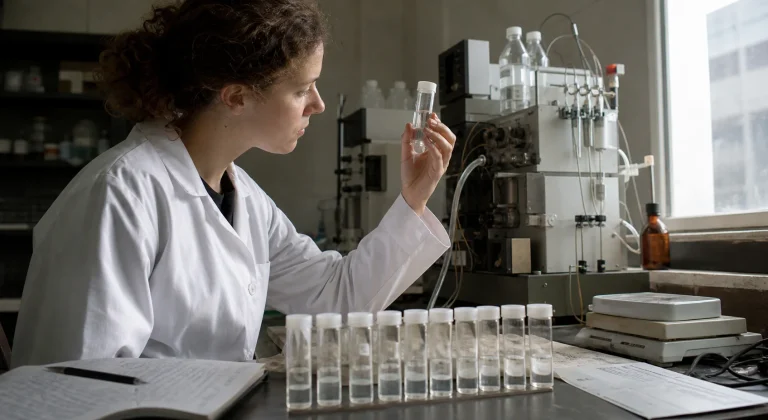
KPV is the tripeptide Lys-Pro-Val and corresponds to the C-terminal tripeptide of α-melanocyte-stimulating hormone. The short name does not specify salt, terminal form, water or peptide-equivalent content.
Evidence at a glance
- The catalog free-peptide record uses formula C16H30N4O4 and molecular weight 342.44 g/mol.
- KPV acetate and free-base KPV are distinct calculation records.
- The 2026 FDA compounding materials separately names KPV acetate and KPV free base, reinforcing the need to state form.
Identity record
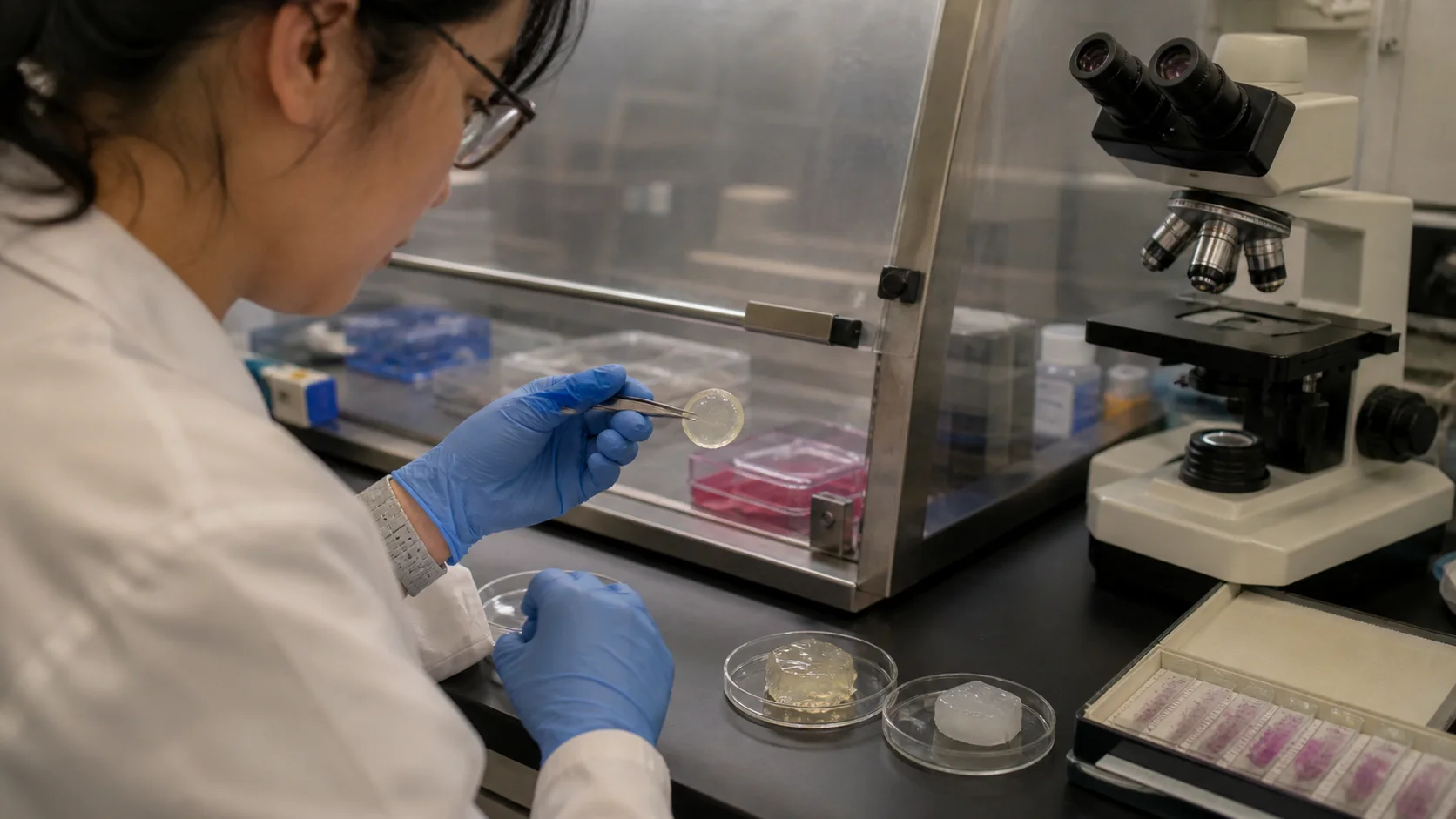
For a three-residue peptide, intact mass is useful but not sufficient. A related fragment, stereoisomer or counterion contribution may require orthogonal methods and a well-characterized reference.
Analytical and evidence boundary
Area-percent purity is not a direct assay of peptide-equivalent content. Water, acetate and non-UV-active components can affect the weighed amount without appearing as peptide peaks at a selected wavelength.
Do not turn the α-MSH relationship into claims about pigmentation, inflammation or tissue repair. Each endpoint requires a directly matched study and model.
Editorial rule
State the exact material, form, model or population and endpoint supported by the cited record. Do not convert mechanistic plausibility, an animal result, an official finished-drug label or an analytical test into a claim about an unrelated catalog lot.
Sources & editorial method
This article discusses the source records listed below, with the study models and limitations stated alongside the findings. AI-assisted drafting and image generation were used. The reference list identifies the records behind this article; it is not an independent peer review or verification of a supplied catalog lot.
3 linked records are listed in the references below. Read the editorial and AI-assistance policy.
How to interpret this article
Source-checked on 2026-09-02. Null results, sample size, model/population limits and regulatory scope are retained. This is not medical advice, a customer case or validation of a catalog lot.
Research-use boundary: Catalog materials discussed on this website are for laboratory research, development and manufacturing use only, not for human or veterinary use. This content is not medical advice and does not provide administration instructions.
Primary records and authoritative sources
- KPV mitigates fine-dust-induced keratinocyte apoptosis and inflammationCell study. 2025. PMID 40073467.
- Drug-loaded nanoparticles targeted to the colon reduce colitis in miceLaroui H, et al. Gastroenterology. 2010. PMID 19909746.
- Certain Bulk Drug Substances That May Present Significant Safety RisksU.S. FDA. Current compounding safety-information page.
Continue with structured records
Move from this editorial analysis to the product identity, filtered evidence and controlled terminology behind it.