Sermorelin is an amidated 29-residue peptide corresponding to the active N-terminal region of human GHRH. The C-terminal amide is identity-defining.
Evidence at a glance
- PubChem lists formula C149H246N44O42S and molecular weight 3357.9 g/mol for Sermorelin.
- The sequence is YADAIFTNSYRKVLGQLSARKLLQDIMSR-NH2.
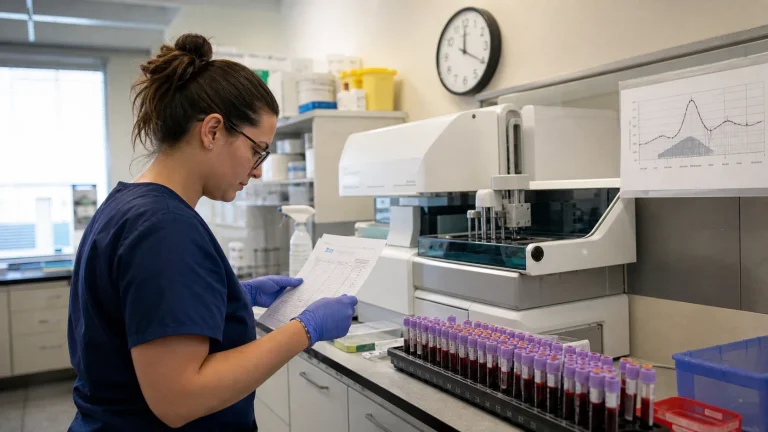
- A validated plasma LC-HRMS/MS method reported lower limits of detection below 50 pg/mL with recovery of 19–37% and imprecision below 20%.
Identity record
Free-base Sermorelin and Sermorelin acetate need separate mass and content accounting. The label should make clear whether the catalog amount refers to total material or peptide equivalent.
Analytical and evidence boundary
The 2016 detection study demonstrated analytical recovery from fortified human plasma for Sermorelin and related GHRH analogues. It was an anti-doping method-validation study, not a therapeutic efficacy study.
A complete lot record should combine sequence or high-resolution intact mass, chromatography, content basis, water and counterion information. A plasma detection limit does not substitute for product release specifications.
Editorial rule
State the exact material, form, model or population and endpoint supported by the cited record. Do not convert mechanistic plausibility, an animal result, an official finished-drug label or an analytical test into a claim about an unrelated catalog lot.
Sources & editorial method
This article discusses the source records listed below, with the study models and limitations stated alongside the findings. AI-assisted drafting and image generation were used. The reference list identifies the records behind this article; it is not an independent peer review or verification of a supplied catalog lot.
5 linked records are listed in the references below. Read the editorial and AI-assistance policy.
How to interpret this article
Source-checked on 2026-09-02. Null results, sample size, model/population limits and regulatory scope are retained. This is not medical advice, a customer case or validation of a catalog lot.
Research-use boundary: Catalog materials discussed on this website are for laboratory research, development and manufacturing use only, not for human or veterinary use. This content is not medical advice and does not provide administration instructions.
Primary records and authoritative sources
- GRF1-29 compared with longer human GRF fragmentsLosa M, et al. Klin Wochenschr. 1984. PMID 6240568.
- Low-dose GHRH(1–29)-amide dose-response studyPrimary human dose-response study; PMID 7921207.
- Sermorelin pediatric reviewHistorical diagnostic and pediatric treatment review; PMID 18031173.
- GHRH analog detection in human plasmaValidated LC-HRMS/MS method; PMID 26879649.
- PubChem Sermorelin recordSequence, formula and molecular weight; CID 16132413.
Continue with structured records
Move from this editorial analysis to the product identity, filtered evidence and controlled terminology behind it.