A formula sheet saying "add 2% stock solution" does not necessarily mean the finished product contains 2% SNAP-8. First check how much of the target ingredient the stock solution itself contains, then calculate how much is carried in after addition. Below is a worked example using a completely hypothetical set of numbers.

First distinguish three quantities
The first is the actual mass of the target peptide; the second is the mass of the stock solution containing the peptide, solvent, or other components; the third is the total mass of the final formula. All three can be recorded in grams, but they are not the same thing. The name of a commercial stock solution also cannot show that it is necessarily pure peptide; its composition and content definition should be checked. Bachem's cosmetic peptide materials list SNAP-8 as a related octapeptide; this article uses that only as identity and category background and does not infer the content of any specific stock solution from it. [1]
Follow the 100 g teaching formula
Suppose the stock contains the target peptide at a mass fraction of 0.05%, and a final 100 g formulation contains 2 g of that stock. The mass of target peptide carried in is 2 g × 0.05% = 0.001 g, or 1 mg. Dividing again by the 100 g finished product mass gives a target peptide mass fraction in the finished product of 0.001%. Therefore, a 2% stock solution addition amount and a 0.001% target peptide content describe two different things. All numbers are teaching assumptions, not NHD specifications or formula recommendations.

Teaching example: stock solution addition amount is not equal to target peptide content
- Hypothetical stock solution: Target peptide mass fraction 0.05%
- Added to final 100 g finished product: Use 2 g stock solution, carrying in 1 mg target peptide
- Finished product target peptide mass fraction: 0.001% = 10 ppm (mass ratio)
Converted to ppm, the result is still the same amount
A mass fraction of 0.001% equals 10 ppm, meaning 10 mg of target ingredient per kilogram of finished product. In this 100 g example, it is still 1 mg; do not multiply by 100 again just because the unit changed. It is recommended to write "target ingredient mass," "finished product total mass," and "result unit" on the same line, then back-calculate once from the original 1 mg to see whether they agree. If ppm means mass ratio, do not directly treat it as mg/L of solution.
When adding by volume, density is also needed
If what is recorded is adding 2 mL of stock solution rather than 2 g, suitable density data are needed to connect with the mass fraction calculation. Do not assume all stock solutions are the same as water. Another common problem is treating "add to 100 g base" as "final 100 g finished product": after adding 2 g of stock solution to the former, the total mass may become 102 g, and the denominator should change accordingly. The clearer the formula record, the easier it is to check.
Do not mix content and purity
The active ingredient mass fraction of the stock solution, the content assay of pure peptide powder, and HPLC area purity need to be recorded separately. If the content declaration is already based on the finished stock solution, another percentage should not be used to correct it again; if correction is truly needed, it must be known what basis each number uses. If "99%" is found without a test name, first ask what it measures, then decide whether it can be used in calculation. [2]
At procurement, you can ask directly like this
Please confirm whether the SNAP-8 material is pure peptide powder or a prepared stock solution, whether the content of the target ingredient is expressed as mass fraction or another unit, and whether there are corresponding tests and batch records. A calculation sheet can help check the dimensions of different quotations, but it cannot prove that a certain concentration has a specific skincare effect. The actual form, specifications, and documentation on the NHD product page should be based on information confirmed by the supplier.
Original sources
Check the study conditions and material records separately. Calculations labeled as examples are not batch test results.
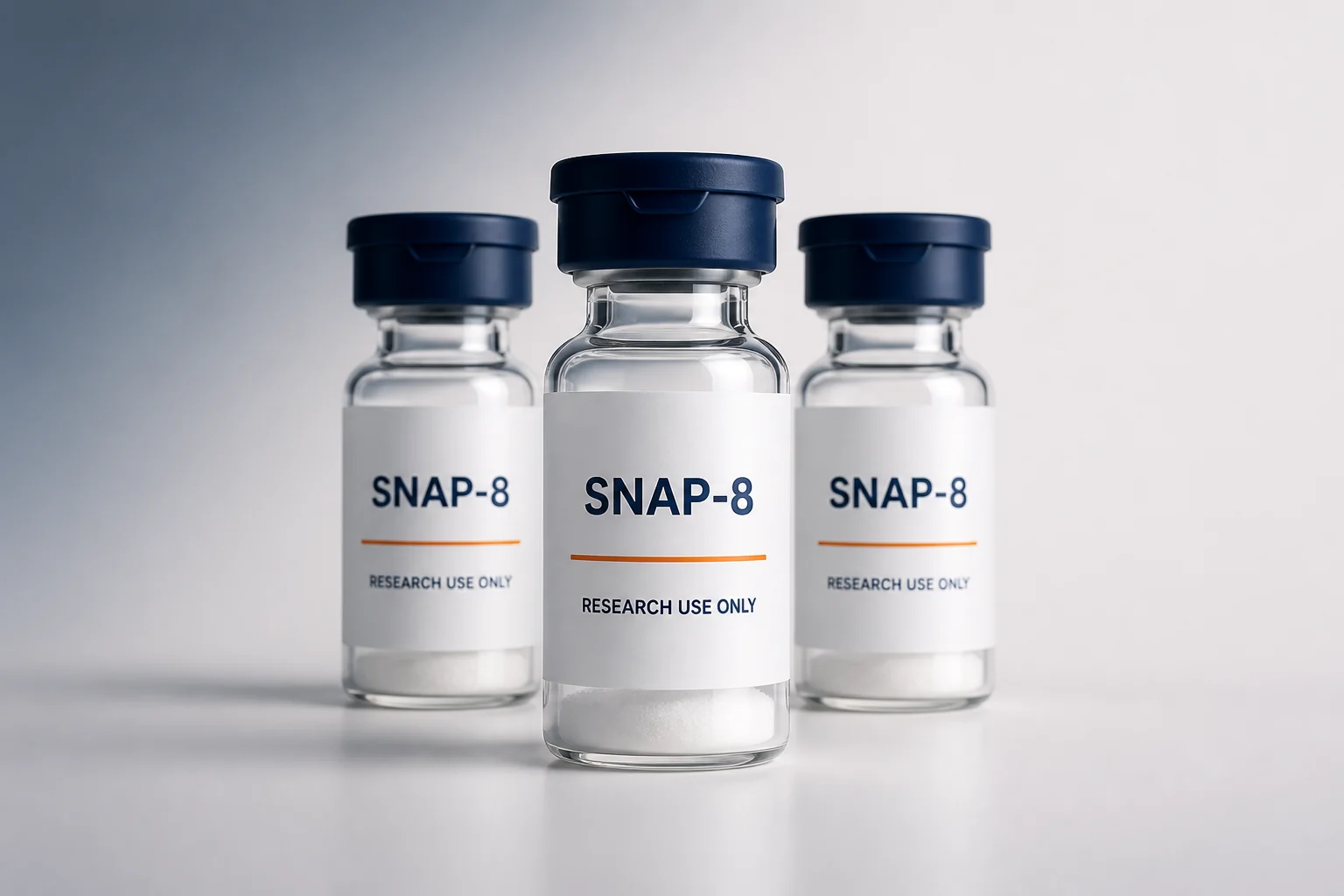 SNAP-8