One report gives copper content, another states HPLC purity. Both can relate to GHK-Cu, yet neither substitutes for the other. To know how much target material is in a sample, first list the questions that need answering.

What information does GHK-Cu contain
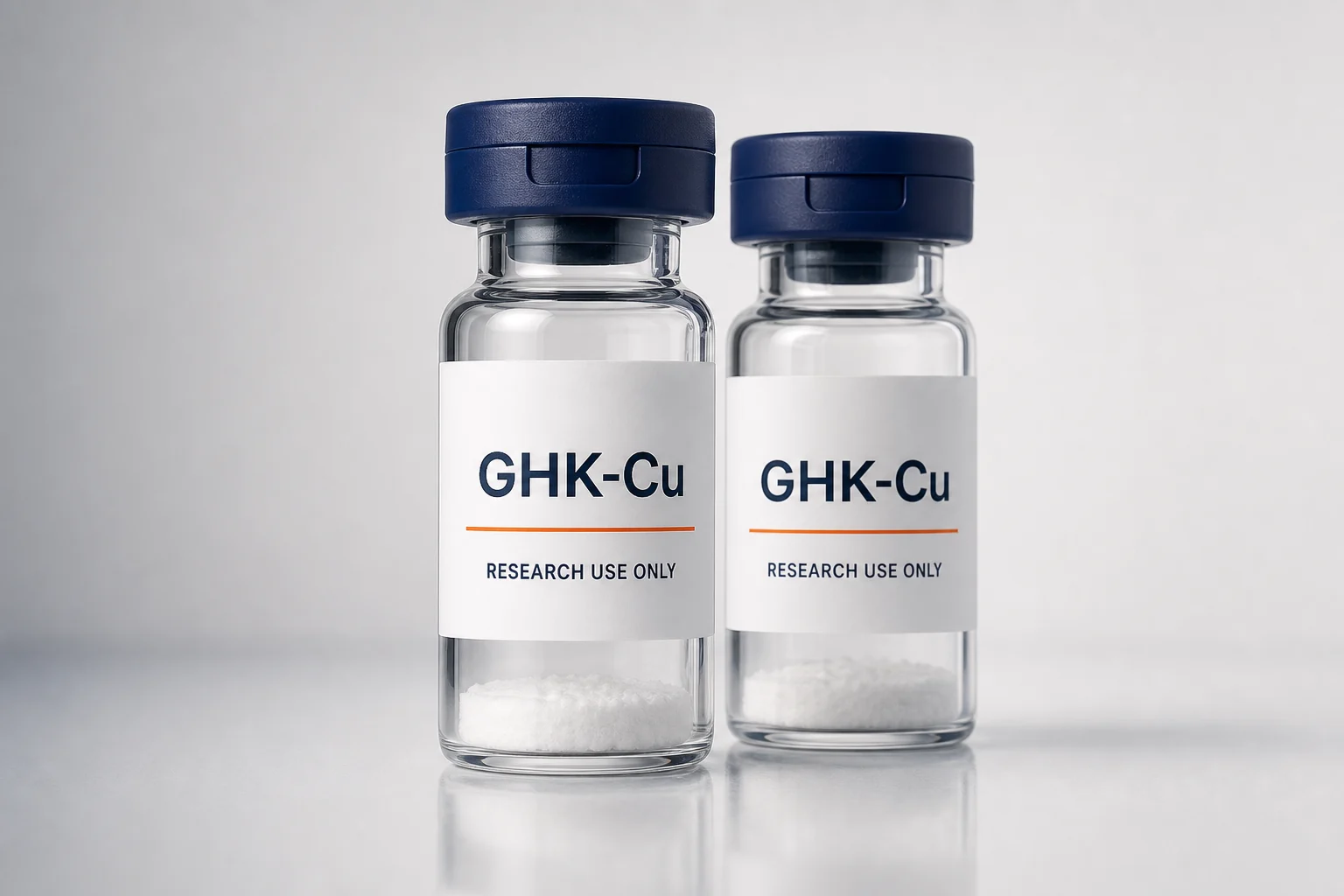
GHK is a tripeptide made of glycine, histidine and lysine; the name GHK-Cu also involves a complexation relationship with copper. Commercial materials may appear in different salt forms or on different mass bases, so you cannot apply one set of theoretical percentages just from the short name. Cayman's GHK-Cu acetate material is an example of one specific form; it does not define all suppliers' materials, nor is it an NHD batch specification. [1]
Detecting copper is not the same as measuring the whole target complex
A suitable elemental analysis method can provide the amount of copper, but copper may come from different states. A total copper result by itself usually cannot distinguish the target complex, free copper or other copper-containing components. Conversely, a peptide-related signal also requires knowing which species it corresponds to and what quantification standard is used. Confirming identity and the quantification target is the first step before choosing a method. [2]

Three types of measurement in GHK-Cu reports
- HPLC area purity: Answers the proportion of signal in the specified chromatographic calculation
- Copper content: Must state the measurement object such as total copper and the mass basis
- Target peptide or complex quantification: Requires clear chemical form, standard and method scope
Three percentages may be saying three different things
HPLC area percentage describes the proportion of chromatographic signal included in the calculation; peptide content requires a clear target substance and measurement basis; copper mass fraction describes how much of the sample mass is copper. They cannot simply be added together, nor should they be arbitrarily multiplied. For example, when a report lists both HPLC area purity and copper content, you cannot multiply the two and call the result the "true GHK-Cu content." Without chemical form and method definitions, that multiplication has no reliable basis.
Color can help you observe, but cannot replace quantification
Color can be part of an observational record. When comparing, path length, container, pH, buffer, lighting and observation concentration all affect appearance. If you want to use absorbance for quantification, you need a standard curve and conditions that have passed suitability checks, not a pick of the bluest sample from photos. Existing pH and color information for GHK-Cu can help frame questions; content conclusions still need to be supported by the corresponding method.
Write testing requests as answerable questions
You can ask separately: which molecules or elements need to be confirmed? Should results be reported per gram of powder, per milliliter of solution, or on another basis? Can the method distinguish related components? Will sample handling change the complexation state? Are parallel checks of copper and peptide needed? Not every laboratory can complete all items; confirming the specific method and scope of interpretation first is more practical than vaguely requesting "a full testing report." [3]
Make material records match the reports
When purchasing GHK-Cu, record the actual form supplied, batch number, specification and available documents. Write what is being measured next to the number, for example "total copper, mg/g sample," rather than copying only a percentage. If you need to discuss a specific formulation or quantification plan, you can include the intended use and the questions to be answered in your inquiry; do not treat structural diagrams from literature or other suppliers' data as proof for this batch of material.
Original sources
- Cayman · GHK-Cu acetate product information
- Bachem · peptide quality control
- FDA · ICH Q2(R2) validation of analytical procedures
Check the study conditions and material records separately. Calculations labeled as examples are not batch test results.
 GHK-Cu