Delta sleep-inducing peptide has a memorable name, but the literature does not support treating that name as a settled mechanism or a proven human sleep outcome.
Evidence at a glance
- A 2006 critical review stated that a DSIP gene, precursor protein and receptor had not been isolated and that the sleep-factor hypothesis was poorly documented.
- A 2000 rat study used 1 mg/kg intraperitoneally and recorded EEG for 12 hours.
- The reported delta/theta changes in rats are not a randomized human insomnia result.
Study record
The 2006 review traced DSIP to a 1977 isolation report and emphasized that endogenous identity and biological activity remained obscure. It also noted that some structural analogues, rather than DSIP itself, produced stronger slow-wave-sleep findings in early rabbit and rat work.
Results in context
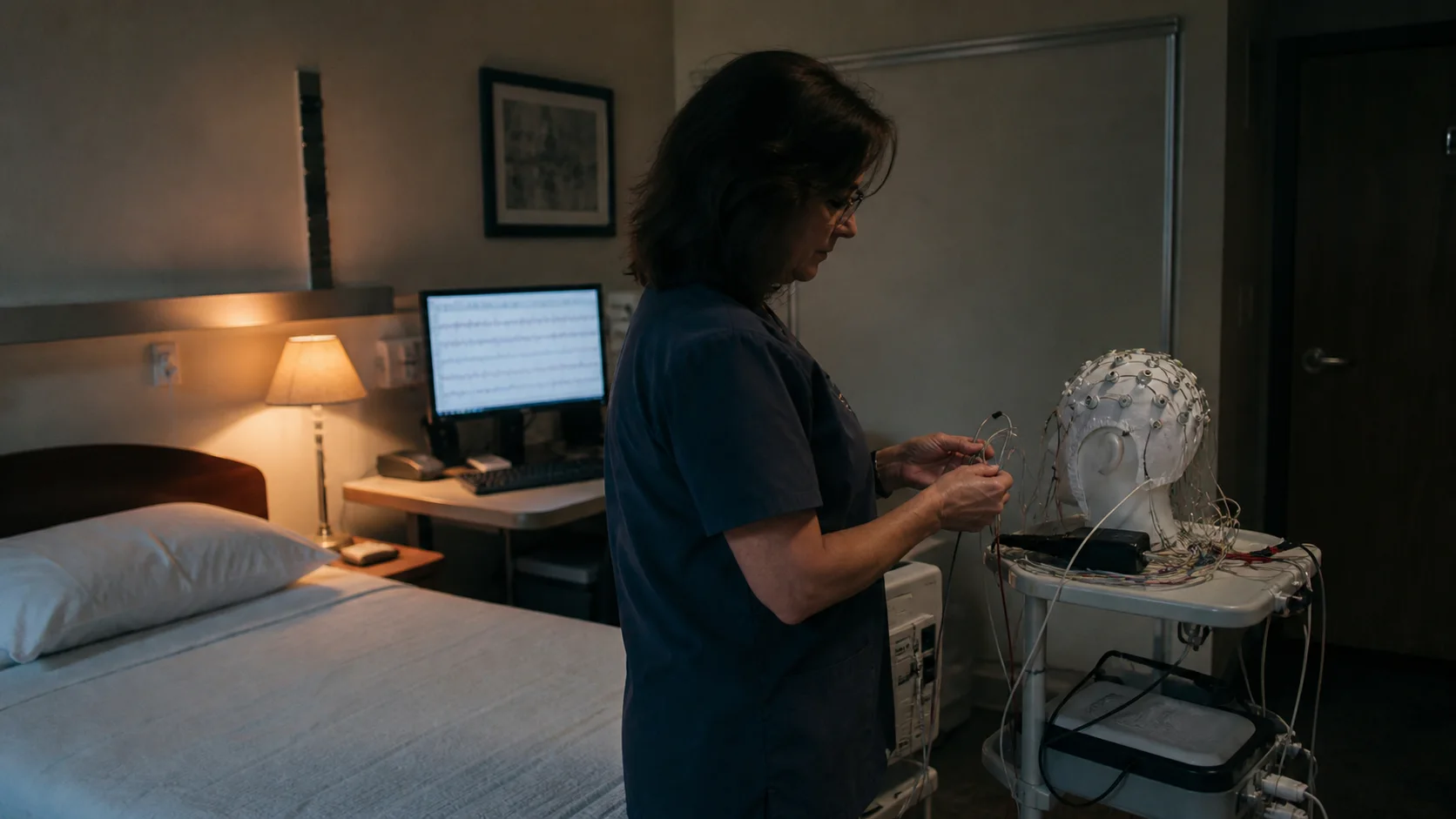
The 2000 Wistar-rat experiment reported more frequent high-amplitude EEG bursts in the 1–9 Hz range and significant delta changes at several time points. The study was animal physiology; it does not supply participant counts, clinical sleep scales or a human adverse-event record.
Search copy should therefore describe DSIP as historically investigated in sleep and neuroendocrine models. Calling it a proven sleep-inducing agent would erase the central uncertainty in the review literature.
What the evidence cannot establish
Old animal experiments have limited relevance to modern clinical insomnia outcomes.
The endogenous precursor and receptor mechanism remain uncertain.
An EEG frequency change is not equivalent to restorative sleep, symptom improvement or long-term safety in humans.
Sources & editorial method
This article discusses the source records listed below, with the study models and limitations stated alongside the findings. AI-assisted drafting and image generation were used. The reference list identifies the records behind this article; it is not an independent peer review or verification of a supplied catalog lot.
3 linked records are listed in the references below. Read the editorial and AI-assistance policy.
How to interpret this article
Source-checked on 2026-09-02. Null results, sample size, model/population limits and regulatory scope are retained. This is not medical advice, a customer case or validation of a catalog lot.
Research-use boundary: Catalog materials discussed on this website are for laboratory research, development and manufacturing use only, not for human or veterinary use. This content is not medical advice and does not provide administration instructions.
Primary records and authoritative sources
- Delta sleep-inducing peptide: a still unresolved riddleGraf MV, Kastin AJ. Peptides. 2006. PMID 16539679.
- DSIP effects on rat EEG and power spectraPrimary 2000 Wistar-rat study; PMID 11214497.
- PubChem Delta Sleep-Inducing Peptide recordSequence, formula, molecular weight and emideltide synonym; CID 68816.
Continue with structured records
Move from this editorial analysis to the product identity, filtered evidence and controlled terminology behind it.