AICAR naming often collapses acadesine, its intracellular phosphorylated metabolite ZMP and an entire AMPK pathway into one label. Reproducible research needs those three concepts kept separate.
Evidence at a glance
- Acadesine is AICA-riboside, a nucleoside with PubChem CID 17513 and molecular weight 258.23 g/mol.
- Cells phosphorylate acadesine to AICA ribotide, commonly called ZMP.
- A 2021 systematic review documents substantial AMPK-independent effects, so “AICAR result” is not automatically “AMPK result.”
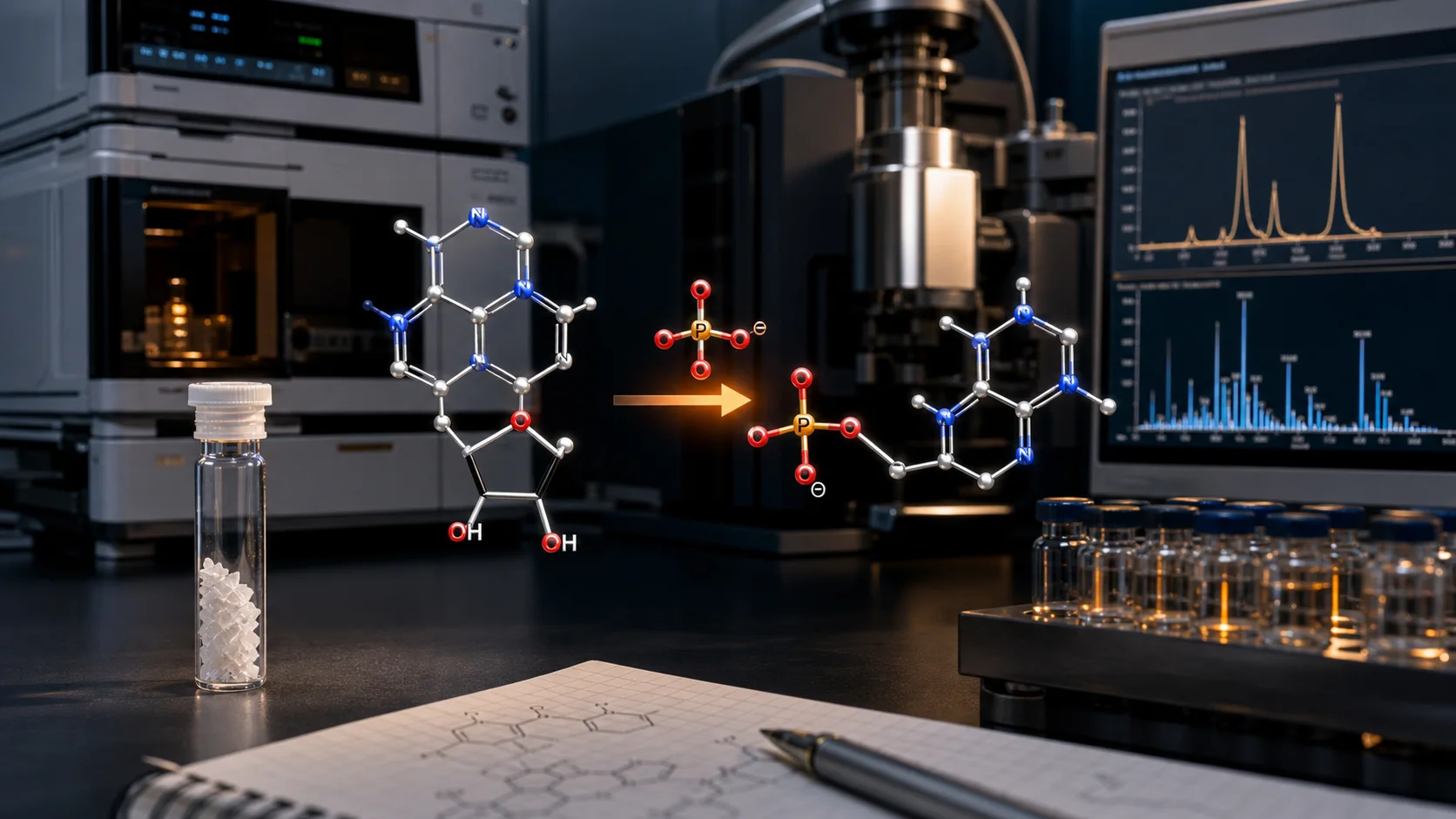
Identity record
A certificate should name the riboside actually supplied and state the formula used for calculations. ZMP is produced after cellular uptake; it is not a synonym for the unchanged starting material in a vial.
Analytical and evidence boundary
The systematic review found effects involving nucleotide synthesis, hypoxia, metabolism, cell cycle and cancer biology that could not all be reduced to AMPK activation. Study interpretation should therefore combine pharmacologic AICAR with genetic or orthogonal pathway controls where possible.
Purity by area percentage does not by itself report water, counterions, residual solvents or absolute AICAR content. Those measurements answer different questions and should not be merged into one number.
Editorial rule
State the exact material, form, model or population and endpoint supported by the cited record. Do not convert mechanistic plausibility, an animal result, a finished-drug label or an analytical test into a claim about an unrelated catalog lot.
Sources & editorial method
The editorial workflow began with linked PubMed primary papers, systematic reviews, PubChem identity records and FDA/DailyMed regulatory records. Population or model, denominators, endpoints, numerical results, null findings, limitations and conflicts were extracted before drafting. AI-assisted drafting and original image generation were used; the final facts and evidence boundaries were checked against the linked records on 2026-09-02. This is not independent peer review.
3 linked records are listed in the references below. Read the editorial and AI-assistance policy.
How to interpret this article
Source-checked on 2026-09-02. Null results, study size, model/population limits and relevant conflicts are retained. This is not medical advice, a customer case or validation of a catalog lot.
Research-use boundary: Catalog materials discussed on this website are for laboratory research, development and manufacturing use only, not for human or veterinary use. This content is not medical advice and does not provide administration instructions.
Primary records and authoritative sources
- AICAR prevents and reverses diabetic polyneuropathy by regulating mitophagyExperimental study. 2024. PMID 39795939.
- AICAr, a Widely Used AMPK Activator with Important AMPK-Independent EffectsVišnjić D, et al. Cells. 2021. PMID 34064363.
- PubChem Acadesine recordIdentity, formula, mass and synonyms; CID 17513.
Continue with structured records
Move from this editorial analysis to the product identity, filtered evidence and controlled terminology behind it.