You add a known amount of the target substance to a sample—does the extra amount you measure match what you added? That is the question a spike recovery experiment usually asks. It can help evaluate a method, but it is not a button that automatically corrects every sample.

First understand what 'spiking' adds
Spiking usually means adding a reference material with a clearly defined identity and quantity to a sample, then putting it through the specified processing and testing. What is added is a known target substance, not just any bottle of material with the same name. The experiment needs to know the reference material's content basis, the amount added, and the time point of spiking. Different matrices and concentration levels may behave differently, and results under one condition cannot summarize all samples.
The easiest thing to miss is the amount already in the original sample
Suppose the unspiked sample measures 10.0 μg, the spiked sample measures 14.5 μg, the reference amount added to the corresponding sample is 5.0 μg, and all results have been converted to the same comparable basis. Recovery = (14.5 − 10.0) ÷ 5.0 × 100% = 90%. If you divide 14.5 directly by 5.0, you count the target substance already present in the original sample as part of the 'recovery.' These three numbers are a teaching hypothesis, not actual batch data.

Teaching example: subtract the original sample first, then divide by the amount added
- Unspiked / after spiking: 10.0 μg / 14.5 μg (converted to the same basis)
- Additional amount added: 5.0 μg
- Spike recovery: (14.5 − 10.0) ÷ 5.0 × 100% = 90%
Adding a solution can also change the denominator and the volume
If results are reported as concentration, adding a standard solution changes the volume, so the dilution relationship between the original and spiked samples must be handled together. You can first convert everything to the mass of the corresponding sample and then make the comparison above; or you can use a confirmed concentration-and-volume correction approach. Without a record of the final volume, a set of concentration numbers alone may not be enough to calculate it. Whether the control sample needs the same amount of blank solvent added should also be confirmed at the design stage.
The spiking time point determines which steps it covers
If spiking is done before extraction, the result may include the influence of more sample-preparation steps; if it is added only after extraction, it cannot be used to show that the earlier extraction had no loss. For materials such as GHK-Cu that involve chemical state, you also need to confirm whether the added reference material matches the object to be measured and whether processing changed the measured state. A single recovery number does not automatically answer these identity questions.
Whether 90% passes depends first on the purpose
This article does not set a unified acceptance range. Evaluation should combine the method's purpose, concentration level, repeatability, and pre-specified criteria. If recovery is abnormal, first check the standard material, volume, matrix interference, sample-preparation loss, and instrument response; do not directly divide all results by 0.90 and then claim the true content has been obtained. Whether correction is allowed and how to correct require the corresponding method basis. [1]
Write the results as a record others can recalculate
Record the unspiked result, the spiked result, the known amount added, volume handling, spiking time point, and calculation formula. When submitting materials such as glutathione or GHK-Cu for testing, you can state whether you care most about quantitative bias or recovery at a certain step, and have the laboratory confirm the design. Catalog materials are not standard substances that naturally have value-assignment qualification; the uses of reference materials and ordinary research materials should be confirmed separately.
Original sources
Check the study conditions and material records separately. Calculations labeled as examples are not batch test results.
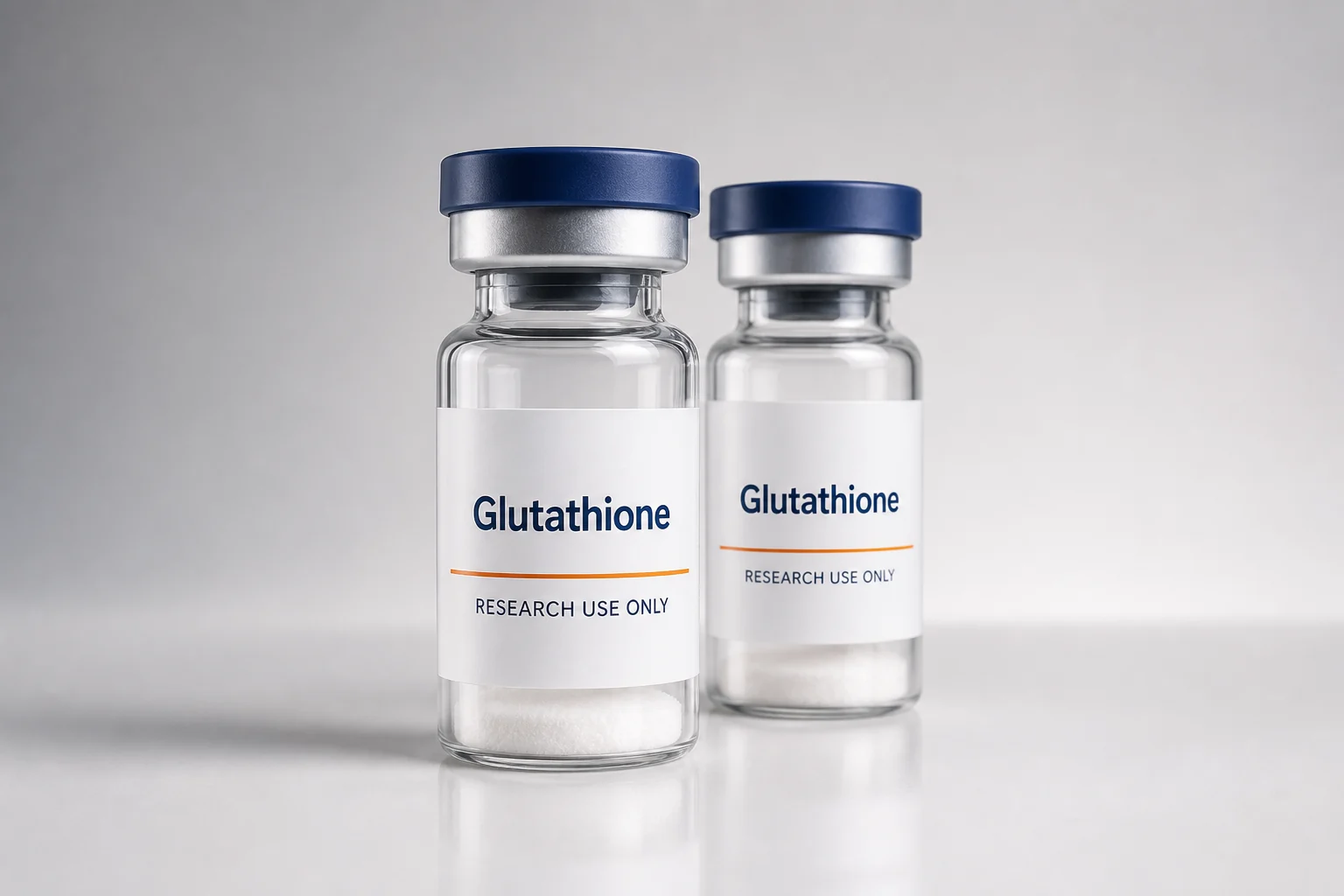 Glutathione
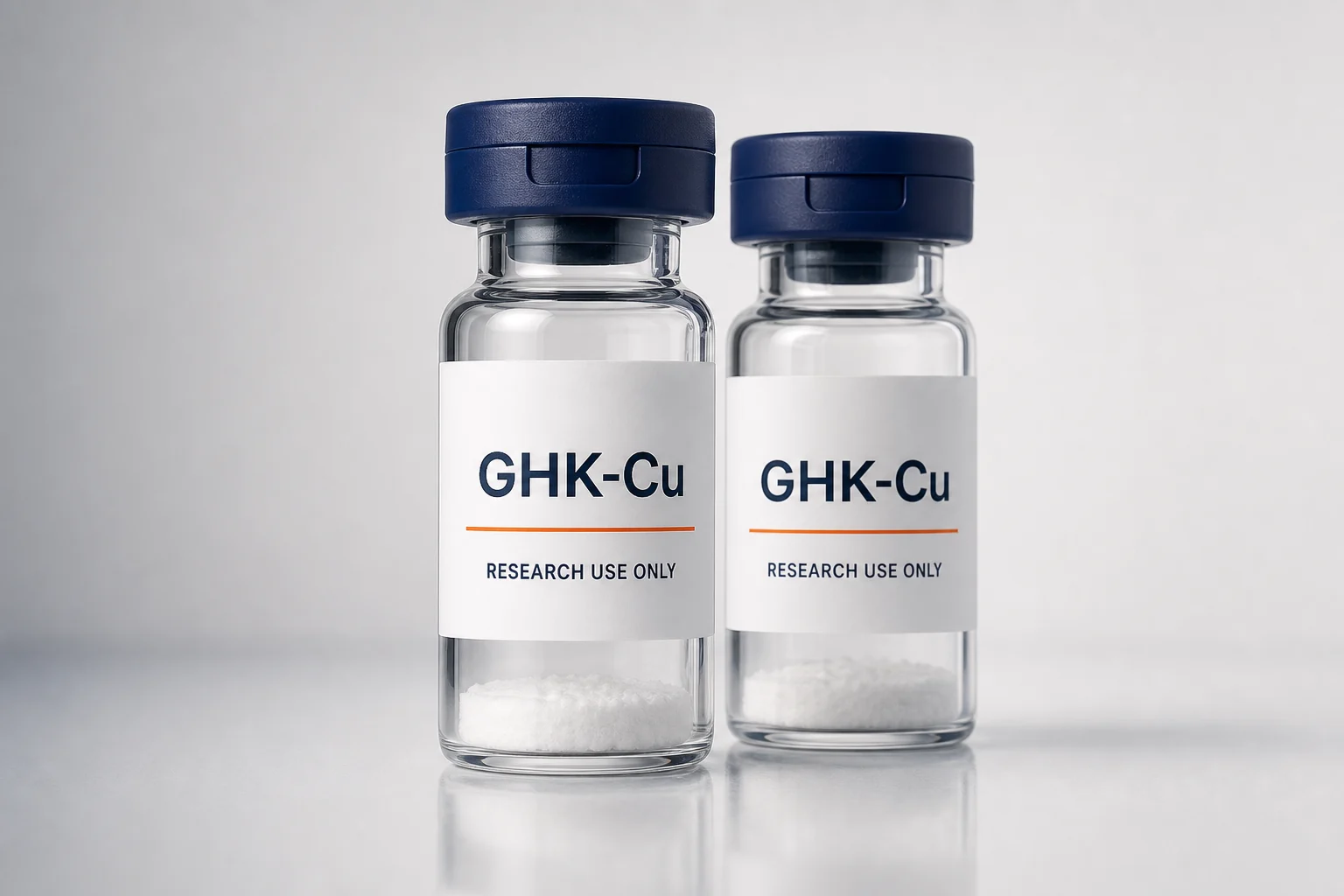 GHK-Cu