Melanotan II has limited early human exposure data and documented harms from unregulated use. A three-person tanning pilot cannot outweigh later toxicity reports or current regulator warnings.
Evidence at a glance
- The 1996 single-blind pilot enrolled three healthy male volunteers and used alternating saline or Melanotan II days.
- At 0.03 mg/kg, one of two participants had grade II somnolence and fatigue; nausea and prolonged spontaneous erections were also reported.
- A confirmed 6 mg exposure in a 39-year-old man was followed by tachycardia, renal dysfunction and CPK rising from 1,760 to 17,773 IU/L.
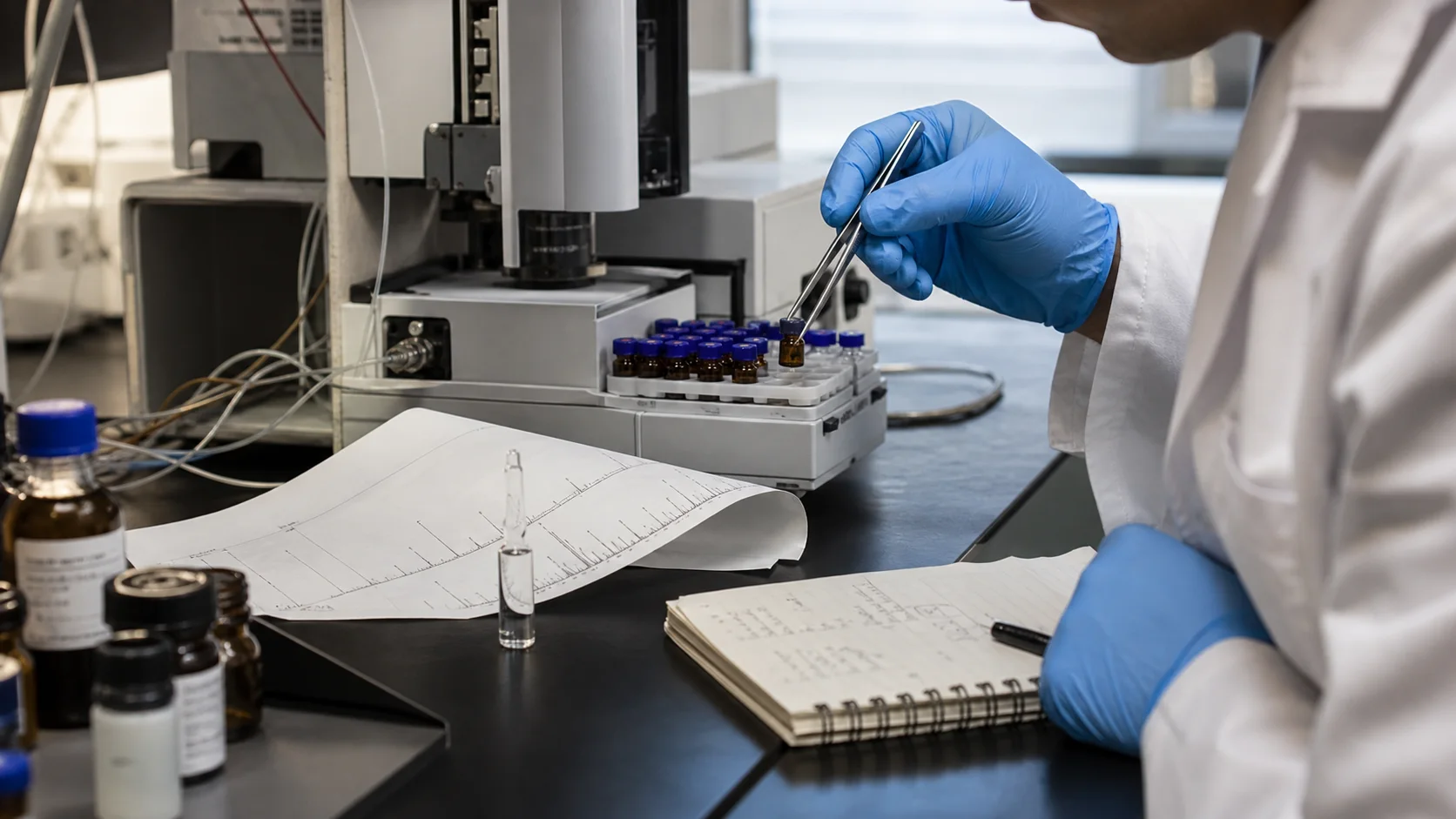
Study record
The phase I pilot was designed to observe short-term effects, not to establish population safety. Three participants are insufficient to estimate uncommon adverse events, and the result does not validate today’s internet products.
Results in context
In the 2012 toxicology case, heart rate reached 146 beats per minute, creatinine was 2.25 mg/dL, CPK later peaked at 17,773 IU/L and intensive-care treatment lasted three days. Mass spectrometry confirmed Melanotan II against a standard, strengthening the exposure attribution while remaining a single case.
In August 2026, Australia’s TGA reported that five seized nasal-spray bottles labeled 30 mg contained estimated amounts ranging from 22 to 54 mg. This real-world inconsistency is a product-quality and dosing risk separate from the molecule’s pharmacology.
What the evidence cannot establish
The pilot sample of three cannot establish safety or efficacy.
A case report cannot estimate incidence, but it can document a plausible serious event.
Unregulated product content cannot be assumed from a label, and catalog research materials are not approved medicines.
Sources & editorial method
This article discusses the source records listed below, with the study models and limitations stated alongside the findings. AI-assisted drafting and image generation were used. The reference list identifies the records behind this article; it is not an independent peer review or verification of a supplied catalog lot.
5 linked records are listed in the references below. Read the editorial and AI-assistance policy.
How to interpret this article
Source-checked on 2026-09-02. Null results, sample size, model/population limits and regulatory scope are retained. This is not medical advice, a customer case or validation of a catalog lot.
Research-use boundary: Catalog materials discussed on this website are for laboratory research, development and manufacturing use only, not for human or veterinary use. This content is not medical advice and does not provide administration instructions.
Primary records and authoritative sources
- Melanotan II pilot phase I studyThree-person single-blind pilot; PMID 8637402.
- Melanotan II systemic toxicity with rhabdomyolysisCase report. 2012. PMID 23121206.
- TGA finds inconsistent Melanotan II contentOfficial August 2026 laboratory-testing safety alert.
- FDA Melanotan II enforcement recordOfficial record describing Melanotan II as an unapproved new drug.
- PubChem Melanotan II recordCyclic sequence, formula and molecular weight; CID 92432.
Continue with structured records
Move from this editorial analysis to the product identity, filtered evidence and controlled terminology behind it.