Oxytocin is a cyclic nonapeptide with a Cys1–Cys6 disulfide bridge and a C-terminal amide. Sequence, disulfide state, counterion, aggregation and potency are distinct quality attributes.
Evidence at a glance
- PubChem lists sequence CYIQNCPLG, formula C43H66N12O12S2 and molecular weight 1007.2 g/mol.
- A degradation study found fastest intact-oxytocin loss at pH 9.0 and slowest among tested conditions at pH 4.5.
- Identified degradation pathways included deamidation, altered sulfur bridges, dimers, beta-elimination and larger aggregates.
Identity record
The acetate designation describes counterion context and should be included in content calculations. The peptide’s C-terminal amide and correct intramolecular disulfide are essential to the reference identity.
Analytical and evidence boundary
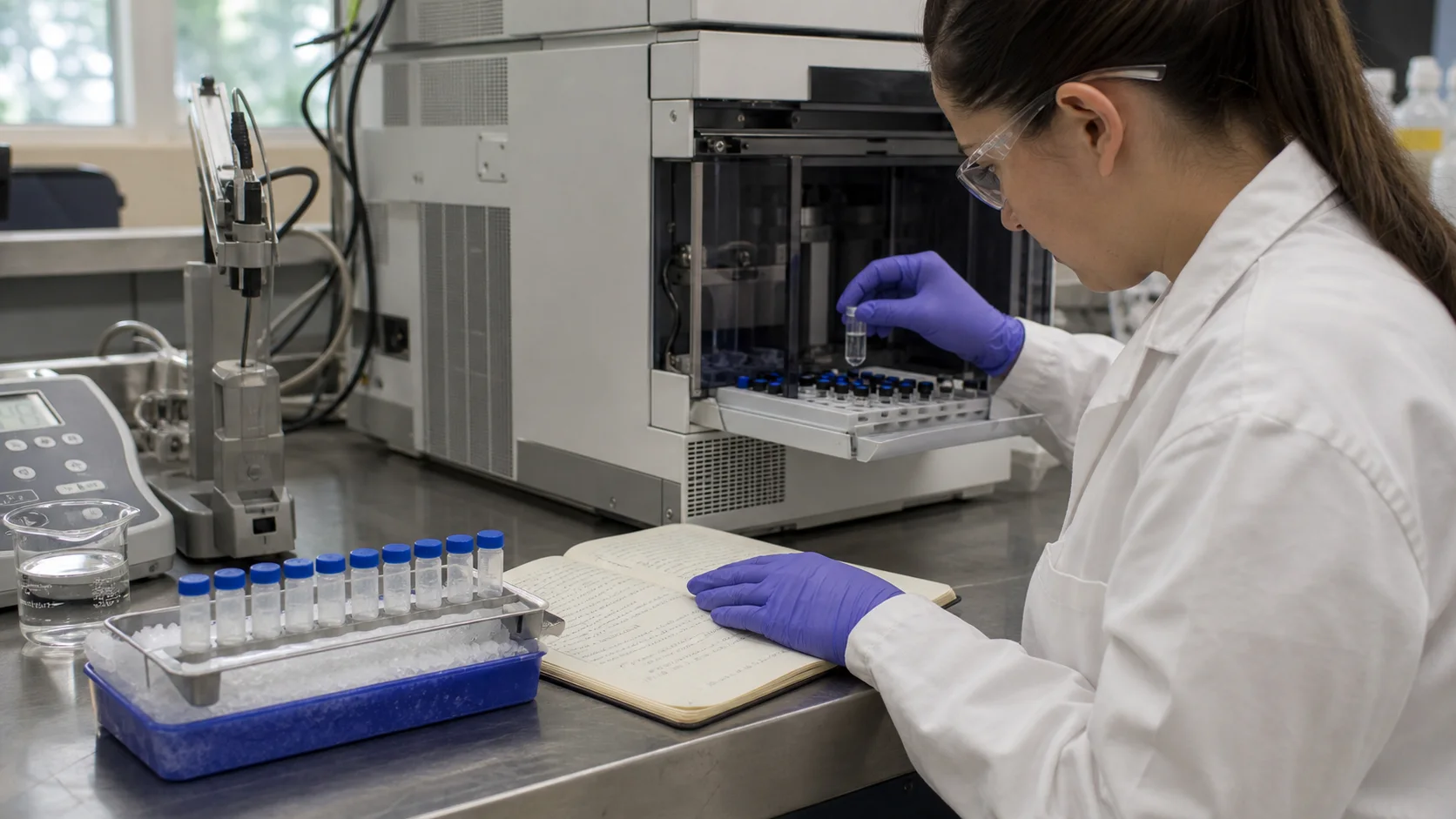
Accelerated degradation at pH 2.0, 4.5, 7.0 and 9.0 showed pH- and temperature-dependent pseudo-first-order loss. RP-HPLC, size-exclusion methods and MS/MS answered complementary questions about intact peptide and degradation products.
A clear solution and a matching molecular mass do not establish biological potency or exclude low-level aggregates. Finished-drug USP units belong to a validated formulation and should not be inferred for unrelated research material.
Editorial rule
State the exact material, form, model or population and endpoint supported by the cited record. Do not convert mechanistic plausibility, an animal result, an official finished-drug label or an analytical test into a claim about an unrelated catalog lot.
Sources & editorial method
This article discusses the source records listed below, with the study models and limitations stated alongside the findings. AI-assisted drafting and image generation were used. The reference list identifies the records behind this article; it is not an independent peer review or verification of a supplied catalog lot.
4 linked records are listed in the references below. Read the editorial and AI-assistance policy.
How to interpret this article
Source-checked on 2026-09-02. Null results, sample size, model/population limits and regulatory scope are retained. This is not medical advice, a customer case or validation of a catalog lot.
Research-use boundary: Catalog materials discussed on this website are for laboratory research, development and manufacturing use only, not for human or veterinary use. This content is not medical advice and does not provide administration instructions.
Primary records and authoritative sources
- DailyMed Oxytocin Injection, USP labelOfficial U.S. prescription label, updated March 2025.
- Oxytocin physiology, pharmacology and labor management2024 clinical review; PMID 37460365.
- Oxytocin degradation kinetics and productsPrimary formulation-degradation study; PMID 19343484.
- PubChem Oxytocin recordSequence, disulfide, formula and molecular weight; CID 439302.
Continue with structured records
Move from this editorial analysis to the product identity, filtered evidence and controlled terminology behind it.