


ANALYTICAL METHODS · PRACTICAL GUIDE
How Many nmol Are in 1 mg of Peptide? A Worked Conversion
Start with what mg and nmol mean, then convert a 1 mg sample one step at a time.
A vial says 1 mg, but the paper you are reading uses nmol. How do you compare them? You need one more number: the peptide’s molecular weight. Here is why, followed by a calculation you can repeat with your own figures.
What is the difference between mg and nmol?
Imagine weighing a handful of small beads and a handful of large beads. At the same weight, you will usually have more small beads. Peptide molecules follow the same idea: equal milligrams do not necessarily mean equal numbers of molecules.
A nanomole, written nmol, is a unit for an amount of molecules. Molecular weight, usually listed in g/mol for these calculations, connects that amount to its weight.

Work through 1 mg of an example peptide
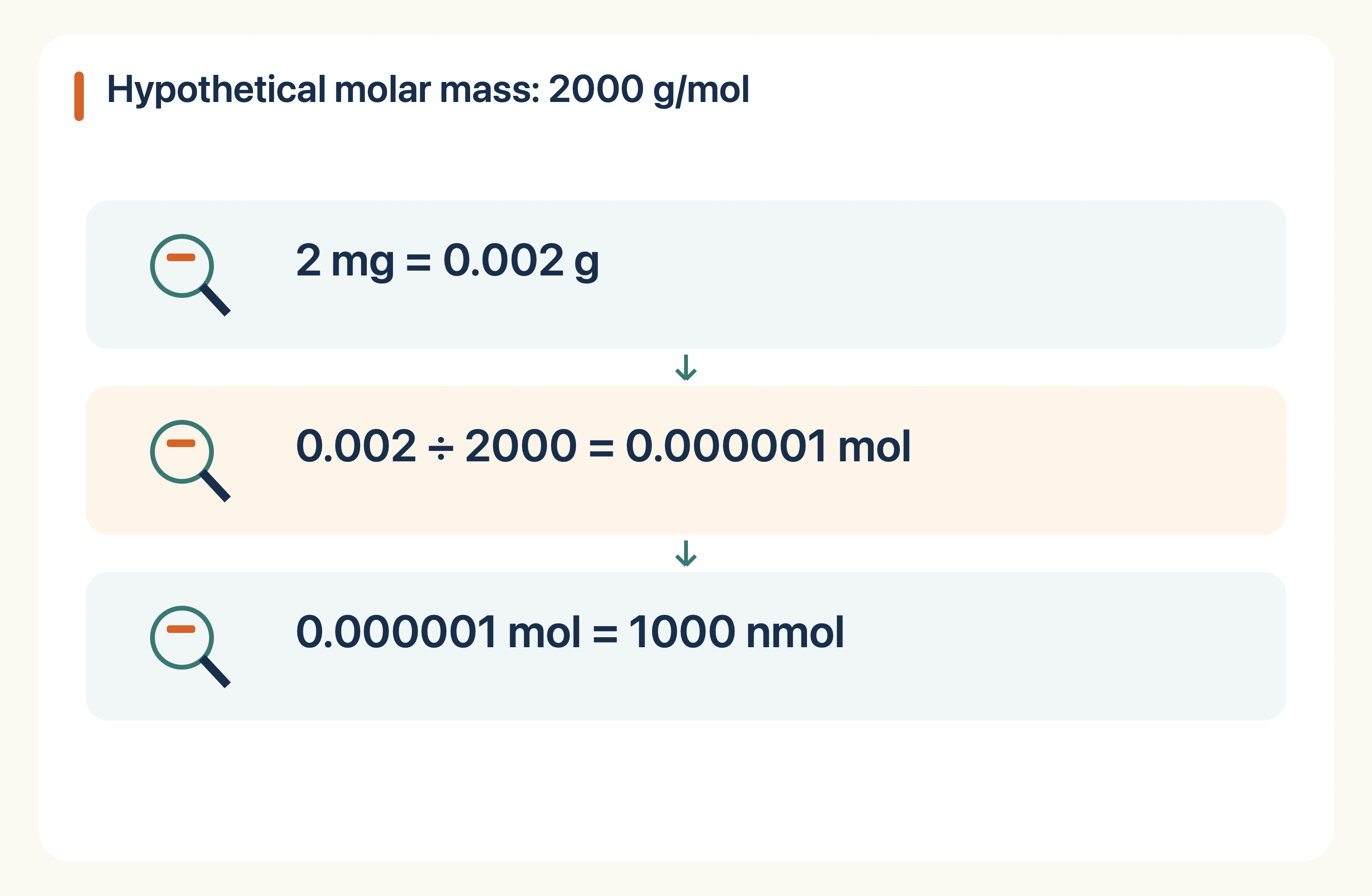
Use an example molecular weight of 2,000 g/mol. This is a round number for practice. Convert the sample mass to grams, divide by the molecular weight, then convert mol to nmol.
- 1 mg = 0.001 g.
- 0.001 ÷ 2,000 = 0.0000005 mol.
- Multiply by 1,000,000,000: the result is 500 nmol.
1 mg × 1,000,000 ÷ 2,000 = 500 nmol
Why another 1 mg vial gives a different answer
Keep the mass at 1 mg. If the molecular weight is 1,000 g/mol, you get 1,000 nmol. At 4,000 g/mol, you get 250 nmol. Each heavier molecule takes up a larger share of that 1 mg.
This is why a conversion for one peptide cannot simply be copied to another.

Does the vial’s powder weight equal peptide weight?
Not always. A powder may also contain water and salt components. Dividing the total powder weight by the peptide’s molecular weight gives an estimate based on powder weight, rather than a measured amount of the target peptide.
If a laboratory has measured the target peptide’s mass fraction, that result can support a correction. An HPLC purity percentage alone does not tell you that mass fraction.

Try 0.5 mg yourself
See the answer
0.5 × 1,000,000 ÷ 2,500 = 200 nmol. Keep a note of which molecular weight and mass you used.
You can use the same formula for other values. If the answer is a thousand times too large or small, check mg versus g and nmol versus µmol first.
Converting quantities for MOTS-c or KPV
When comparing MOTS-c and KPV, use the molecular weight for each exact product form. Check whether the stated quantity is total powder or a measured peptide amount. These two details make the conversion useful, rather than just a correct calculation.
Discuss material and document requirements with NHD · Continue with the analytical guide
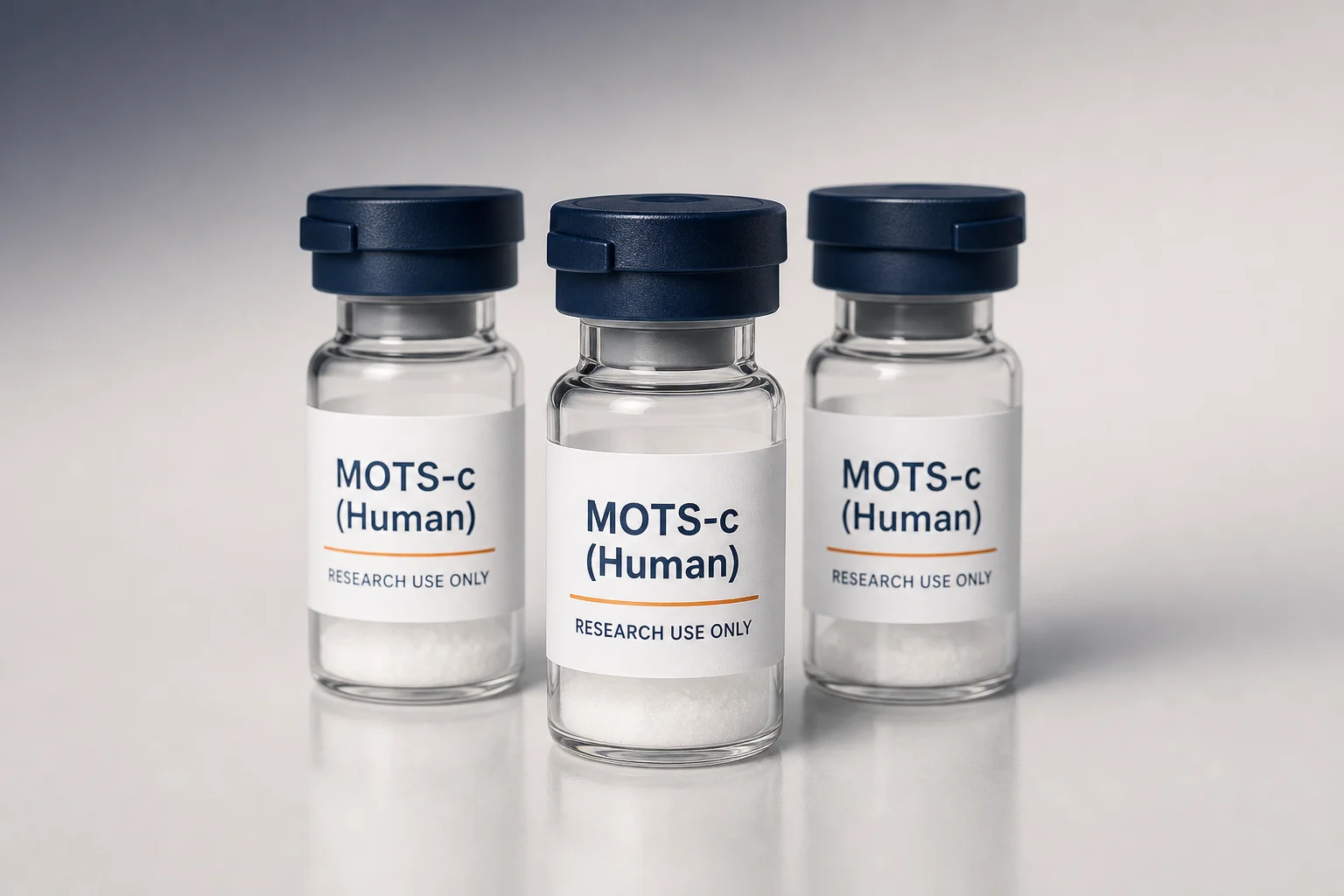 MOTS-c (Human)
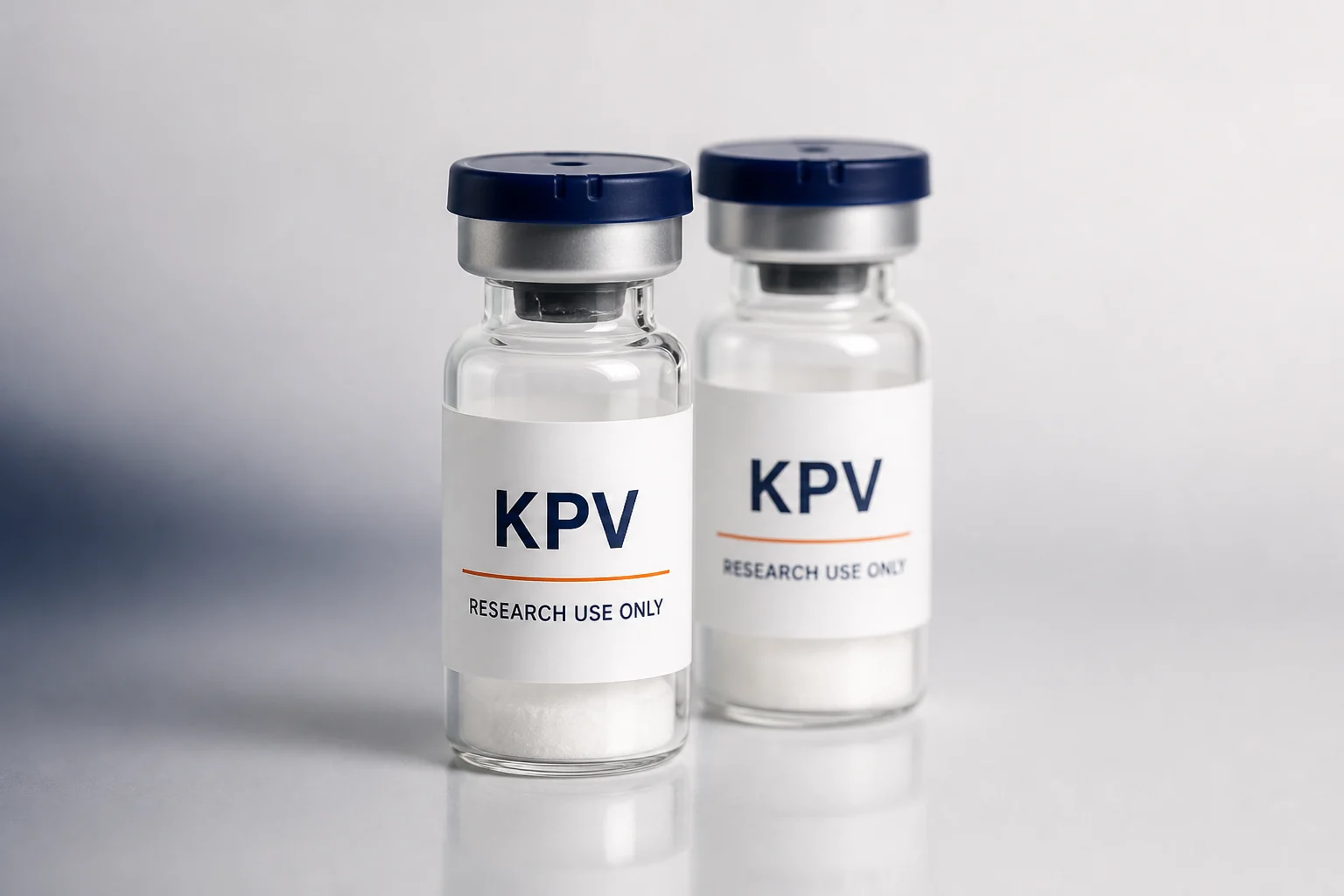 KPV