


Research Supplies & Solvents · Source-reviewed dossier
Bacteriostatic Water
Source-Reviewed Research Dossier
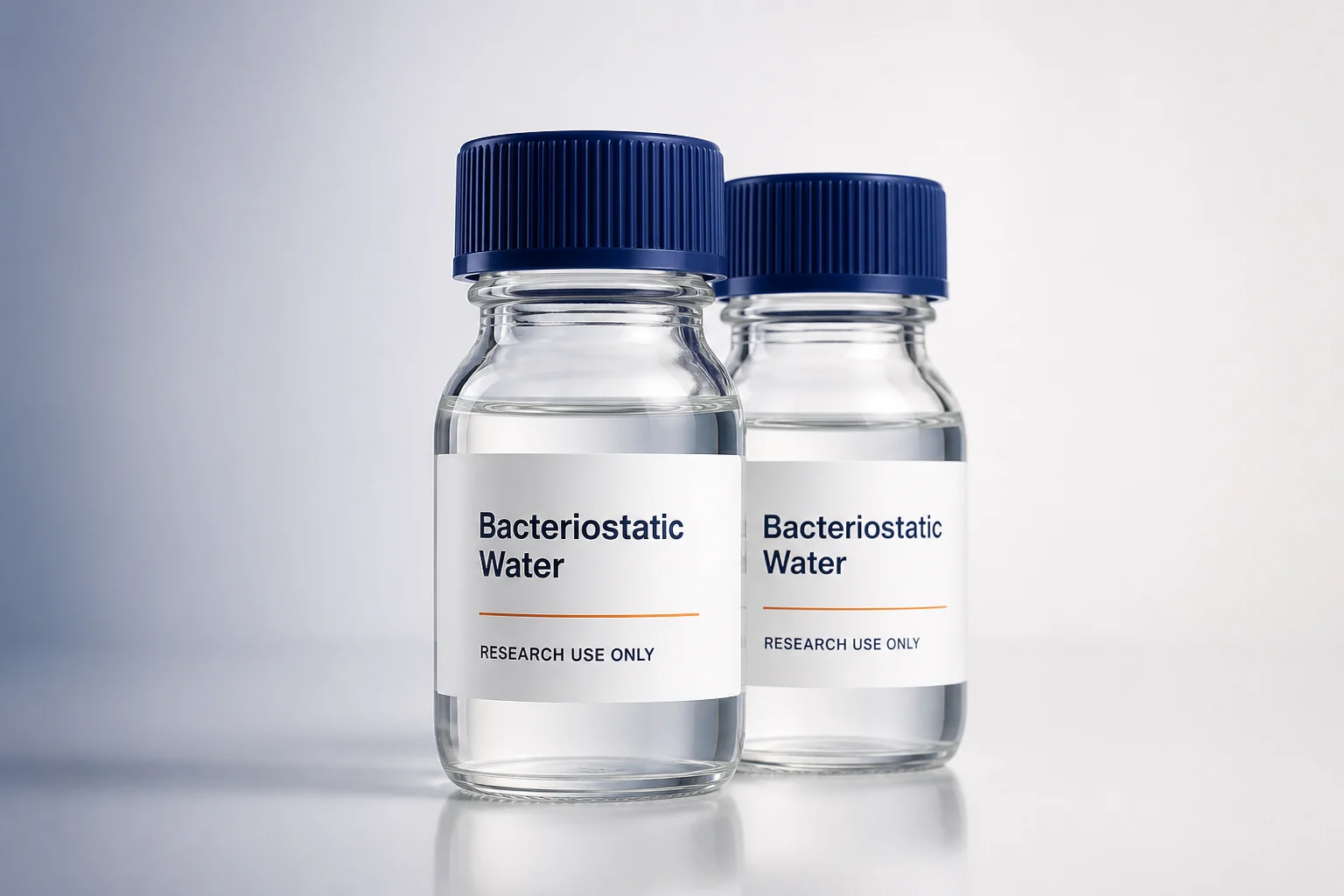
Bacteriostatic Water is a preserved aqueous diluent. Current U.S. labeling describes Bacteriostatic Water for Injection, USP as sterile, nonpyrogenic water containing 0.9% (9 mg/mL) benzyl alcohol in a multiple-dose container and warns against neonatal use. The catalog item must be checked against its own specification and is not represented as a branded finished drug.
Compound overview
Shared values below are consolidated from the current catalog record. They are not independent verification or lot results; the current product specification and lot COA control.
Product identity
- Product type
- Research solution or laboratory supply
- Catalog family
- Bacteriostatic Water
- Research category
- Research Supplies & Solvents
- Catalog CAS RN
- 7732-18-5
- Catalog molecular formula
- H2O
- Catalog molecular weight
- 18.02 g/mol
- Identity boundary
- Water is the vehicle; benzyl alcohol concentration, pH and container details belong to the complete formulation specification.
- Evidence status
- Authoritative labeling and formulation-compatibility evidence
- Intended use
- Research, development and manufacturing use only
Literature reference parameters
- Compound or material class
- Preserved sterile diluentCatalog-family identity
- Evidence scope
- Authoritative labeling and formulation-compatibility evidenceDo not generalize beyond the cited model
- Source review
- Primary or authoritative records linked belowChecked 2026-09-01
Identity safeguard Reference identifiers above describe the literature compound record. The supplied form, formula, molecular weight, purity and storage conditions must be verified against the product-specific specification and lot COA.
How Bacteriostatic Water is studied
A target-to-pathway view grounded in the linked research records.
Reported research findings
What published studies report about Bacteriostatic Water
Reported outcomes are paired with their experimental model and evidence boundary.
0.9% benzyl alcohol is the labeled preservative
The referenced U.S. label states 9 mg/mL benzyl alcohol, multiple-dose use and a neonatal warning.
This is a regulated finished-product label used to establish the formulation concept, not evidence that this catalog lot is the same product.
Read the primary studyPreservative compatibility is protein-specific
Benzyl alcohol promoted aggregation of recombinant IL-1 receptor antagonist under some lyophilized-formulation conditions.
PMID 15614819 demonstrates a compatibility risk; it does not predict behavior for every peptide.
Read the primary studyCatalog options
Variant specifications
Pack-level catalog data; lot-level controls remain document-specific.
Specification & documents for WA3
Product specification
Laboratory research solution · 3 ml/vial nominal fill · 10-vial pack · concentration, formulation and fill volume controlled by lot specification.
Lot documentation
Request by lot: CoA, concentration and formulation
Specification & documents for WA10
Product specification
Laboratory research solution · 10 ml/vial nominal fill · 10-vial pack · concentration, formulation and fill volume controlled by lot specification.
Lot documentation
Request by lot: CoA, concentration and formulation
Quality documentation
Document availability is stated honestly and can vary by catalog variant or lot.
Analytical interpretation
Interpret the documents, not just the headline number.
Use the source-reviewed guide to separate chromatographic area purity, quantitative assay, LC-MS identity, composition and stability evidence before comparing variants or requesting a lot record.
Open the Quality & Documentation HubHPLC area ≠ assayA dominant peak does not establish target mass fraction.
Intact mass ≠ full sequenceIdentity strength depends on resolution and orthogonal evidence.
Counterions affect contentWater, salt form and solvents change the as-is composition.
Storage needs a data basisShipping practice is not the same as stability evidence.
Evidence map
Research context
Published studies and regulatory records, not customer testimonials or usage guidance.
0.9% benzyl alcohol is the labeled preservative
This is a regulated finished-product label used to establish the formulation concept, not evidence that this catalog lot is the same product.
View primary recordPreservative compatibility is protein-specific
PMID 15614819 demonstrates a compatibility risk; it does not predict behavior for every peptide.
View primary recordCurated references
Third-party publications selected for direct relevance.
-
01
Authoritative label
Bacteriostatic Water for Injection, USP
DailyMed current labeling record; benzyl alcohol 9 mg/mL.
-
02
Formulation study
Effects of benzyl alcohol on protein aggregation
Zhang Y, et al. Journal of Pharmaceutical Sciences. 2005. PMID 15614819.
Bacteriostatic Water questions
Concise answers for researchers comparing identity, evidence and catalog variants.
What is Bacteriostatic Water?
Bacteriostatic Water is a preserved aqueous diluent. Current U.S. labeling describes Bacteriostatic Water for Injection, USP as sterile, nonpyrogenic water containing 0.9% (9 mg/mL) benzyl alcohol in a multiple-dose container and warns against neonatal use. The catalog item must be checked against its own specification and is not represented as a branded finished drug.
What evidence is available for Bacteriostatic Water?
Authoritative labeling defines the common 0.9% benzyl-alcohol formulation, while published work shows why protein-specific compatibility testing is necessary.
Does the cited research validate this catalog material?
No. The cited records describe their own intervention, formulation, model and controls. They do not verify the identity, purity, sterility, safety or efficacy of a catalog lot.
Which quality documents can be requested?
A lot-specific COA, product specification sheet and analytical method summary can be requested where applicable.
How should Bacteriostatic Water be stored?
Store at 2-8 °C. Do not freeze. Protect from light. Confirm the applicable storage statement on the product-specific specification and lot documentation.
Knowledge tools
Continue with structured evidence
Move from this dossier into canonical evidence maps, verified status records, analytical interpretation and laboratory calculations.
Claims were checked against the linked primary publication, regulatory label or authoritative compound record. Published findings stay attached to their study model, formulation and route. Catalog identity and lot quality remain controlled by the applicable specification and lot-specific documents.
Technical procurement
Ready to request a quote?
Selected: WA3 · 3 ml × 10 vials