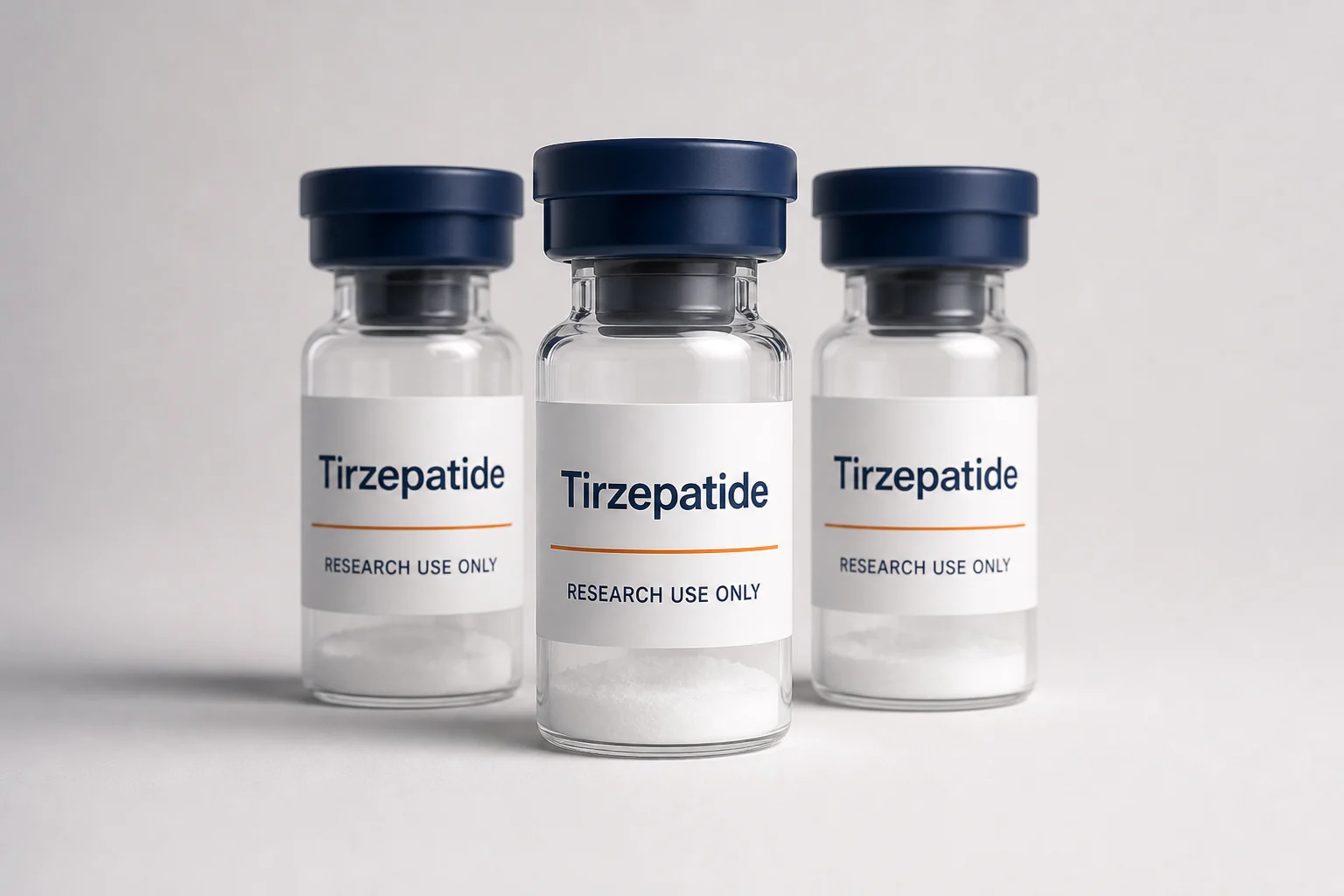
For research, development and manufacturing use only. Not for human or veterinary use.
Metabolic & Weight Loss · GIP/GLP-1 research
Tirzepatide
Scientific Product Dossier
Tirzepatide is a peptide that activates two hormone receptors, GIP and GLP-1. These signals help explain research into appetite, body weight and glucose control. Large human trials tested regulated drug preparations, not NHD research vials. This page explains the measured results in plain language and keeps them separate from the identity, specifications and document status of catalog material. For a research quotation, select the relevant variant and tell us the amount and records you need.
Research use only Lot documents on request
AI-generated packaging mockup for catalog navigation. It is not a photograph of an actual supplied lot; container, label and presentation may vary.
Product family
Compound overview
Shared values below are consolidated from the current catalog record. They are not independent verification or lot results; request the applicable product specification and ask which lot records are available before ordering.
C225H348N48O68 · 4813.53 DaFDA MOUNJARO prescribing information, section 11 (December 2025). Molecular identity of the active ingredient; not a measurement of catalog stock.
Structural features in the reference label
Aib at positions 2 and 13; C-terminal amide; lipid-linked Lys20These structural features matter when matching a sequence, molecular form or analytical reference.
Identity safeguard Reference identifiers above describe the literature compound record. Confirm the supplied form, formula, molecular weight, purity and storage conditions against the applicable product specification and any available lot records.
Mechanism of action
How Tirzepatide is studied
A target-to-pathway view grounded in the linked research records.
Appetite and Food Intake
Tirzepatide activates GIP and GLP-1 receptors, which are part of the body's natural response to a meal. The FDA describes the approved medicine as reducing appetite and food intake through this dual action. Because one molecule can engage both receptors, researchers continue to study how this combined signaling affects eating behavior in controlled settings.
Body Weight Over Time
Weight-loss trials measure each participant's change from starting weight over many months. Results vary by population, duration, and regimen, so a single percentage needs context. In the main obesity trial, body weight fell substantially and stayed lower throughout treatment. These effects belong to the tested drug product, not to catalog research material.
Blood Sugar and Insulin
The approved-drug label describes increased insulin release when blood sugar is high and reduced glucagon, a hormone that raises blood sugar. This supports blood-sugar control in people with type 2 diabetes. The clinical effects are established for the regulated medicine, not for third-party research compounds.
Reported research findings
What published studies report about Tirzepatide
Reported outcomes are paired with their experimental model and evidence boundary.
Human clinical trial
SURMOUNT-1: 2,539 adults, 72 weeks
In adults with obesity or overweight without diabetes, mean weight reductions were 15.0%, 19.5% and 20.9% across the three tirzepatide groups, versus 3.1% with placebo.
These are study-group averages. Gastrointestinal events were common. The intervention and monitoring in the trial are different from catalogue research material.
In 1,879 adults with type 2 diabetes, HbA1c fell by 2.01, 2.24 and 2.30 percentage points across tirzepatide groups, versus 1.86 points with the studied semaglutide comparator.
HbA1c reflects average glucose over roughly two to three months. The comparison applies to this trial’s regimens and population, not every product or patient.
Approved-product benefits sit beside major safety information
Current U.S. labeling includes a boxed warning based on thyroid C-cell tumor findings in rats, contraindications and common gastrointestinal adverse reactions.
This safety information belongs to the named regulated finished drug; it neither validates nor characterizes third-party catalog material.
Translation boundary: findings are limited to the evidence level stated on each card. Experimental protocol quantities are research details, not usage instructions.
Single-component peptide · 5 mg/vial nominal · 10-vial pack · supplied form and release limits controlled by lot specification.
Lot documentation
Document availability and scope must be confirmed for this variant and lot in the written quotation. A catalog description is not a lot-specific test result.
Catalog no.TR10
Pack size10 mg × 10 vials
Specification & documents for TR10
Product specification
Single-component peptide · 10 mg/vial nominal · 10-vial pack · supplied form and release limits controlled by lot specification.
Lot documentation
Document availability and scope must be confirmed for this variant and lot in the written quotation. A catalog description is not a lot-specific test result.
Catalog no.TR15
Pack size15 mg × 10 vials
Specification & documents for TR15
Product specification
Single-component peptide · 15 mg/vial nominal · 10-vial pack · supplied form and release limits controlled by lot specification.
Lot documentation
Document availability and scope must be confirmed for this variant and lot in the written quotation. A catalog description is not a lot-specific test result.
Catalog no.TR20
Pack size20 mg × 10 vials
Specification & documents for TR20
Product specification
Single-component peptide · 20 mg/vial nominal · 10-vial pack · supplied form and release limits controlled by lot specification.
Lot documentation
Document availability and scope must be confirmed for this variant and lot in the written quotation. A catalog description is not a lot-specific test result.
Catalog no.TR30
Pack size30 mg × 10 vials
Specification & documents for TR30
Product specification
Single-component peptide · 30 mg/vial nominal · 10-vial pack · supplied form and release limits controlled by lot specification.
Lot documentation
Document availability and scope must be confirmed for this variant and lot in the written quotation. A catalog description is not a lot-specific test result.
Catalog no.TR40
Pack size40 mg × 10 vials
Specification & documents for TR40
Product specification
Single-component peptide · 40 mg/vial nominal · 10-vial pack · supplied form and release limits controlled by lot specification.
Lot documentation
Document availability and scope must be confirmed for this variant and lot in the written quotation. A catalog description is not a lot-specific test result.
Catalog no.TR50
Pack size50 mg × 10 vials
Specification & documents for TR50
Product specification
Single-component peptide · 50 mg/vial nominal · 10-vial pack · supplied form and release limits controlled by lot specification.
Lot documentation
Document availability and scope must be confirmed for this variant and lot in the written quotation. A catalog description is not a lot-specific test result.
Catalog no.TR60
Pack size60 mg × 10 vials
Specification & documents for TR60
Product specification
Single-component peptide · 60 mg/vial nominal · 10-vial pack · supplied form and release limits controlled by lot specification.
Lot documentation
Document availability and scope must be confirmed for this variant and lot in the written quotation. A catalog description is not a lot-specific test result.
Catalog no.TR100
Pack size100 mg × 10 vials
Specification & documents for TR100
Product specification
Single-component peptide · 100 mg/vial nominal · 10-vial pack · supplied form and release limits controlled by lot specification.
Lot documentation
Document availability and scope must be confirmed for this variant and lot in the written quotation. A catalog description is not a lot-specific test result.
Catalog no.TR120
Pack size120 mg × 10 vials
Specification & documents for TR120
Product specification
Single-component peptide · 120 mg/vial nominal · 10-vial pack · supplied form and release limits controlled by lot specification.
Lot documentation
Document availability and scope must be confirmed for this variant and lot in the written quotation. A catalog description is not a lot-specific test result.
Quality system
Quality documentation
A listed document is not proof of availability for this lot. Ask the team to confirm the current COA status and the scope of any other records before ordering.
Lot-specific Certificate of AnalysisAvailability and scope must be confirmed for the selected catalog variant and lot
Interpret the documents, not just the headline number.
Use the source-reviewed guide to separate chromatographic area purity, quantitative assay, LC-MS identity, composition and stability evidence before comparing variants or requesting a lot record.
HPLC area ≠ assayA dominant peak does not establish target mass fraction.
Intact mass ≠ full sequenceIdentity strength depends on resolution and orthogonal evidence.
Counterions affect contentWater, salt form and solvents change the as-is composition.
Storage needs a data basisShipping practice is not the same as stability evidence.
Evidence map
Research context
Published studies and regulatory records, not customer testimonials or usage guidance.
Phase 3
SURMOUNT-1 obesity trial
Randomized, double-blind, placebo-controlled human research over 72 weeks. Results are clinical evidence for the studied intervention, not a specification for this catalog lot.
Evidence boundary: each card states its evidence type. Human trials and regulatory records describe the studied or regulated intervention; preclinical records remain model-specific. None verifies the identity, quality, safety or efficacy of this catalog lot or provides usage instructions.
Literature basis
Curated references
Third-party publications selected for direct relevance.
U.S. Food and Drug Administration. Current Drugs@FDA label for NDA 217806.
FDA record
Research FAQ
Tirzepatide questions
Concise answers for researchers comparing identity, evidence and catalog variants.
What effects are studied for Tirzepatide?
In human trials, the tested drug produced substantial, lasting weight loss in adults with obesity and improved long-term blood-sugar control in adults with type 2 diabetes. These effects are linked to GIP and GLP-1 receptor activation. The evidence comes from regulated medicines tested under specific protocols, not from catalog research material.
How should the Tirzepatide research findings be understood?
The approved-drug label describes increased insulin release when blood sugar is high and reduced glucagon, a hormone that raises blood sugar. This supports blood-sugar control in people with type 2 diabetes. The clinical effects are established for the regulated medicine, not for third-party research compounds.
What are the main effects of tirzepatide medicines?
The effects discussed here are reduced appetite and food intake, weight reduction and improved blood-sugar control. The evidence concerns approved medicines and clinical trial interventions, not NHD research vials.
Are weight-loss percentages directly comparable with retatrutide?
Not when the numbers come from separate trials. Different participants, follow-up periods and analyses can change the results. A direct comparison needs an appropriate head-to-head study.
Is this catalog tirzepatide an FDA-approved medicine?
No. FDA approval applies to specific regulated branded products. This catalog entry is research, development and manufacturing material only.
Which quality documents can be requested?
Tell us which records your project requires. Availability and scope must be confirmed for the selected material. Published papers are not batch certificates, and this page does not confirm that a lot-specific COA is available.
How should Tirzepatide be stored?
Request the storage conditions for the exact supplied form and selected variant. A temperature stated for another supplier or a clinical drug preparation is not a verified storage specification for NHD catalog material.
Does an improvement in a trial mean every research vial has the same effect?
No. A trial tests a defined preparation in a defined population, with a protocol and monitoring. Catalog material must be evaluated for its own identity and research specifications. A published clinical result does not verify a supplied batch.
What should I include in a research quotation request?
Send the exact product name, selected catalog variant, required quantity, destination and documents needed for the project. Specify whether the amount refers to powder mass or measured peptide content. Availability, price, lead time and document scope require confirmation.
Does a published study replace a lot-specific analytical report?
No. A paper describes the material and methods used in that study. It does not establish the identity, purity or content of a different supplied lot. Ask which records actually apply to the requested material; do not assume a COA is available.
Knowledge center
Related insights
Owned educational content connected to this family.
An evidence-led explanation of tirzepatide dual receptor agonism and the endpoints measured in SURPASS and SURMOUNT trials, with clear limits on applying drug data…
Updated October 13, 2026
ArticleFDA regulatory records and product-quality principles
Published-study results are tied to the linked records and kept separate from catalog-lot claims. Imported purity, storage and document-availability templates have been removed pending product- and lot-specific confirmation.
Editorial status: Source review complete · 2026-10-09 · Not independent medical review · Review policy