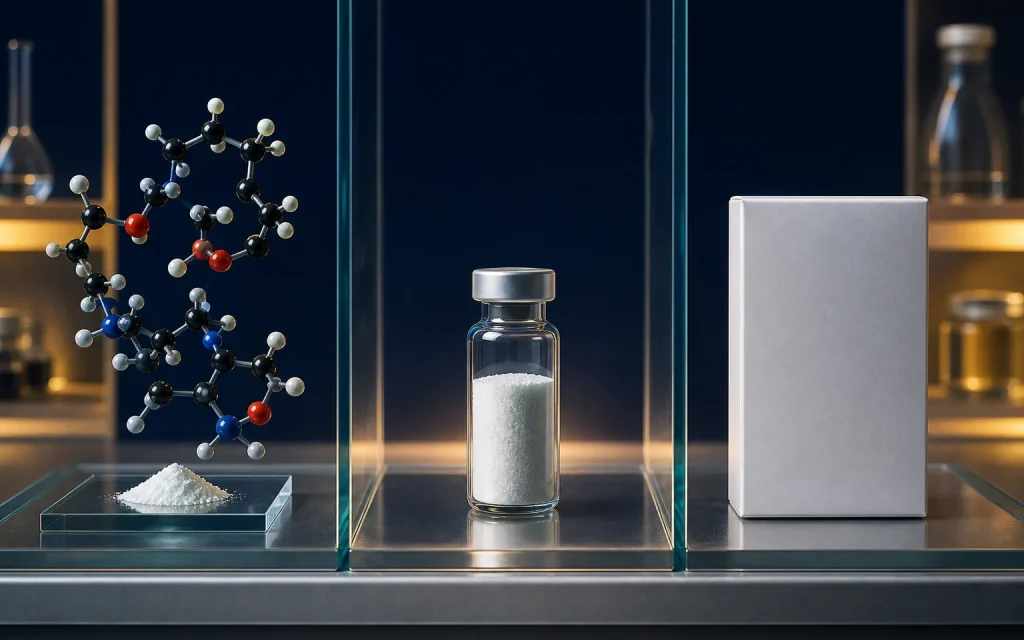
SS-31 and elamipretide are names used around the same mitochondrial-targeted peptide, but Forzinity is a specific FDA-approved finished drug with an approved application, formulation, manufacturing controls and label. A matching ingredient name does not create pharmaceutical equivalence.
What the record shows
- The approved indication is limited to Barth syndrome patients weighing at least 30 kg.
- Accelerated approval does not remove the requirement for confirmatory evidence.
- A catalog SS-31 lot should be described by its own analytical record, not by borrowing the approved product’s status.

The identity and evidence boundary
The FDA application includes product-specific chemistry, manufacturing, safety and labeling information. None of that transfers automatically to a separate material carrying an elamipretide or SS-31 name.
What belongs in the material record
Research copy should state what the catalog lot is and how it was tested. It should not say “FDA-approved SS-31” unless it is discussing the approved finished product in its exact regulatory context.
Editorial rule
Use the exact intervention name, model, population and endpoint from the cited record. Do not convert an association, mechanism, animal result, approved finished-drug record or analytical test into a claim about an unrelated catalog lot.
Sources & editorial method
The editorial workflow starts with linked peer-reviewed papers, trial registries or regulatory records; extracts the population or model, endpoints, numerical results and limitations; and separates the studied intervention from catalog material. AI-assisted drafting was used to structure the first version. Claims, figures, evidence labels and limitations were checked against the linked records in the site editorial workflow. This is not independent peer review.
3 linked records are listed in the references below. Read the editorial and AI-assistance policy.
How to interpret this article
Source-checked on 2026-08-28. Null findings and study limitations are retained. This is not independent peer review, medical advice, a customer case, or validation of a catalog lot.
Research-use boundary: Catalog materials discussed on this website are for laboratory research, development and manufacturing use only, not for human or veterinary use. This content is not medical advice and does not provide administration instructions.
Primary records and authoritative sources
- FDA Drug Trials Snapshot: ForzinityU.S. FDA. Approval date September 19, 2025; SPIBA-201 population and endpoint record.
- Elamipretide phase 2/3 trial in Barth syndromeReid Thompson W, et al. Genetics in Medicine. 2021. PMID 33077895.
- FDA accelerated approval announcement for ForzinityApproval scope and confirmatory requirement.
Continue with structured records
Move from this editorial analysis to the product identity, filtered evidence and controlled terminology behind it.