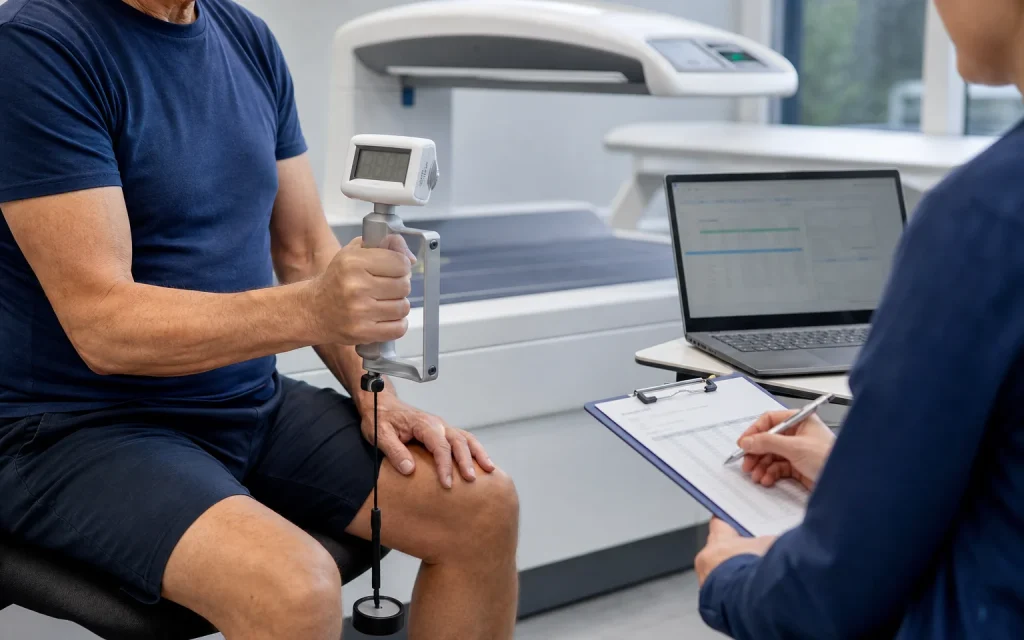
A two-year trial in 65 healthy older adults is often quoted for lean-mass change. The same paper also reported no improvement in strength or function, increased body weight, higher fasting glucose and reduced insulin sensitivity.
What the record shows
- Fat-free mass increased by 1.1 kg with MK-677 and fell by 0.5 kg with placebo.
- The change did not translate into improved strength or physical function.
- Fasting glucose rose by 0.3 mmol/L and insulin sensitivity decreased.

Study record
The trial shows why a surrogate or composition endpoint cannot stand in for a patient-relevant outcome. Raising GH and IGF-1 and changing fat-free mass did not improve the measured functional outcomes.
Results in context
The authors also reported increased appetite, mild transient lower-extremity edema and muscle pain among frequent adverse effects. Glucose findings move in an unfavorable direction and deserve equal prominence beside the lean-mass result.
A separate hip-fracture phase IIb study enrolled 123 older patients and ended early after a congestive-heart-failure safety signal. Its mixed functional results do not repair that risk signal.
What this study cannot answer
The study population was healthy older adults, not athletes or people seeking body recomposition.
The data come from a defined investigational product and protocol, not an unverified commercial material.
Sources & editorial method
The editorial workflow starts with linked peer-reviewed papers, trial registries or regulatory records; extracts the population or model, endpoints, numerical results and limitations; and separates the studied intervention from catalog material. AI-assisted drafting was used to structure the first version. Claims, figures, evidence labels and limitations were checked against the linked records in the site editorial workflow. This is not independent peer review.
3 linked records are listed in the references below. Read the editorial and AI-assistance policy.
How to interpret this article
Source-checked on 2026-08-28. Null findings and study limitations are retained. This is not independent peer review, medical advice, a customer case, or validation of a catalog lot.
Research-use boundary: Catalog materials discussed on this website are for laboratory research, development and manufacturing use only, not for human or veterinary use. This content is not medical advice and does not provide administration instructions.
Primary records and authoritative sources
- MK-677 in healthy older adultsNass R, et al. Annals of Internal Medicine. 2008. PMID 18981485.
- MK-0677 phase IIb hip-fracture studyAdunsky A, et al. Archives of Gerontology and Geriatrics. 2011. PMID 21067829.
- FDA Pharmacy Compounding Advisory Committee meeting materialsFDA assessment materials for ibutamoren and ipamorelin.
Continue with structured records
Move from this editorial analysis to the product identity, filtered evidence and controlled terminology behind it.