Lot-document scope confirmed before quotation · Research use only
  • Specification Review
  • Lot Documents on Request
  • Business Support · Xi’an
  • Destination Eligibility Confirmed
西安诺和达生物科技有限公司

Knowledge library · Product status

Product approval and research status

Has a medicine been approved, is it still in a trial, or has an ingredient appeared in a compounding review? Start here to understand what each statement means, then open the original source for the product you are checking.

This page focuses on U.S. FDA records and the developer’s public information. For stock and delivery dates, please contact our team.

Sources checked

First, understand these three terms

They answer different questions. Read the full name and the type of record before drawing a conclusion.

Approved medicine

FDA approval concerns a specific medicine and its approved uses. Look for the brand, manufacturer, dosage form and official label.

Example: Zepbound is a finished medicine containing tirzepatide.

Clinical research

Researchers are testing a medicine’s effects and safety in people. A Phase 3 result is a study result; approval requires a separate regulatory decision.

Example: Lilly describes retatrutide as investigational.

Compounding review

The review considers an ingredient used to prepare compounded medicines. A staff proposal or committee recommendation is a step in that process.

Example: discussion of a 503A ingredient does not mean a finished medicine has been approved.

Check a product’s source record

Each card explains what the linked record actually covers. Older documents are dated so you can tell a historical review from a newer update.

5 products

Clinical research

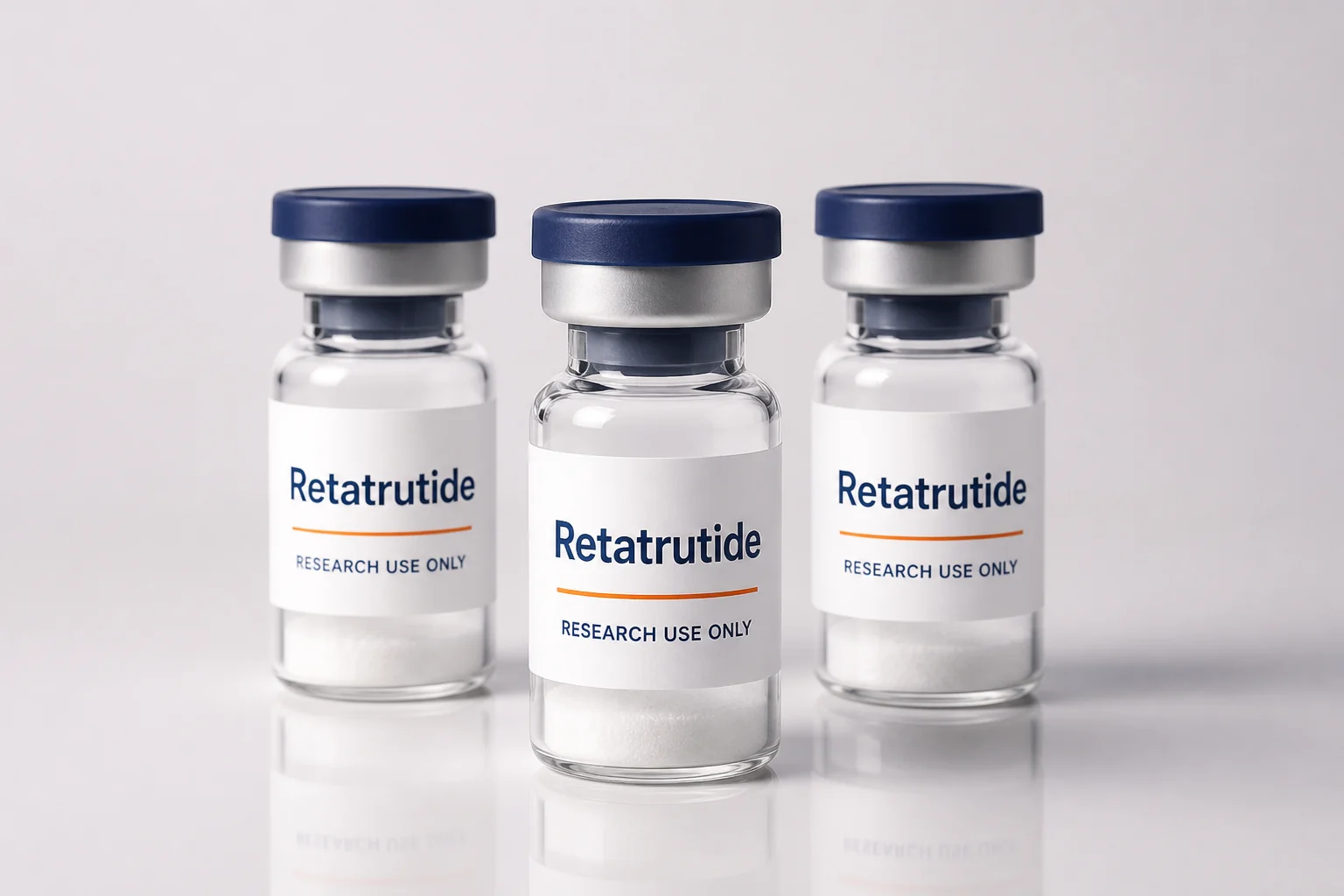
Retatrutide: still investigational

Source date
September 2026

Lilly’s September 2026 information describes retatrutide as an investigational medicine in Phase 3 trials and states that it is not FDA approved. Published results can help explain its development; they do not replace an approval decision.

What to check

Check the trial name and the material used. A catalog material is not the medicine supplied in Lilly’s trials.

Approved finished medicines

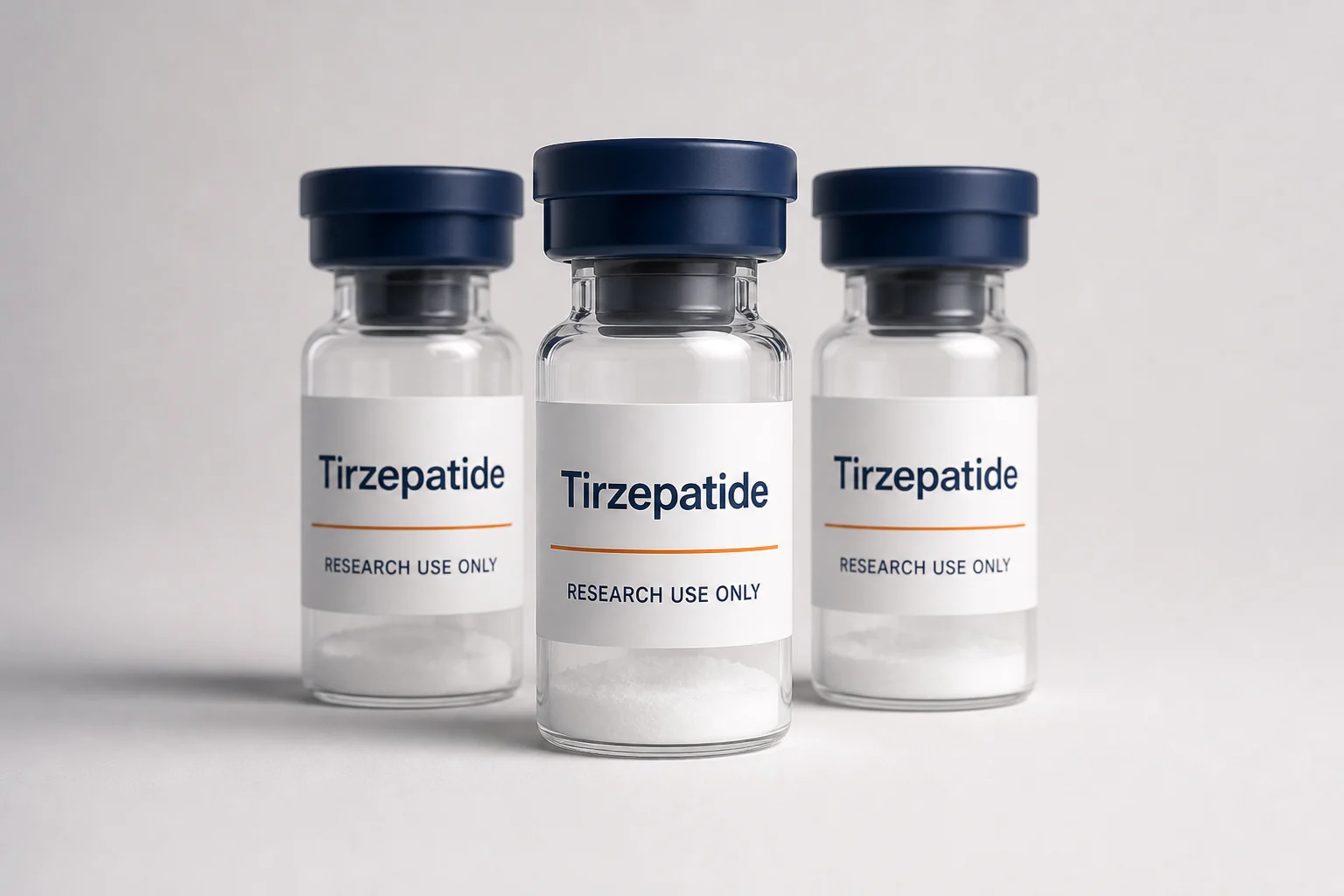
Tirzepatide: read the medicine’s full name

Source date
8 November 2023 · FDA approval announcement

FDA approved Zepbound in November 2023. Tirzepatide is also the active ingredient in Mounjaro. These approvals concern the named finished medicines; a research material sold under the ingredient name does not inherit that approval.

What to check

Find the approved medicine and its current label. Confirm the identity and batch documents of research materials separately.

Compounding review

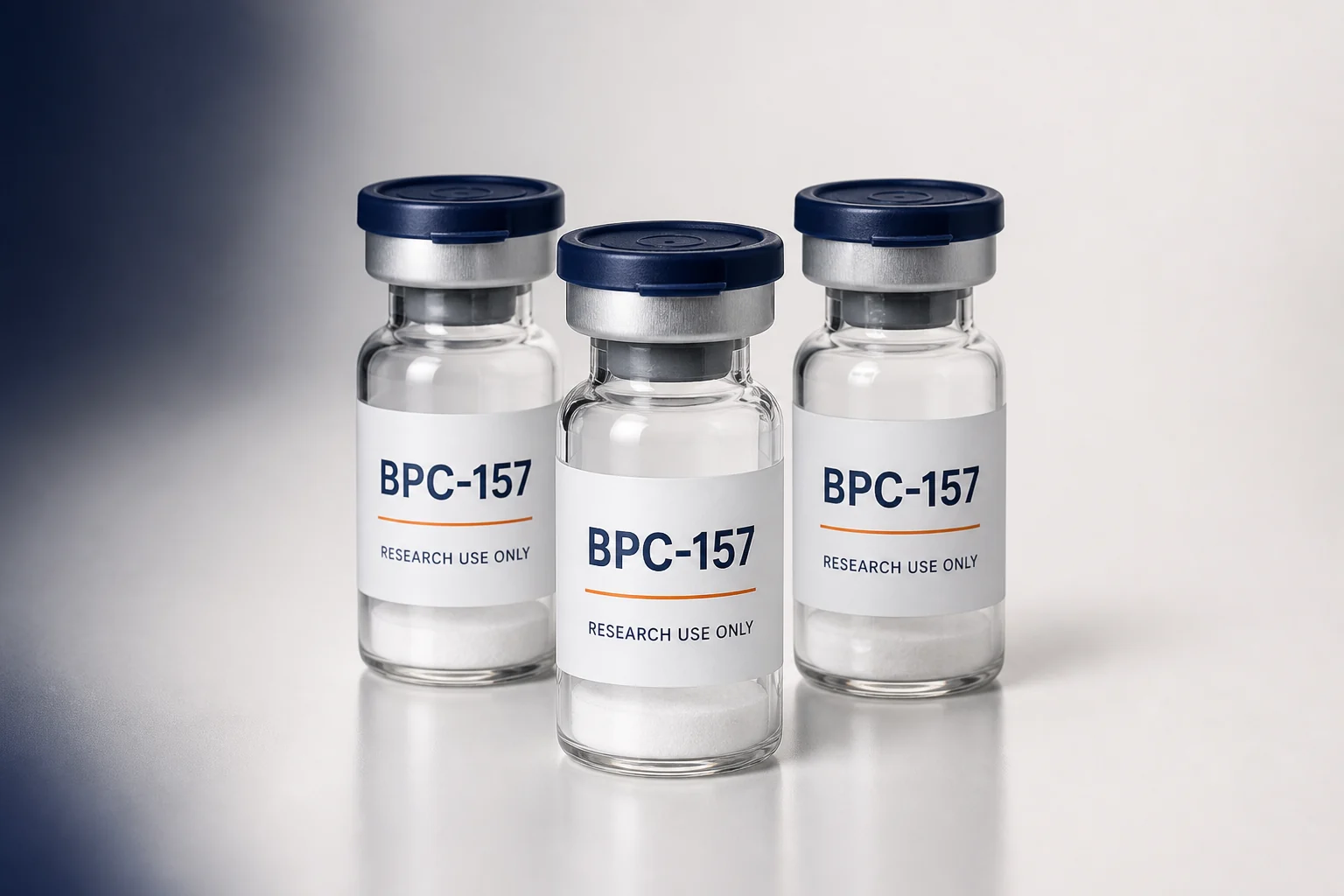
BPC-157: what did the FDA meeting discuss?

Source date
23–24 July 2026 · FDA meeting

The July 2026 FDA meeting considered BPC-157 free base and acetate for the 503A Bulks List. This is an ingredient-list discussion. The FDA explains that advisory committee recommendations are not binding.

What to check

Separate FDA staff briefing documents, committee advice and a final agency decision. Use the FDA record for later updates.

Compounding review

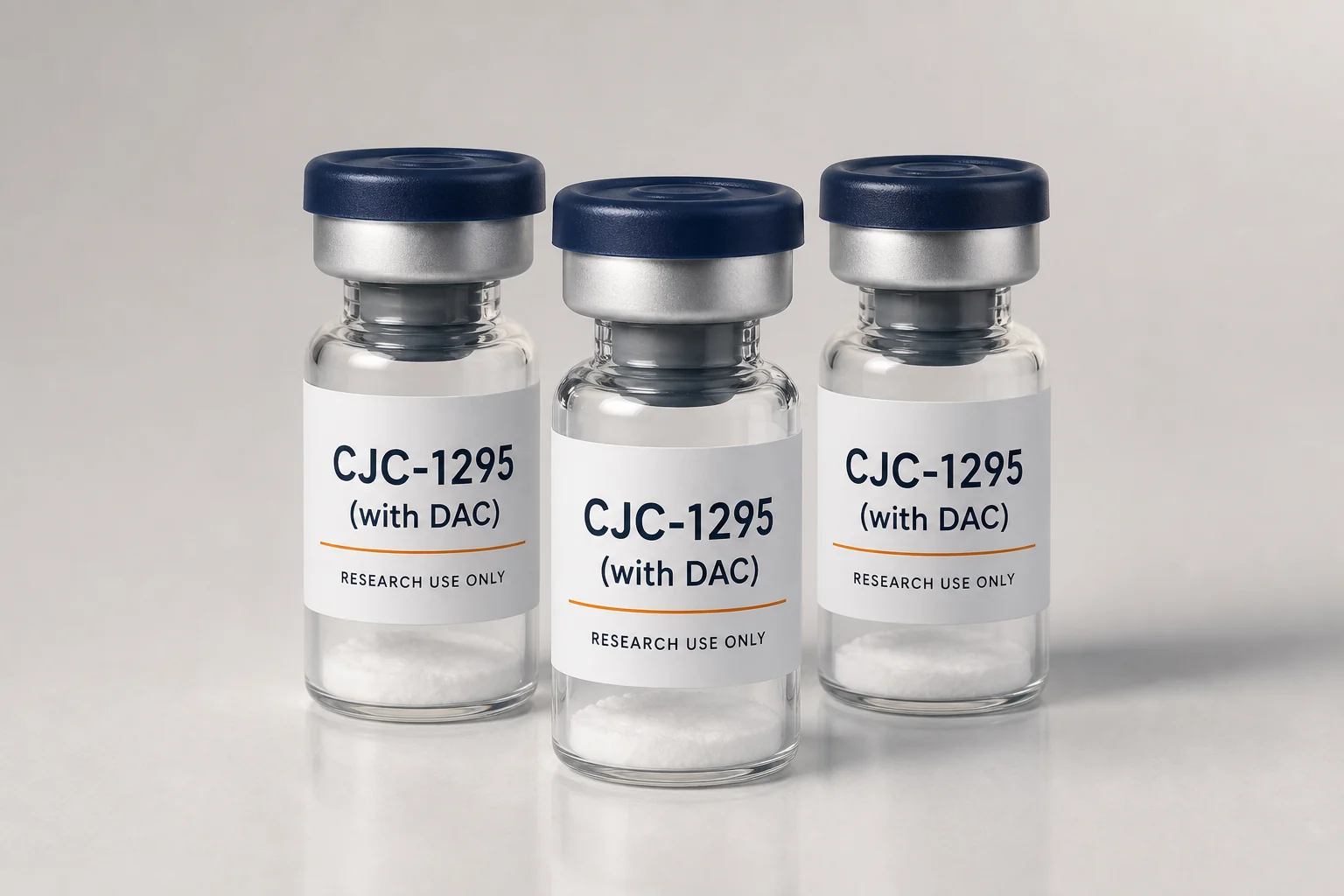
CJC-1295: check whether DAC is included

Source date
4 December 2024 · FDA briefing

The December 2024 FDA review evaluated five CJC-1295-related forms, including DAC forms, and recommended against placing them on the 503A Bulks List. The document treats CJC-1295 and CJC-1295 DAC as distinct active moieties.

What to check

Match the structure and salt form to the record. This historical ingredient review is not a finished-drug approval notice.

Compounding review

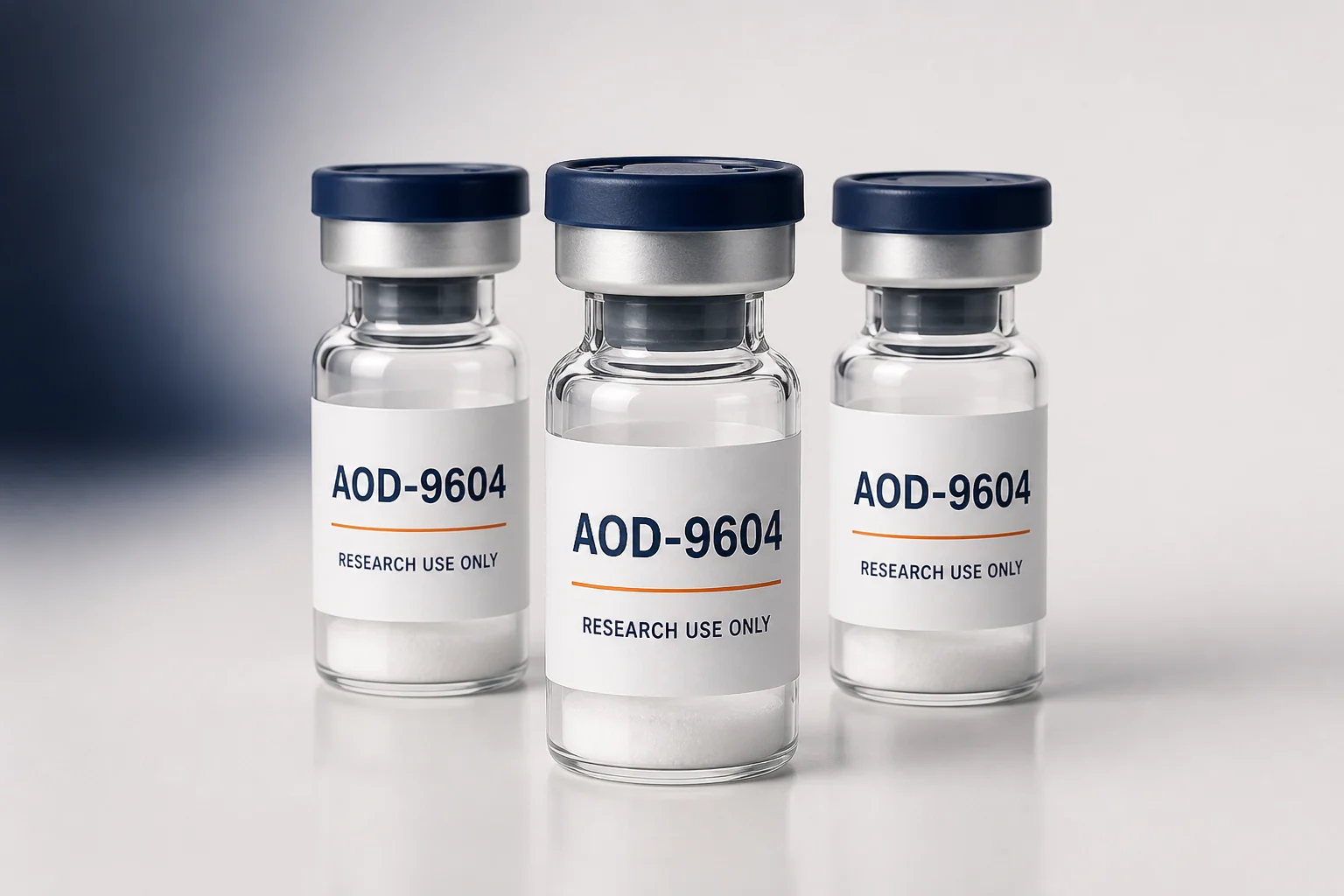
AOD-9604: read the scope of the review

Source date
4 December 2024 · FDA briefing

The December 2024 FDA document evaluated AOD-9604 free base and acetate for the 503A Bulks List. It describes limitations in characterization, safety and effectiveness and recommends against adding these forms.

What to check

Read this as a dated compounding review. It does not establish approval of a finished medicine or verify a catalog batch.

Questions that often cause confusion

Does a COA mean a product is FDA approved?

A COA reports the tests and results for a batch. Drug approval is a separate regulatory decision. For a batch, check the product name, batch number, test method and result; for approval, check the official medicine record.

Does Phase 3 mean approval is close or guaranteed?

Phase 3 describes a stage of clinical testing. The developer must still submit the required information and the regulator must make a decision. A positive result does not guarantee approval or a launch date.

Are compounded medicines FDA approved?

The FDA states that compounded medicines are not FDA approved. Rules about which ingredients may be used in compounding are separate from approval of a finished medicine.

Does this page show the status in every country?

It mainly uses U.S. FDA and developer records. Other countries have their own requirements. Check the relevant local authority for your location and intended use.

Need to check a specific material?

Tell us the product name, required form and documents you need. We can confirm the available specifications and batch-document scope.

SS-31, Elamipretide and Forzinity: which name refers to what?

SS-31 is commonly seen as a research material name, Elamipretide is the generic name of the related molecule, and Forzinity is a specific drug trade name. When checking status, you must keep the specific finished product and scope of use.

First separate the three names

Similar names help in finding information, but not all materials with the same name have the same formulation, salt form, specifications, or approval status. Catalog research materials and drug marketing records must be confirmed separately.

How are official records written?

On September 19, 2025, the FDA announced accelerated approval of Forzinity (elamipretide) injection to improve muscle strength in patients with Barth syndrome who weigh at least 30 kg. Check the current official label for the complete approved use and patient information.

This is a record for a specific finished drug, not a general approval for all SS-31 or Elamipretide catalog materials. Accelerated approval also involves follow-up confirmation requirements, so it cannot simply be written as “all efficacy has been proven.”

What information should be recorded together to be complete?

Record the jurisdiction, trade name, related generic name, finished product and route, specific use, applicable population, approval type, source, and verification date. Records from different regions cannot substitute for one another.

What else should be confirmed when viewing the NHD catalog?

Check the actual name, form, specifications, and documentation requirements of the SS-31 research material. An official drug label is not the COA of any catalog lot, and it does not automatically prove that a research material is identical to the marketed formulation.

This card helps you check status. It was reviewed on October 13, 2026; follow the official source for later updates. It does not provide individual diagnosis or treatment advice.

Name and record correspondence
SS-31Verification focus: Specific identity of literature and research materials
ElamipretideVerification focus: Molecule generic name and the form referred to
ForzinityVerification focus: Specific finished drug, region, use, and official label
Teaching summary. Check the explanation and original sources; this is not a to-scale molecular model or a product test result.
Name and record correspondence
NameVerification focus
SS-31Specific identity of literature and research materials
ElamipretideMolecule generic name and the form referred to
ForzinitySpecific finished drug, region, use, and official label

Original sources and further reading

Sources checked on 2026-10-13. Findings apply to the models and materials studied. Batch quality requires records for the actual batch.

Related research materials

Inquire about specifications, quantity, and required documentation

A clinical trial is “Completed”. Why aren’t the results available?

Completed describes the study's completion status; it does not mean you can already read a formal paper or public results. When checking progress, separate the different dates and release steps.

What is the difference between recruiting, primary completion, and overall completion?

Recruitment status describes whether participants are still being recruited. The primary completion date relates to when data collection for the primary outcome measures is finished; the study completion date also involves collection related to primary and secondary outcomes and adverse events. Read the specific fields according to the registry platform's definitions.

Why might results still not be found after Completed?

After data collection ends, organizing, analysis, submission, and quality checks may still be needed. The registry page status, results submission, results public posting, and paper publication are not the same step.

You cannot infer from the single field Completed that the results must be positive, nor can you directly interpret not finding a paper as the trial failing.

When actually checking a record, follow this order

First verify the registration number and study name, then read the population, comparison groups, and measures; then check recruitment status, primary completion date, study completion date, and record update time. If there is a results page, continue reading whether it has been made public and what was actually reported.

What if the news mentions results, but the registry page does not show them yet?

Keep the news source and date, and check whether it is a preliminary announcement, a conference abstract, or a formal paper. Record the publicly available information and the details still pending separately; do not mix different versions into a conclusion without a date.

Write the status as a record that can be updated

Record the last verification date and link to the original registry page. If the platform changes the status or adds results, simply note the change in the same record; there is no need to create a near-duplicate article for every update.

Look at the five fields separately
Recruitment endedDoes not equal: All results have been analyzed
Primary completion dateDoes not equal: All follow-up has ended
Study completion statusDoes not equal: Results must be positive
Teaching summary. Check the explanation and original sources; this is not a to-scale molecular model or a product test result.
Look at the five fields separately
Field or stepDoes not equal
Recruitment endedAll results have been analyzed
Primary completion dateAll follow-up has ended
Study completion statusResults must be positive
Results submissionResults have been made public
Paper publicationAll follow-up questions have been answered

Original sources and further reading

Sources checked on 2026-10-13. Findings apply to the models and materials studied. Batch quality requires records for the actual batch.

Related research materials

Ask about specifications, quantities, and required documentation