A clear vial tells you that no obvious particles are visible. It does not tell you whether the peptide has degraded or stuck to the container. Dissolving a peptide and keeping it stable are separate questions.

Solubility describes a state; stability describes change
Sugar disappearing into water is a familiar example of dissolution. A peptide also needs a suitable solvent, but the story does not end when the liquid looks clear. Exposure to air, light and containers, followed by time, can change its composition. Oxidation products may be present in a transparent solution. Your eyes are not an analytical instrument.
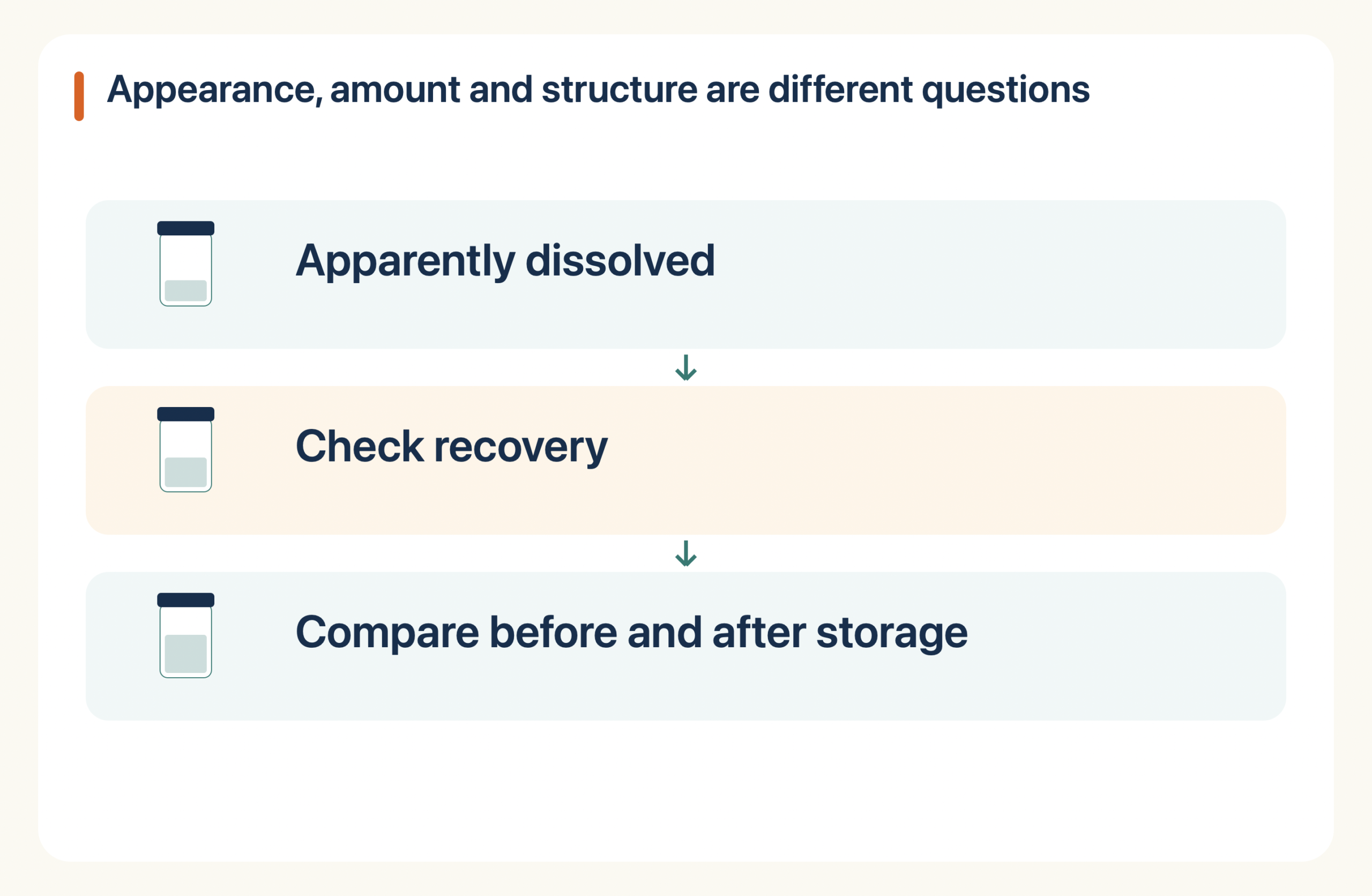
Ask three questions about the same vial
Did the target peptide enter the liquid rather than remain on the bottom or walls? How much target peptide is available when you take a sample? Is the remaining material still the original structure? These questions concern dissolution, recovery and chemical stability. A clear appearance cannot answer all three.
Use a small comparison to separate the causes
Compare candidate conditions with a small amount of material. Record solvent, pH, preparation concentration, container and time. Keep a freshly prepared sample as the starting point and use the same method for later measurements. Comparing peak areas from different methods on different days also introduces method differences; storage cannot explain all of the change.
Do not look only at the purity percentage
Hypothetical example: the initial target peak area is 100 and later falls to 70. If the target peptide and some impurities are both lost, the target can still account for a high proportion of the remaining signal. An unchanged purity percentage does not prove that none of the original peptide was lost. Assessing amount changes requires a suitable quantitative method and reference.
Explain the next experiment when requesting material
Tell the supplier whether you plan a cell experiment or instrument analysis, which system you intend to use and how long you need to observe it. Ask whether relevant solubility and stability information is available. General handling guidance helps design a small trial; it does not validate a particular product and lot under your conditions. MOTS-c contains residues for which oxidation deserves attention. KPV being short does not establish stability under every condition.
Original sources and scope
Consult the sources for full methods and results. Teaching examples are not NHD lot-test data.
Related research materials
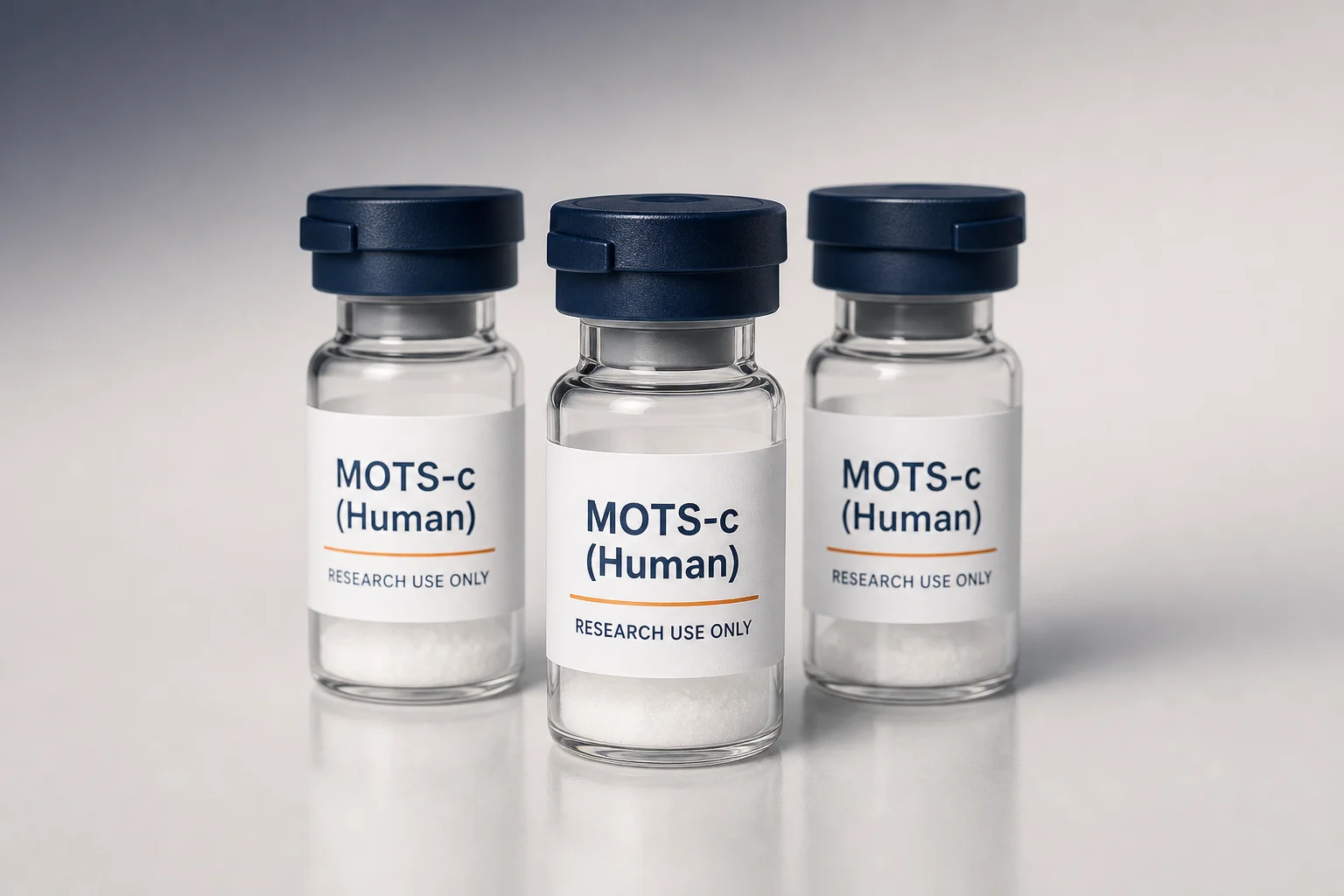 MOTS-c (Human)Review catalog identity and specifications; ask about supply, information and project requirements.
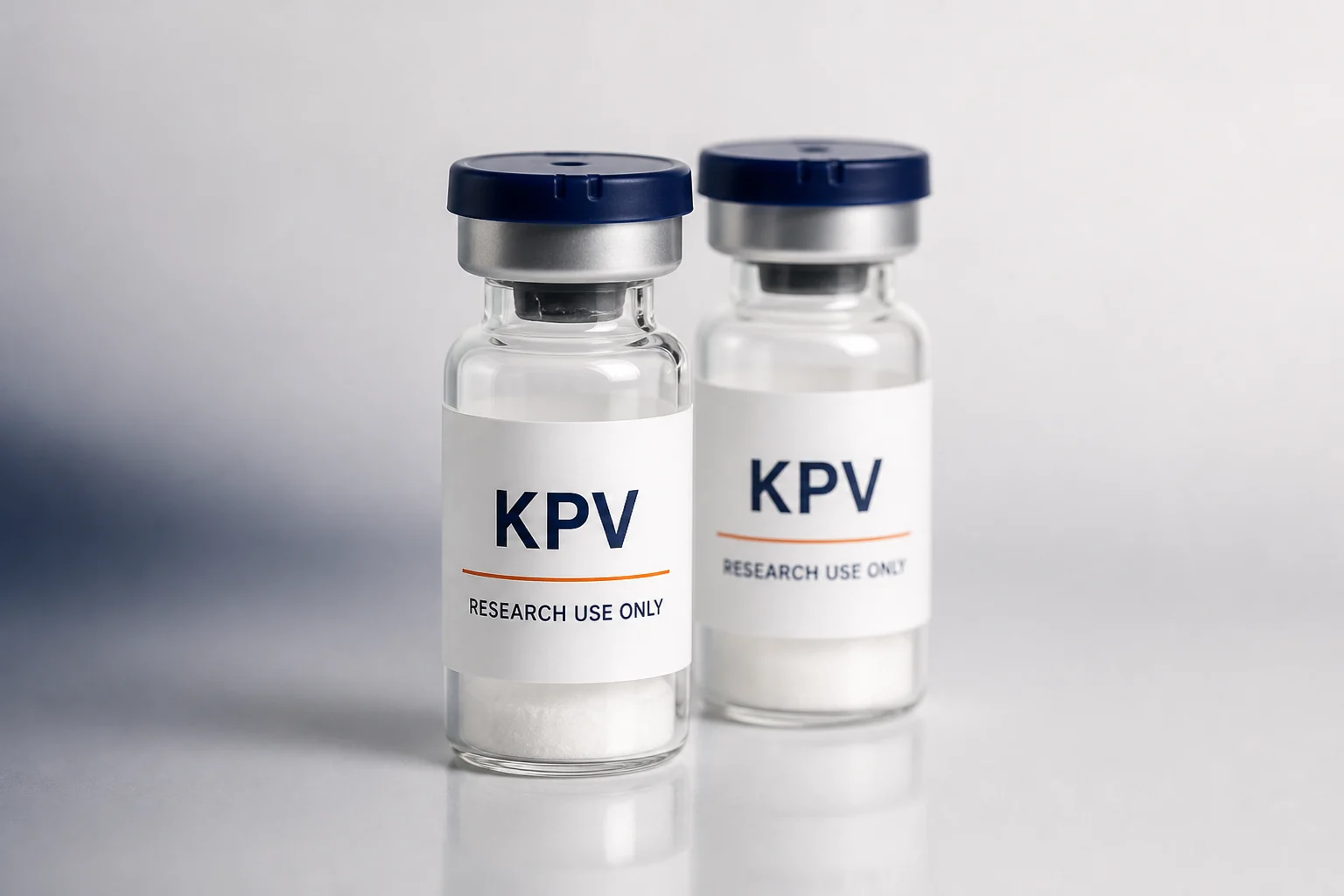 KPVReview catalog identity and specifications; ask about supply, information and project requirements.
Ask about materials and documentation
Research materials and experimental education; no instructions for human use.