Calculate portions from actual session needs and keep the remaining volume separate from assumptions about storage or sample lifetime.

Start with the amount needed for one experiment
Include groups, replicates, controls and preparation losses before deciding the amount per session. Three equal portions may still leave every experiment short if that input is wrong. Mass-to-volume conversions need a clear concentration and content basis.
Work through a small volume example
Suppose there are 300 µL of solution and three experiments each require 80 µL. Planned use is 240 µL, leaving 60 µL. The figure separates 300, 3×80 and 60. These are teaching values and exclude transfer, pipetting and container-residual losses.
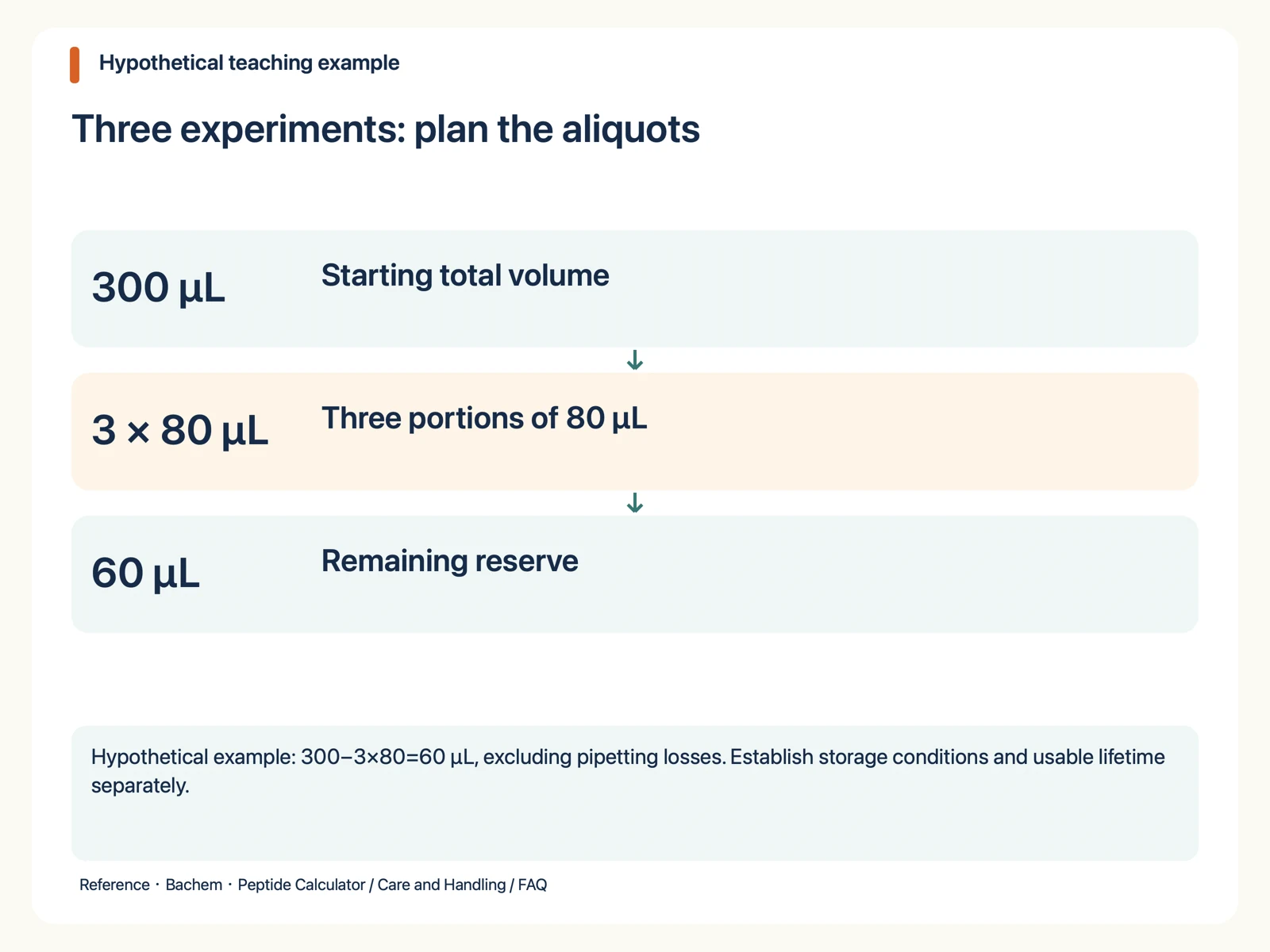
| Condition | Value / information to fill in |
|---|---|
| Starting total volume | 300 µL |
| Three portions of 80 µL | 3 × 80 µL |
| Remaining reserve | 60 µL |
Give the remainder an explicit purpose
The remaining 60 µL may be reserve, but its adequacy for a repeat requires another calculation. A remainder does not guarantee enough material for every failed experiment. Different session requirements should be calculated separately rather than forced into equal portions.
Link every container to the original material
Keep original batch, preparation record and aliquot identifiers, with actual amounts, dates and operator. Record which container was used for each experiment. Cross-laboratory use also needs a handover trail; “same batch” alone is incomplete.
Aliquot count does not establish storage stability
Three portions do not prove usability until the third experiment under any conditions. Temperature, solvent, material and lifetime need their own basis. One freeze–thaw cycle is not a universal stability guarantee for every peptide.
Discuss packaging before placing the order
Use the session plan to discuss total amount and packaging for KPV, MOTS-c or SS-31. Product cards help confirm catalog identity. Availability of the packaging arrangement and relevant batch information must be checked separately.
References
Published findings, hypothetical teaching examples and material information are distinguished. Read the original methods before attempting replication.
Related research materials
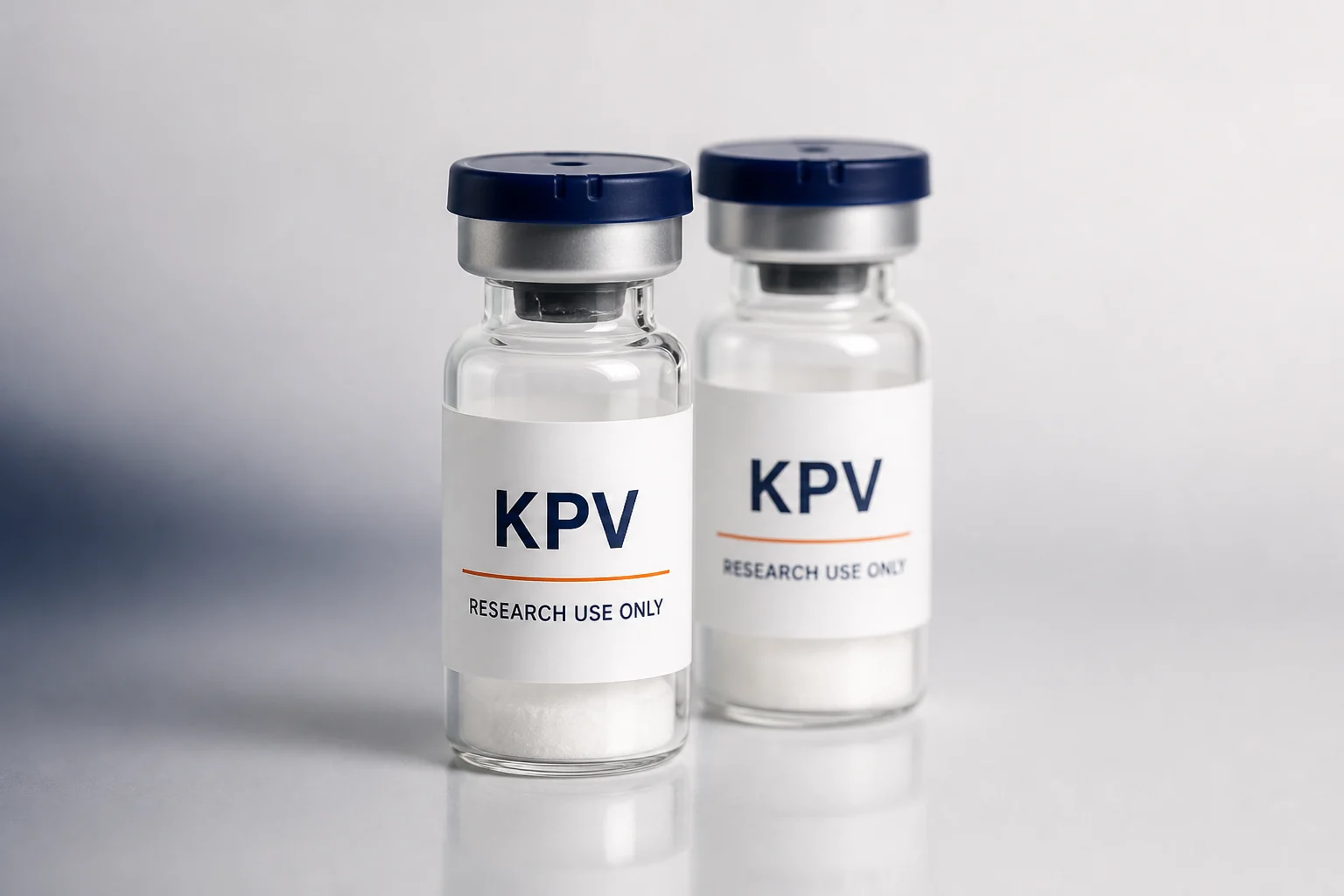 KPVView material information and specifications, or submit an enquiry.
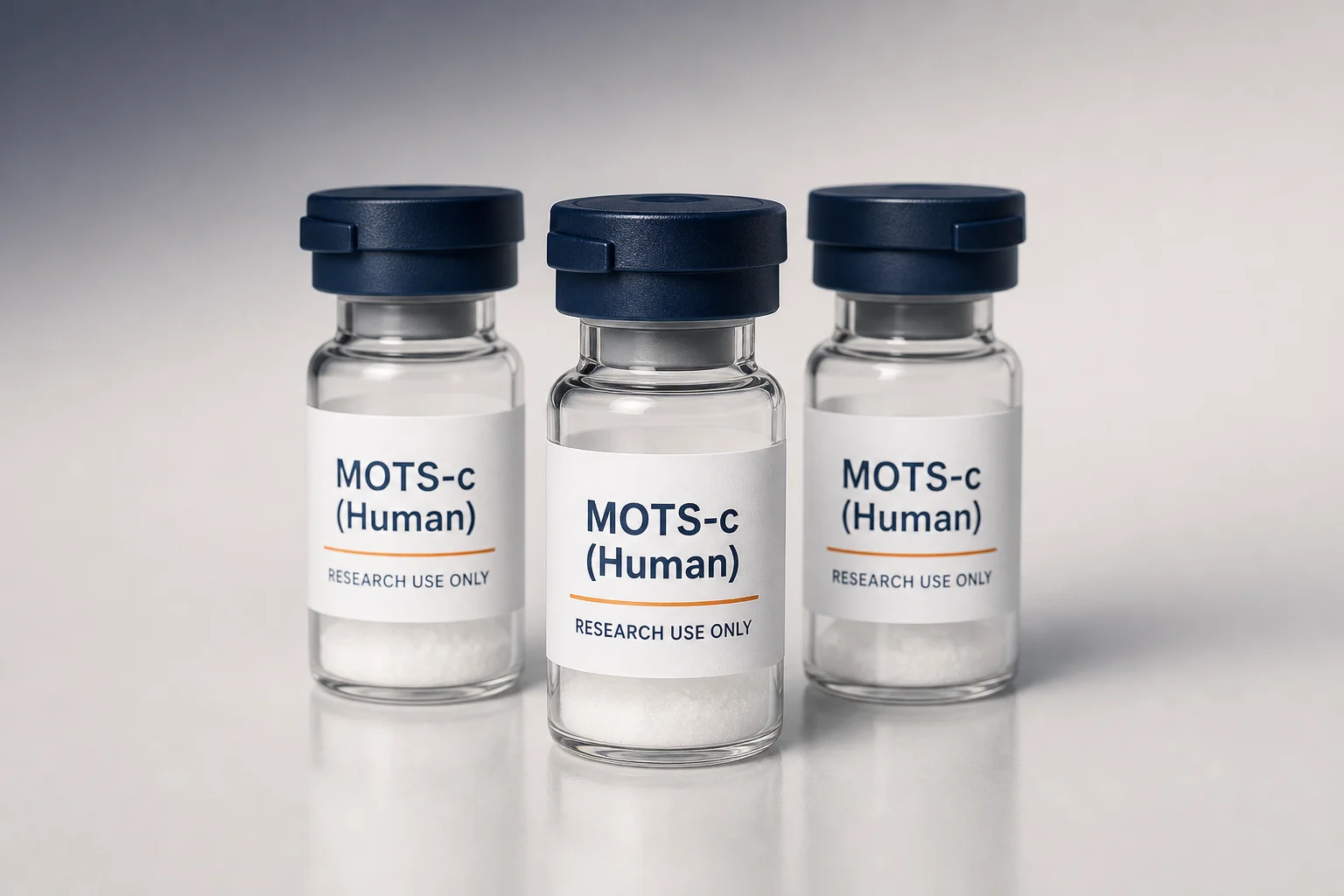 MOTS-c (Human)View material information and specifications, or submit an enquiry.
 SS-31 (Elamipretide)View material information and specifications, or submit an enquiry.
Enquire about products and information →
Research reading and material enquiries only. This page is not personal medical advice or a substitute for batch-specific records.