Separate human observations, mouse interventions and rat-cell experiments in the MOTS-c and HNG atrial-fibrillation study.

Three research systems, different questions
The study examined human atrial-tissue information and plasma from 39 people with atrial fibrillation and 39 sinus-rhythm controls. It also used 36 male C57BL/6J mice in total and primary rat cardiomyocytes and fibroblasts. These results cannot all be described as patients improving after receiving MOTS-c.
Human observations show associations
The abstract reports lower Humanin and MOTS-c in atrial-fibrillation-related tissue and associations with fibrosis or NT-proBNP, a marker related to cardiac load. Such associations identify questions worth testing. They do not establish that adding one peptide will restore another measurement or produce a treatment benefit.

Mouse experiments add intervention evidence
An angiotensin II model was used to examine peptide treatment alongside atrial-fibrillation inducibility, atrial fibrosis, hypertrophy and mitochondrial changes. Intervention studies can test hypotheses beyond observational associations, but their conclusions remain limited by the animal model. Mouse improvement does not establish human efficacy or a clinical indication.
Humanin and HNG are not identical
Although the title refers to Humanin, one intervention material was HNG, a Humanin analogue. The analogue differs from native Humanin. MOTS-c was another intervention material. Product comparisons and citations must identify the material actually used; HNG findings should not be transferred directly to a native-Humanin product description.
Mechanistic clues still require further work
The paper examined mitochondrial structure, fission-related proteins, oxidative stress and inflammatory markers, with exploratory RNA sequencing. These findings help build explanations, but different cell types and endpoints must be interpreted separately. The figure shows evidence levels and sample composition, not an invented combined cardiac-recovery percentage.
Define the experiment before choosing material
Specify whether the question concerns cardiomyocyte stress, fibroblast activation or an animal-model endpoint. The MOTS-c product page is a starting point for identity and specification enquiries. Batch information and experimental conditions still need separate confirmation.
References
Published findings, hypothetical teaching examples and material information are distinguished. Read the original methods before attempting replication.
Related research materials
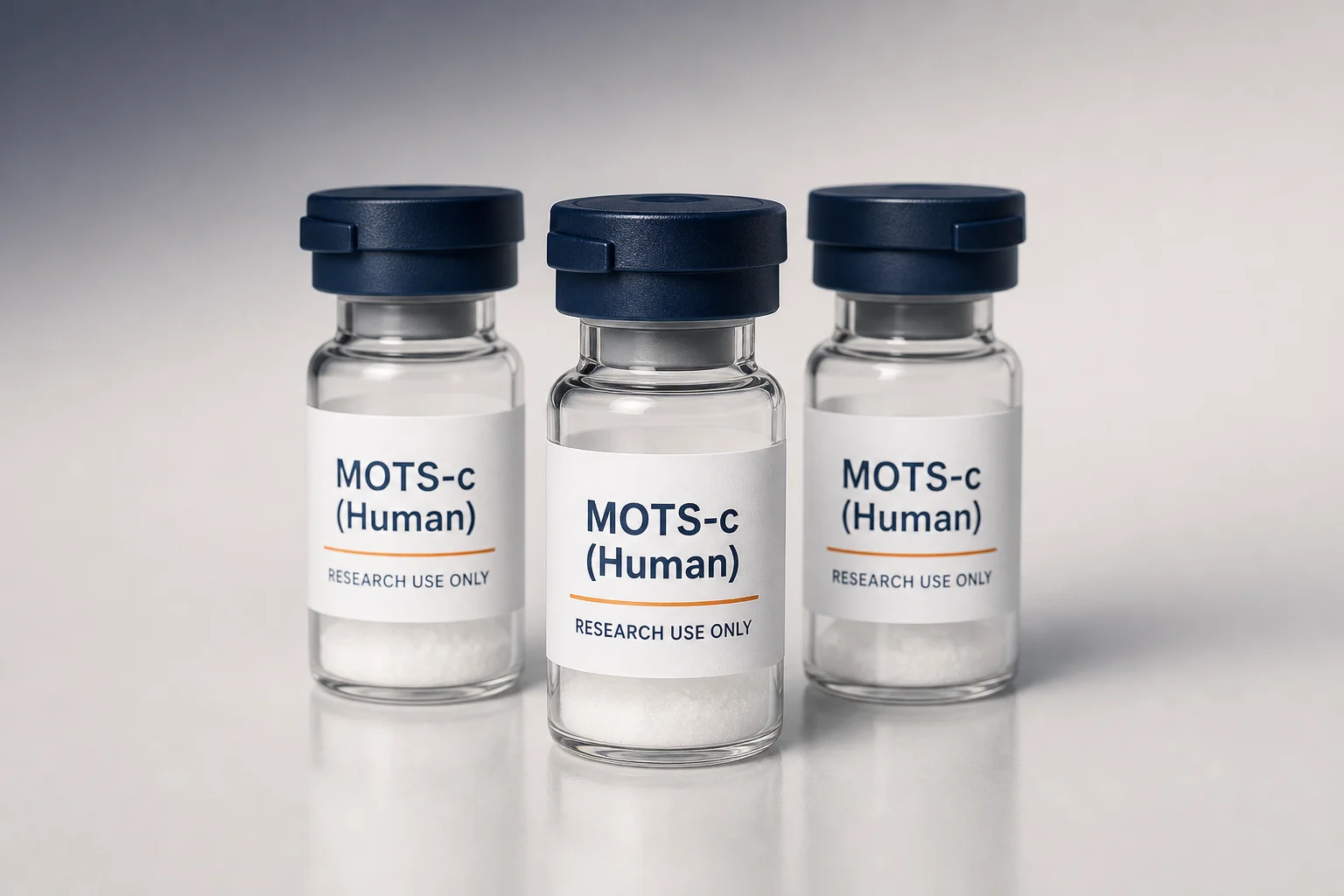 MOTS-c (Human)
Enquire about products and information →
Research reading and material enquiries only. This page is not personal medical advice or a substitute for batch-specific records.