Sermorelin is GHRH(1–29)-amide. Human research shows acute pituitary growth-hormone responses, while historical treatment data are limited and do not support modern anti-aging or performance claims.
Evidence at a glance
- A normal-subject study found comparable maximal GH increases after GRF1-44, GRF1-40 and GRF1-29.
- A low-dose study found significant mean peak GH responses after 10 and 100 µg, but not 1 µg, GHRH(1–29)-amide.
- A pediatric review described limited height-velocity data and stated that final adult-height effects and direct comparison with somatropin were unresolved.
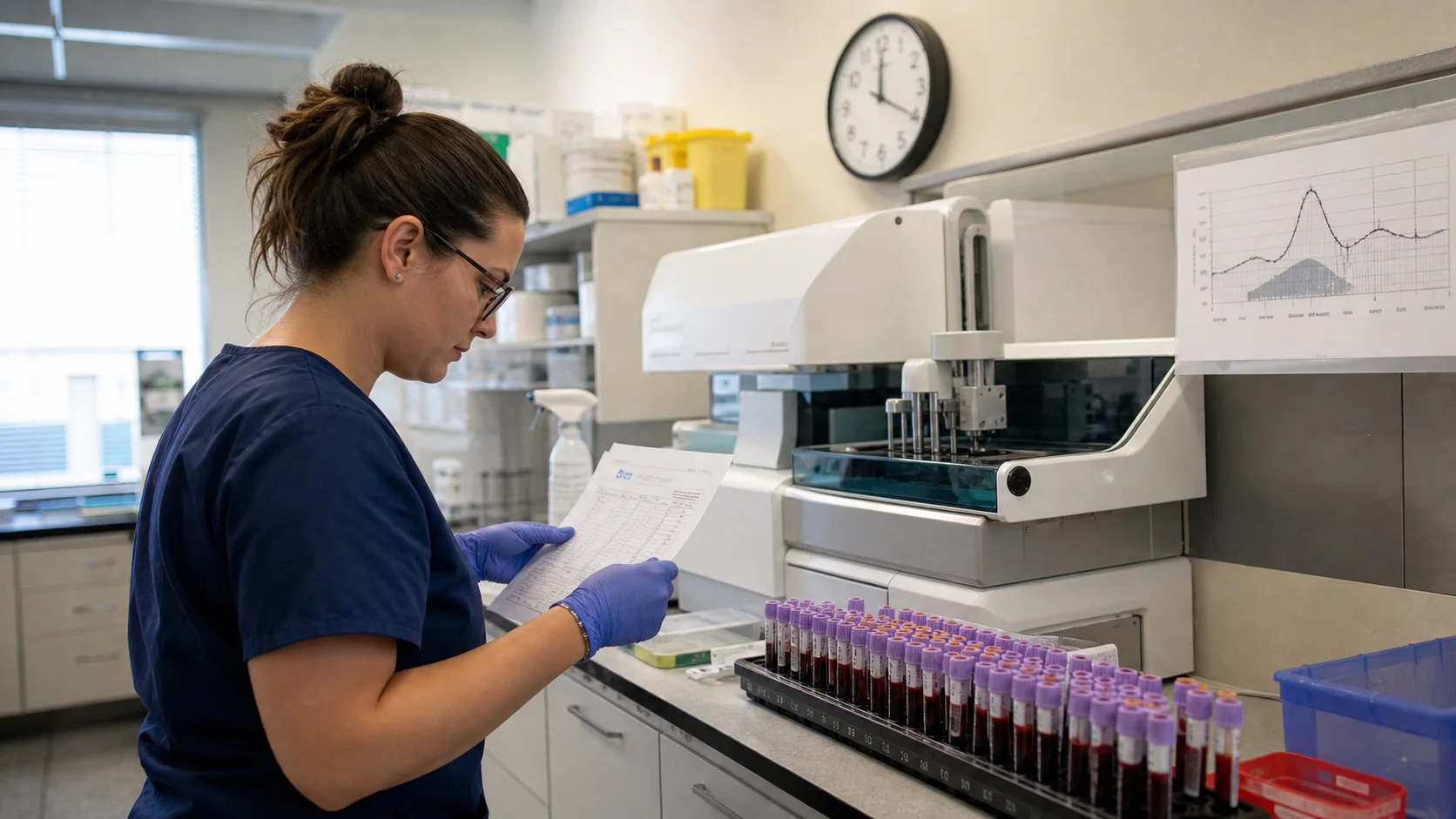
Study record
The early normal-subject work established that the 1–29 fragment retained biological activity. Repeated administration at six-hour intervals produced GH responses, while shorter intervals and continuous infusion behaved differently. These were physiology and diagnostic questions, not longevity trials.
Results in context
In the low-dose response study, 10 and 100 µg produced similar peak GH values, but the higher dose had a slower post-peak decline and delayed time to peak. These data illustrate dose-response behavior under a specific test protocol; they should not be converted into unsupervised instructions.
The pediatric review discussed diagnostic use and selected children with idiopathic GH deficiency. It also stated that long-term final-height effects were not determined and that recommended-dose effects had not been directly compared with somatropin.
What the evidence cannot establish
Historical protocols and assays may not match current practice.
Acute GH release is a surrogate physiological endpoint.
The cited evidence does not validate anti-aging, body-composition or athletic-performance marketing.
Sources & editorial method
This article discusses the source records listed below, with the study models and limitations stated alongside the findings. AI-assisted drafting and image generation were used. The reference list identifies the records behind this article; it is not an independent peer review or verification of a supplied catalog lot.
5 linked records are listed in the references below. Read the editorial and AI-assistance policy.
How to interpret this article
Source-checked on 2026-09-02. Null results, sample size, model/population limits and regulatory scope are retained. This is not medical advice, a customer case or validation of a catalog lot.
Research-use boundary: Catalog materials discussed on this website are for laboratory research, development and manufacturing use only, not for human or veterinary use. This content is not medical advice and does not provide administration instructions.
Primary records and authoritative sources
- GRF1-29 compared with longer human GRF fragmentsLosa M, et al. Klin Wochenschr. 1984. PMID 6240568.
- Low-dose GHRH(1–29)-amide dose-response studyPrimary human dose-response study; PMID 7921207.
- Sermorelin pediatric reviewHistorical diagnostic and pediatric treatment review; PMID 18031173.
- GHRH analog detection in human plasmaValidated LC-HRMS/MS method; PMID 26879649.
- PubChem Sermorelin recordSequence, formula and molecular weight; CID 16132413.
Continue with structured records
Move from this editorial analysis to the product identity, filtered evidence and controlled terminology behind it.