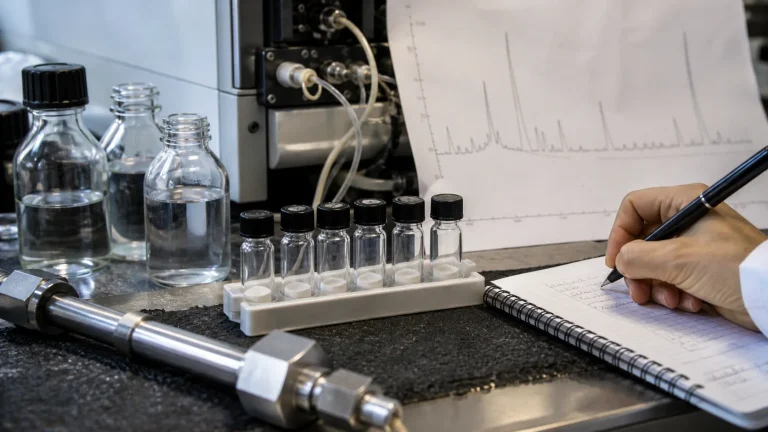
GHRP-6 can provoke growth-hormone release in controlled human experiments, but the response depends heavily on intact hypothalamic GHRH signaling and does not establish a downstream clinical benefit.
Evidence at a glance
- In nine healthy men, a GHRH antagonist reduced mean maximal GH after GHRP-6 from 33.8 ± 4.8 to 6.2 ± 1.8 µg/L.
- The same experiment reduced GH AUC from 1701 ± 278 to 376 ± 113 µg·min/L.
- A 34-hour infusion study in nine men observed pulsatile GH release; it was physiology research, not a body-composition trial.
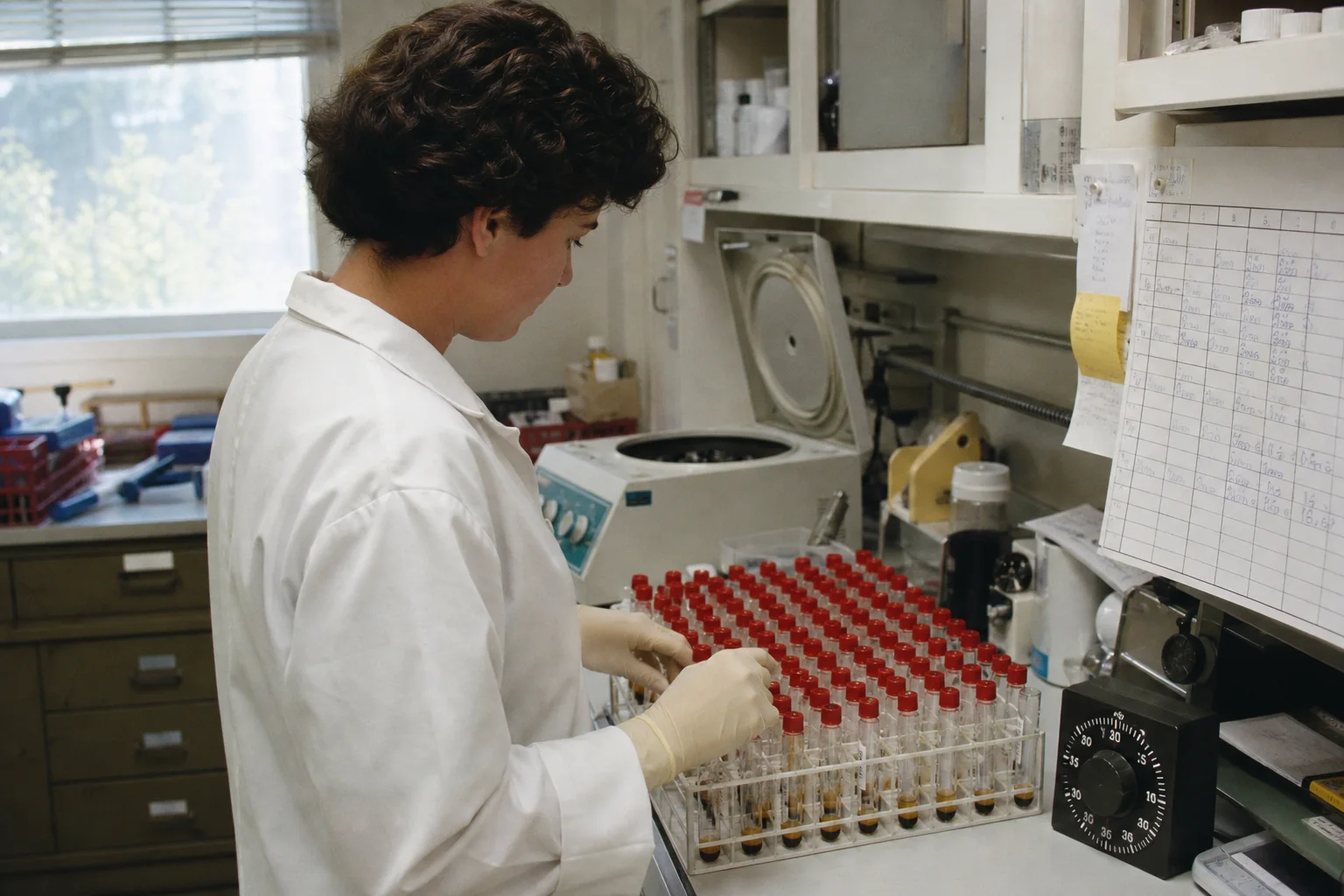
Study record
The antagonist experiment tested mechanism by blocking endogenous GHRH before administering GHRP-6. The large reduction in peak and integrated GH shows that GHRP-6 response cannot be described as a context-free direct pituitary effect.
Results in context
The 34-hour study reported continued pulsatile secretion rather than a flat hormone elevation. Pulsatility is a physiological observation; it does not provide evidence for muscle gain, fat loss, recovery or long-term safety.
FDA states that compounded GHRP-6 may present immunogenicity and metabolic concerns, including possible cortisol effects and reduced insulin sensitivity. WADA lists GHRP-6 as prohibited.
What the evidence cannot establish
Both highlighted human experiments enrolled only nine participants.
Acute stimulated GH is not a patient-centered outcome.
Route, assay and population constrain interpretation and do not define unsupervised use.
Sources & editorial method
This article discusses the source records listed below, with the study models and limitations stated alongside the findings. AI-assisted drafting and image generation were used. The reference list identifies the records behind this article; it is not an independent peer review or verification of a supplied catalog lot.
5 linked records are listed in the references below. Read the editorial and AI-assistance policy.
How to interpret this article
Source-checked on 2026-09-02. Null results, sample size, model/population limits, finished-drug scope, regulatory status and product-evidence boundaries are retained. This is not medical advice, a customer case or validation of a catalog lot.
Research-use boundary: Catalog materials discussed on this website are for laboratory research, development and manufacturing use only, not for human or veterinary use. This content is not medical advice and does not provide administration instructions.
Primary records and authoritative sources
- GHRH dependence of the GHRP-6 responseNine-person antagonist study; PMID 9543138.
- Prolonged GHRP-6 infusion and pulsatile GH secretionThirty-four-hour physiology study in nine healthy men; PMID 7903313.
- GHRP-6 sequence and human GH responsePrimary human sequence and dose-response record; PMID 8435889.
- Certain Bulk Drug Substances That May Present Significant Safety RisksU.S. FDA. Current compounding safety-information page.
- WADA 2026 Prohibited ListOfficial list prohibits mechano growth factors.
Continue with structured records
Move from this editorial analysis to the product identity, filtered evidence and controlled terminology behind it.