Bone is constantly being renewed. On one side, cells form new bone tissue; on the other, cells resorb old bone tissue. When reading MOTS-c and bone mass research, first figure out which side the paper is observing, then look at what model it used.

Bone mass is not determined by one type of cell
Osteoblasts participate in forming bone matrix, and osteoclasts participate in bone resorption. The balance of activity between the two sides affects bone tissue renewal, but the real process is also influenced by hormones, mechanical loading, nutrition, and many signals. An increase in protein expression in one type of cell is not enough to prove that the whole bone is stronger; bone mass, microstructure, and mechanical performance also need to be measured separately. Putting "cellular changes" and "skeletal outcomes" into two columns often makes a paper easier to understand.
First look at the animal study on reducing bone resorption
A 2016 study used an ovariectomized mouse model to observe MOTS-c and changes in bone mass. The study examined bone structure by micro-CT and carried out osteoclast-related experiments, discussing the involvement of AMPK signaling. The ovariectomized model is used to study bone loss under specific hormonal changes and does not represent all causes of osteoporosis. The research treatments used in animal experiments also cannot be converted into a human supplementation regimen. [1]

Two observation paths in bone mass research
- Osteoclast direction: Look at bone resorption-related activity, then correlate it with animal bone structure results
- Osteoblast direction: Look at matrix and collagen-related expression; this does not mean stronger bone has already formed
- Human questions: Outcomes such as bone density and fractures require corresponding human studies
Inhibiting a pathway can help researchers ask about causes
In this study, the AMPK inhibitor compound C could partially weaken the observed related effects. It can be understood as an experiment that "turns the suspected switch down and then sees whether the phenomenon changes." But "partially weakens" does not equal proof that only this one pathway is involved; the inhibitor's own selectivity and other effects must also be considered. Mechanistic evidence usually comes from multiple experiments supporting one another, not from a single protein band. [1]
The osteoblast study measures a different layer of the question
A 2019 study observed MOTS-c and type I collagen-related expression in hFOB1.19 cells, using methods such as cell viability, gene expression, and protein detection, and studied TGF-β/SMAD-related signaling. This layer of evidence answers what happens in cultured cells; it cannot be directly read as an increase in bone density in participants, and even less as clinical evidence of reduced fracture risk. The two studies can be placed on one evidence map, but they cannot be pieced together into a human trial. [2]
When reading figures yourself, write four questions beside them
First, is the study object cells or animals? Second, is the result a gene, a protein, bone structure, or a mechanical indicator? Third, are the comparison groups consistent, and how long was the observation? Fourth, how many independent samples correspond to the differences in the figure? For example, if expression of a certain collagen gene becomes higher, that can only first describe this measurement result; further discussion of bone tissue formation still requires supporting evidence. When values and statistical methods are incomplete, one should not fill in percentages oneself.
MOTS-c material records should be written clearly
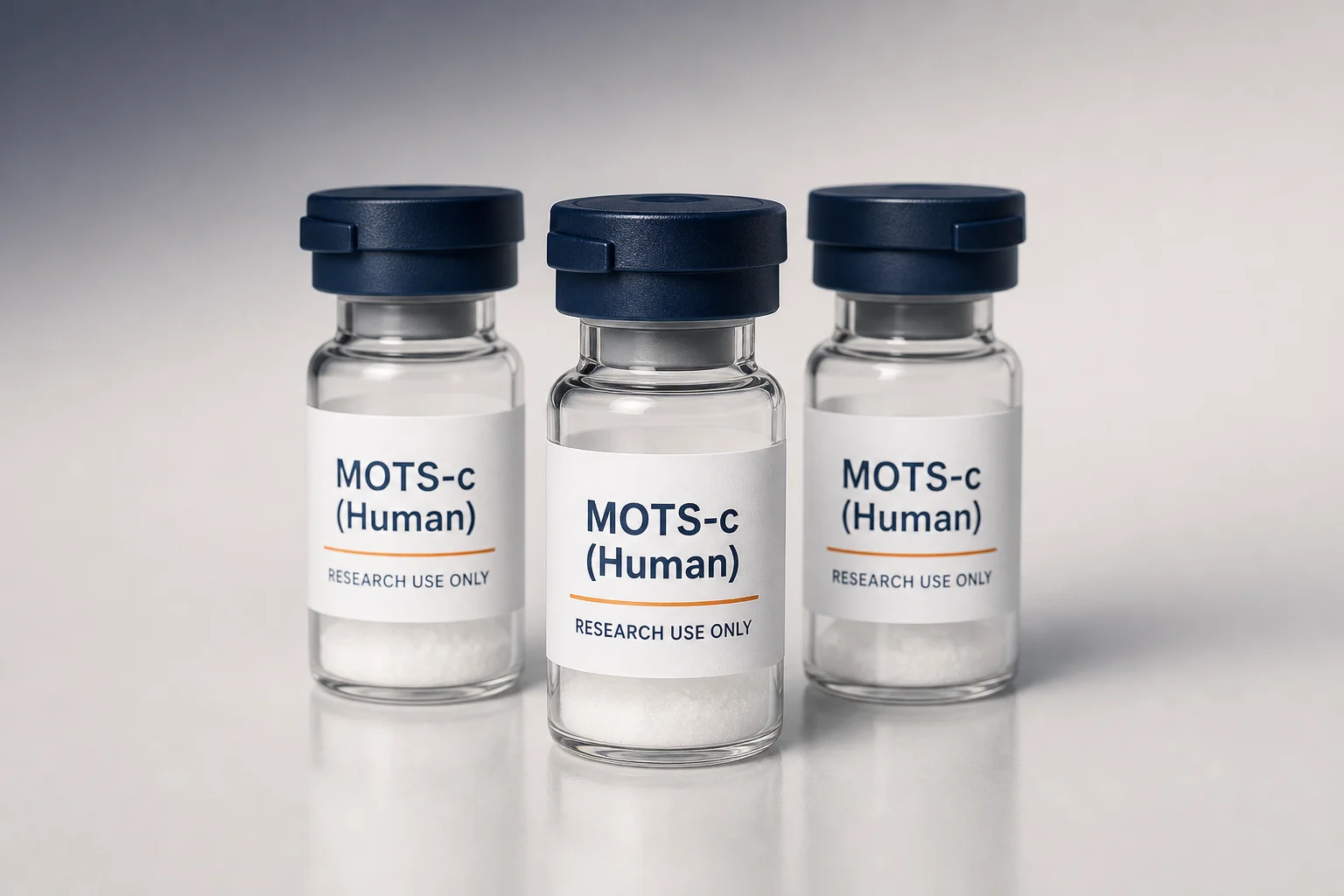
For follow-up research, it is recommended to record in the material table the sequence, terminal form, lot number, preparation and storage process, and the identity and content information required for the experiment. "Human" usually appears in molecular or sequence identifiers and is not proof of human applicability. You can check catalog materials from the MOTS-c product page, then return to the methods section of the paper to check the experimental subjects. This article introduces existing research ideas and does not constitute supplementation advice.
Original sources
Check the study conditions and material records separately. Calculations labeled as examples are not batch test results.
 MOTS-c (Human)