


ANALYTICAL METHODS · PRACTICAL GUIDE
Why the Same Peptide Can Have Different HPLC Retention Times
Find out what controls the time at which a peptide peak appears.
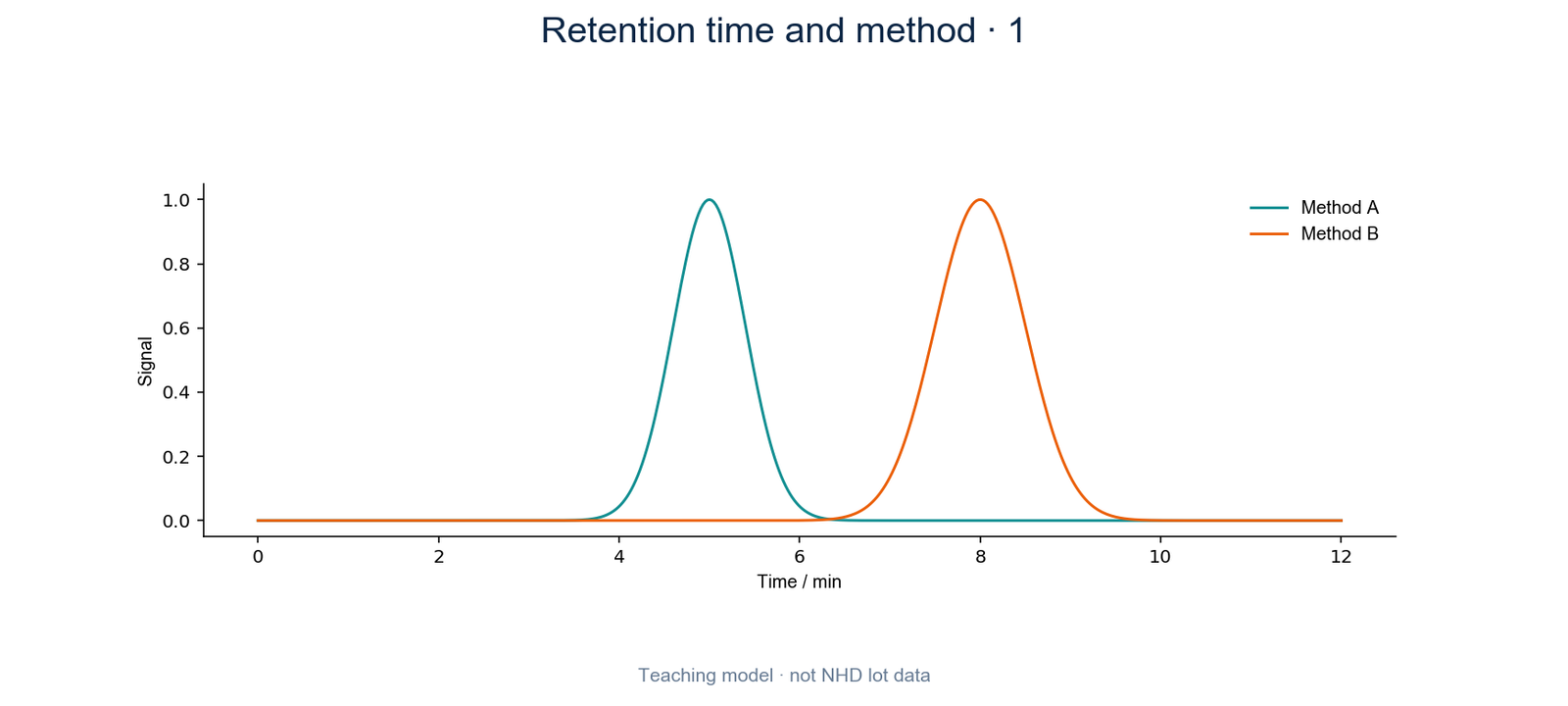
One report places a peptide peak at 5 minutes; another puts it at 8. Is one wrong? The answer depends on how the tests were run. Retention time belongs to a method as well as a sample.
What is retention time?
Retention time is the time between starting the run and the appearance of a particular peak. It describes how long a component took to pass through the system under those test conditions.
It is useful for comparison when conditions are controlled. It is not a fixed number permanently attached to a product name.
Why a different column can change the time
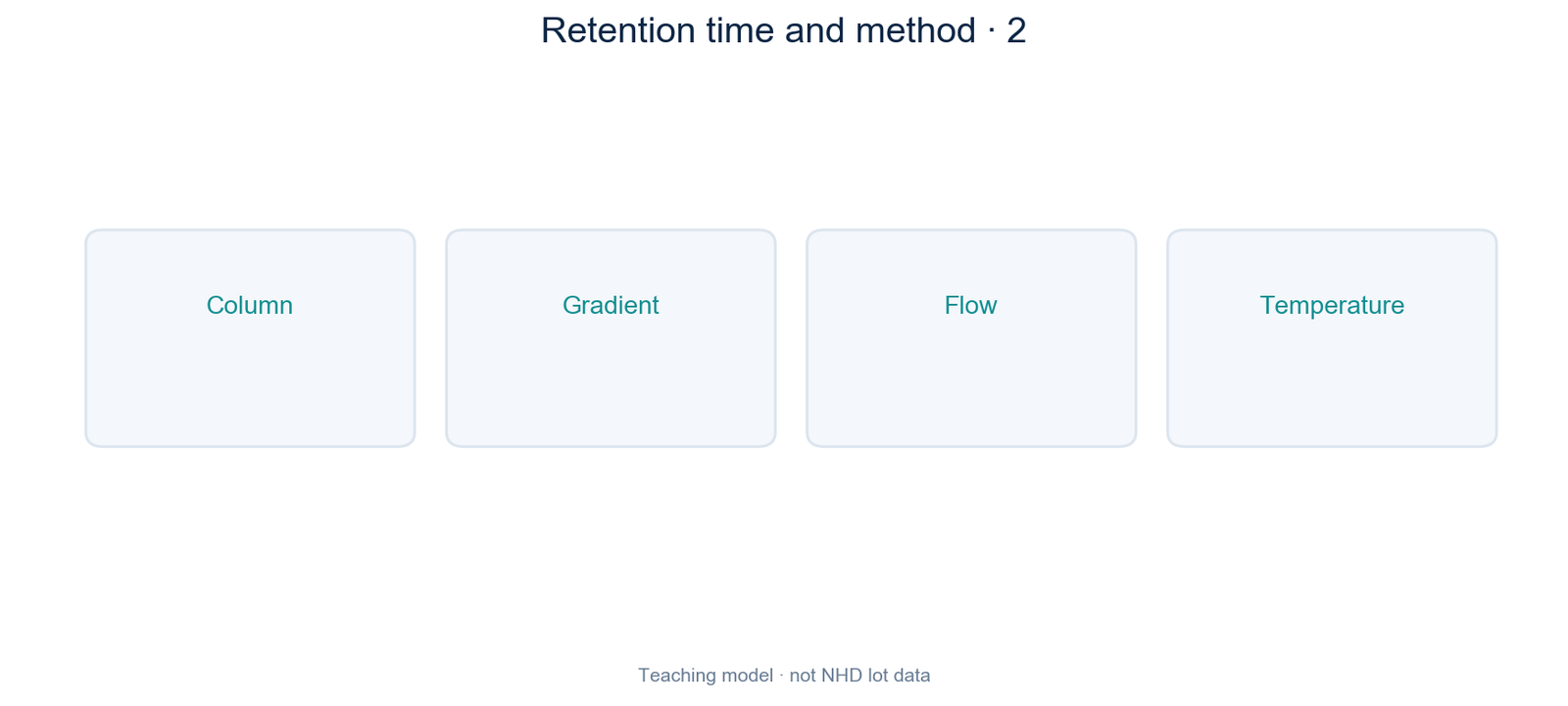
A column is more than its broad type, such as C18. Dimensions and the material inside can differ. Components may interact with those materials differently, changing how long they remain in the column.
Two reports that both say C18 are therefore not necessarily using the same method.
Solvent and flow also matter
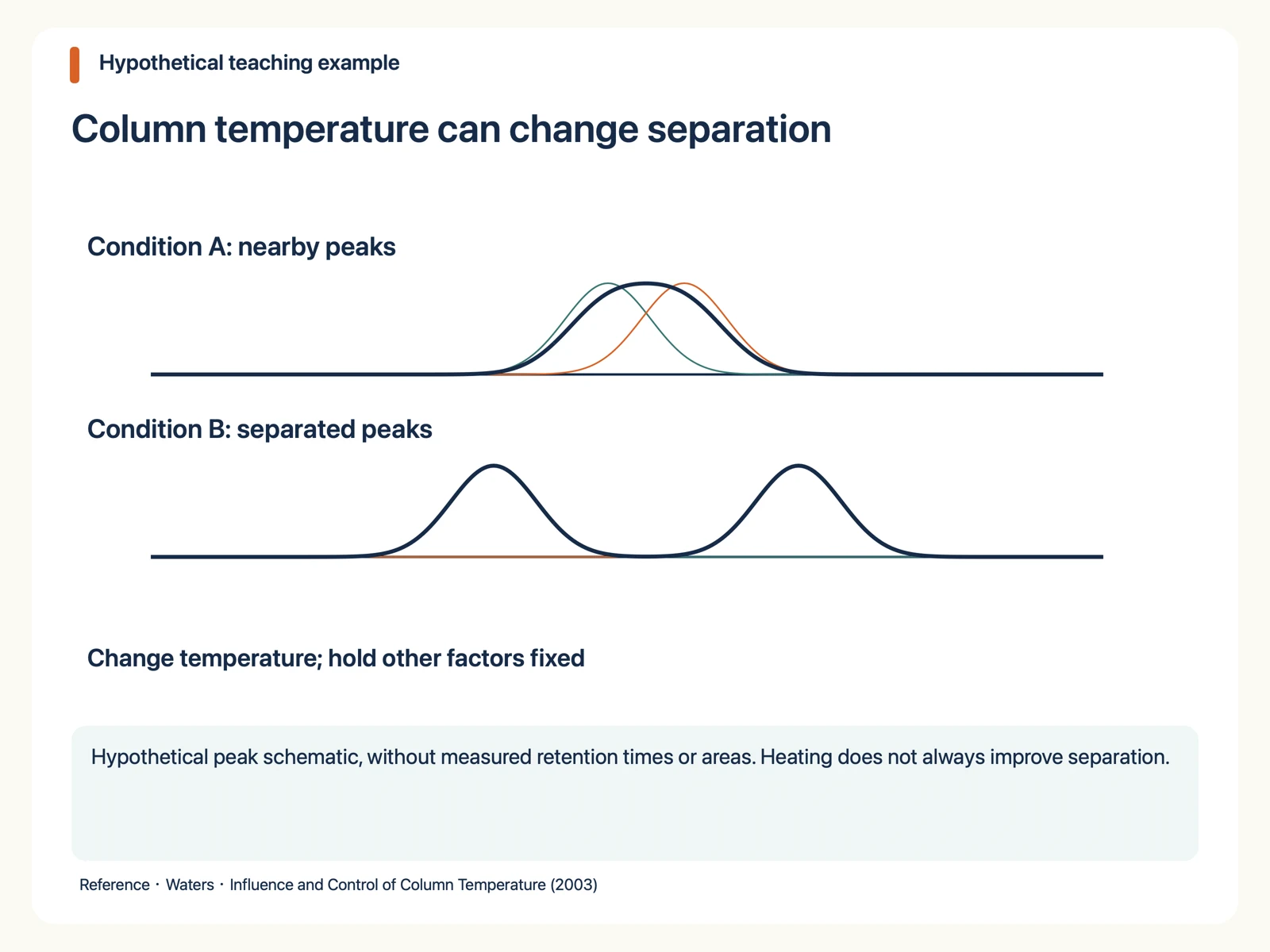
Many peptide methods gradually change the solvent mixture during a run. This is called a gradient. A different starting mixture or a faster change can move peaks. Flow rate and temperature also form part of the comparison.
Read these details before comparing times. Detector settings matter to how the recorded signal is seen, even though they are not a substitute for the separation conditions.
How to make a useful comparison
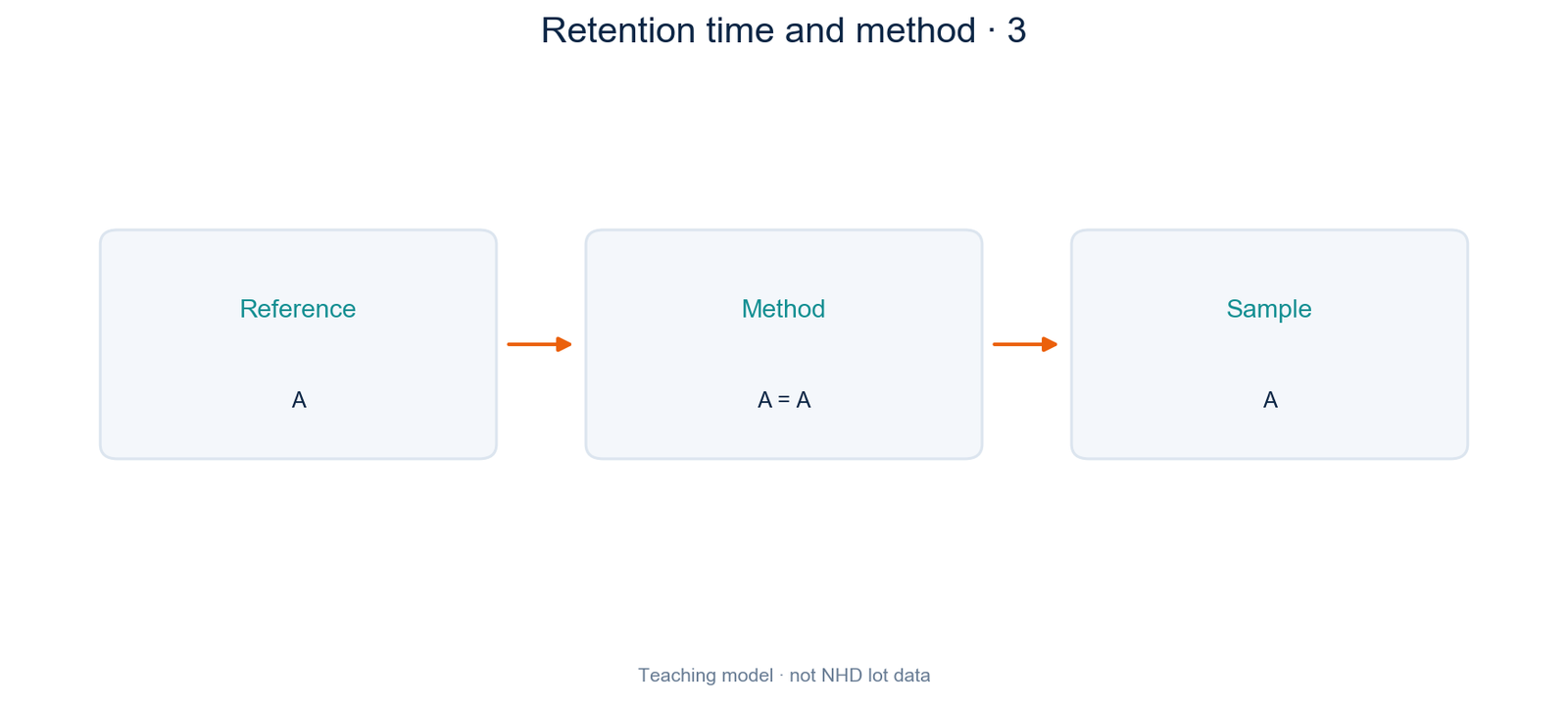
Place the column details, solvent program, flow, temperature and detection settings side by side. If they differ, a time difference alone cannot show that the samples differ.
A suitable reference tested under the same conditions can strengthen the comparison. Even matching retention times do not by themselves prove a complete peptide sequence.
A quick check before you reject a report
A different time is a reason to investigate, rather than an automatic pass or fail. Start with the method information.
See the answer
No. Check the specific columns and the other conditions before making that comparison.
Comparing Cagrilintide or MOTS-c records
When reviewing Cagrilintide or MOTS-c information, ask for the method details that accompany any chromatogram. Keeping those details with the plot makes later comparisons more useful.
Discuss material and document requirements with NHD · Continue with the analytical guide

 BPC-157
 GHK-Cu