


Understand the study
SS-31 in Aged Muscle: Better Energy Supply or More Mitochondria?
Separate the amount of cellular machinery from how well it works.
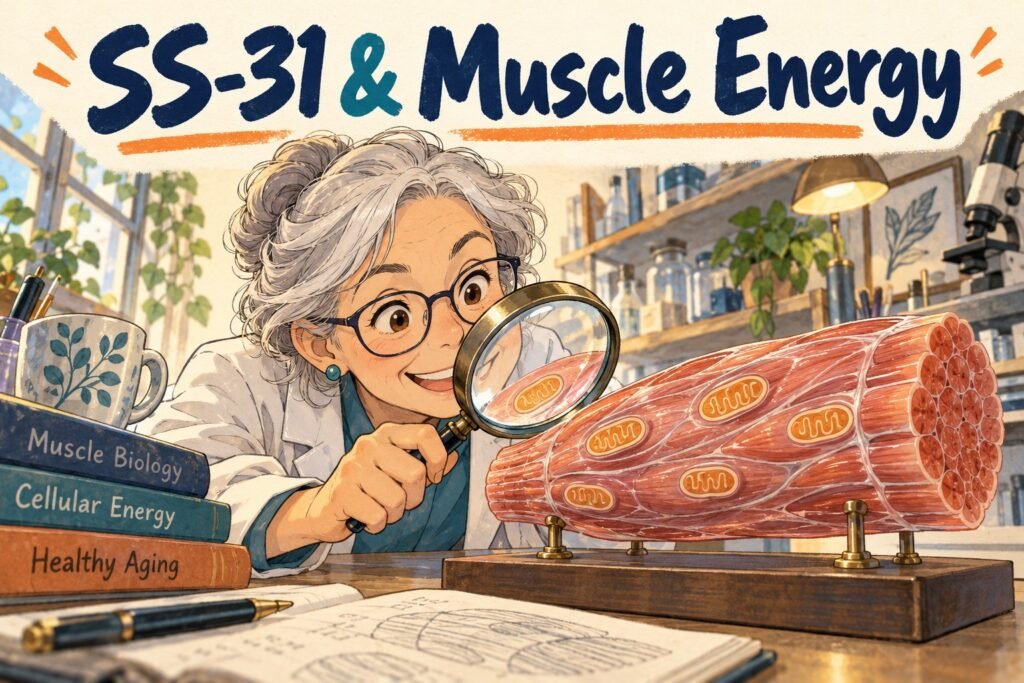
More machines or better machines?
No. A workshop can increase output by adding machines or by making its existing machines work better. Mitochondrial research asks a similar pair of questions. Measurements of mitochondrial amount and measurements of energy production should be kept separate, even if both appear in the same paper.
What is ATP?
ATP is a molecule used to transfer energy for cellular work, including muscle contraction. It is useful to think of ATP supply as usable energy arriving at the job. Oxygen consumption is another measurement. To judge how efficiently the system produces ATP, researchers may need to examine both rather than treating oxygen use as the final answer.
- 01Mitochondrial amount
- 02ATP production
- 03Animal endurance
What did the short experiment observe?
The 2013 paper compared young mice aged five months and old mice aged 27 months. It examined energy-related measurements about one hour after SS-31 administration. The authors reported reversal of age-related energetic deficits in old muscle without an observable effect in young muscle. [1]
What did eight weeks add?
The later study used young and aged female mice and an eight-week period. It reported improved ATP-production capacity and endurance in aged animals without an increase in mitochondrial content. This supports separating function from amount. It does not mean that every laboratory readout increased together. [2]
Why do different tests give different answers?
A measurement in living muscle and one in a prepared fiber sample are made in different surroundings. Treadmill endurance adds another level: the animal as a whole. Before calling results contradictory, ask what each test measures. A concentration, a production rate and a performance test are not interchangeable units.
What does this mean for SS-31 research?
They give researchers a reason to examine mitochondrial function in aged muscle. They do not establish a general anti-aging or exercise benefit in people. Use the related SS-31 product link to discuss laboratory material and its form, with the study question and required records clearly stated.
Explore the research topic
Related research products

SS-31 (Elamipretide)
Cell-energy research
View product
MOTS-c (Human)
Cell-energy research
View product
NAD+
Cell-energy research
View productImages illustrate the catalog. Related products are further reading, not claims of equal effects or interchangeability.
Original research and reading notes
Study amounts and preparations identify experimental conditions, not recommended use. AI-assisted research explanation; sources checked 11 October 2026. NHD catalog materials are for research, development and manufacturing, not human or veterinary use.