Read the KPV study through lipid staining, triglycerides and animal findings, with clear distinctions between cell results and human weight loss.

The study began with cell differentiation
The researchers used 3T3-L1 preadipocytes, which can develop into fat cells under suitable induction conditions. MDI refers to the induction treatment, not a peptide. The question was whether adding KPV changed differentiation and lipid accumulation, rather than how much weight a person would lose.
Two measurements, two different reductions
At 100 µg/mL KPV, Oil Red O staining intensity was approximately 55% lower and intracellular triglycerides approximately 38% lower than in the MDI-treated group. These endpoints cannot be added together. Setting each MDI control to 100% gives approximately 45% and 62%, respectively, as shown in the redrawn figure. These are relative values, not raw measurements.

| Condition | MDI control | KPV treatment |
|---|---|---|
| Oil Red O staining | 100% | ≈45% |
| Intracellular triglycerides | 100% | ≈62% |
What the signaling results suggest
The paper also examined ROS, AKT/mTOR signaling and PPARγ-related changes. ROS relates to cellular oxidative conditions; PPARγ helps regulate adipocyte differentiation. These observations support a mechanistic explanation, but changes occurring together do not establish every step of a causal pathway. Consult the original methods for timing, controls and assays.
What the mouse experiments add
In a high-fat-diet mouse model, the study reported improvements in weight gain, adipose-tissue expansion and some metabolic measurements. An animal model adds information beyond isolated cells, but diet, administration and duration remain specific to that model. The findings cannot be converted into an expected amount of human weight loss.
Keep the comparison attached to the number
Record material identity, the cell model, the 100 µg/mL condition, each endpoint and its control. Check replicate numbers, variability and statistical methods in the full paper. A percentage taken from an abstract is not a complete protocol, and missing methods should not be supplied by guesswork.
Using the product page
The KPV page provides a starting point for material and quotation enquiries. Include the publication, required sequence or form, amount and documentation questions. A shared peptide name does not establish that a catalog batch has reproduced the study or has the same experimental performance.
References
Published findings, hypothetical teaching examples and material information are distinguished. Read the original methods before attempting replication.
Related research materials
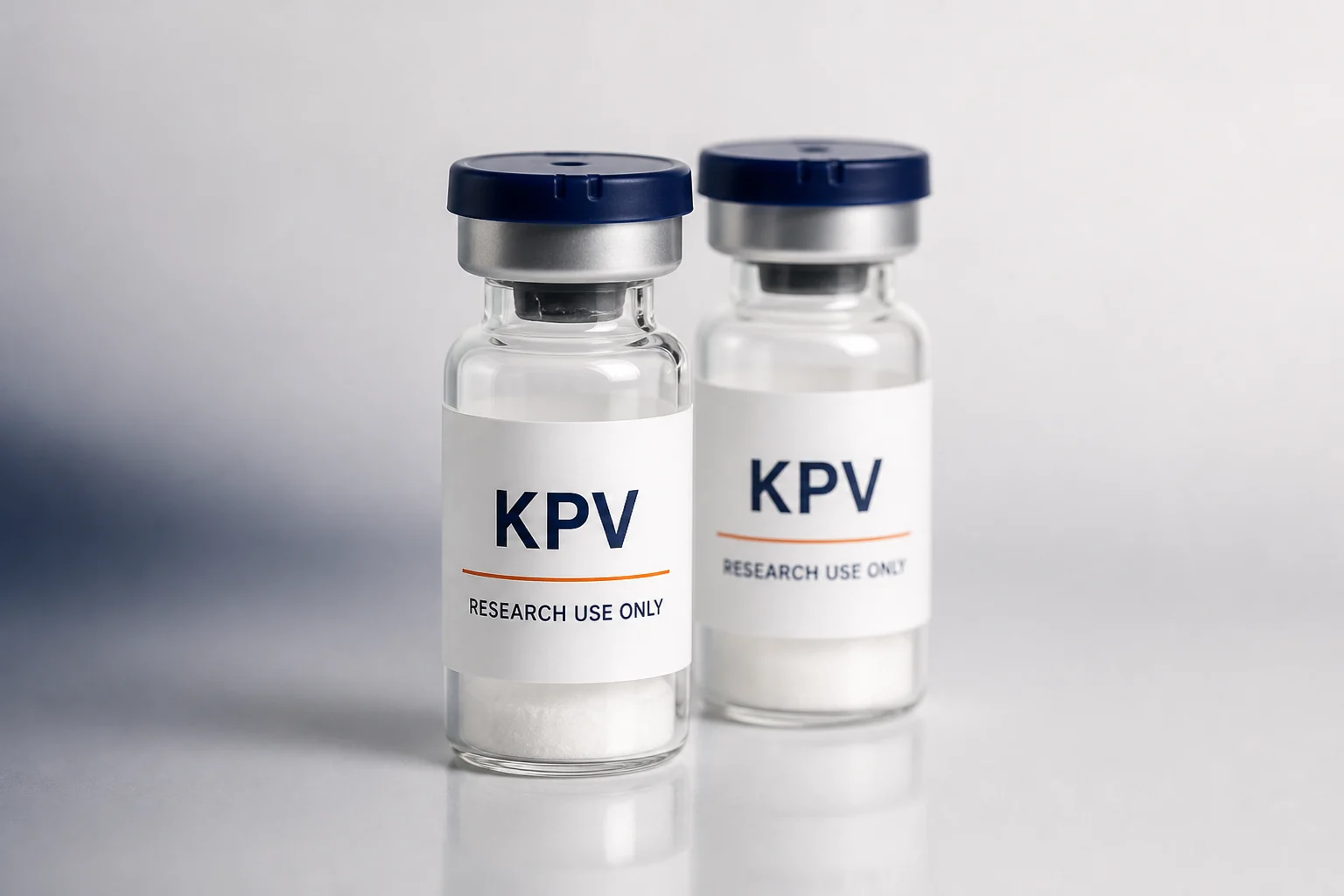 KPV
Enquire about products and information →
Research reading and material enquiries only. This page is not personal medical advice or a substitute for batch-specific records.