Kd describes binding between a molecule and a receptor. EC50 describes a particular experimental response. Both may be reported in nM, but they answer different questions.

A receptor is a place where a signal can be received
A molecule reaching and binding a receptor is only the beginning. Receptor activation, downstream amplification and the cell response all influence the final measurement. Some molecules bind without activating the receptor in the same way.
Kd: binding affinity under specified conditions
In a simple one-to-one equilibrium binding model, receptor occupancy is half when free ligand concentration equals Kd. This refers to free concentration, not simply the total amount added, and requires the model and conditions to be appropriate. A lower Kd generally indicates higher affinity under those conditions. It does not tell you how large the cell response will be.

EC50: the concentration giving half the maximum response in this assay
Read it with the endpoint: was the assay measuring cAMP, calcium signaling or another response? A different cell type, receptor expression level or reading time can change EC50 for the same molecule. Ranking numbers from different papers can therefore confuse assay differences with material differences.
A numerical example separates the two ideas
Hypothetical example: a molecule has a Kd of 10 nM. Under the simple model above, free concentrations of 10 nM and 90 nM give approximately 50% and 90% occupancy. Those occupancies cannot simply be relabeled as 50% and 90% cell responses, let alone percentages of clinical improvement.
Read the table headings for multi-receptor peptides
For Tirzepatide or Retatrutide results at different receptors, check whether the experiments measure binding or function, whether references match and whether units and platforms are comparable. Confirm the complete molecular identity before discussing the receptor experiments you need. A correct molecule name does not mean that every activity result has been verified.
Original sources and scope
Consult the sources for full methods and results. Teaching examples are not NHD lot-test data.
Related research materials
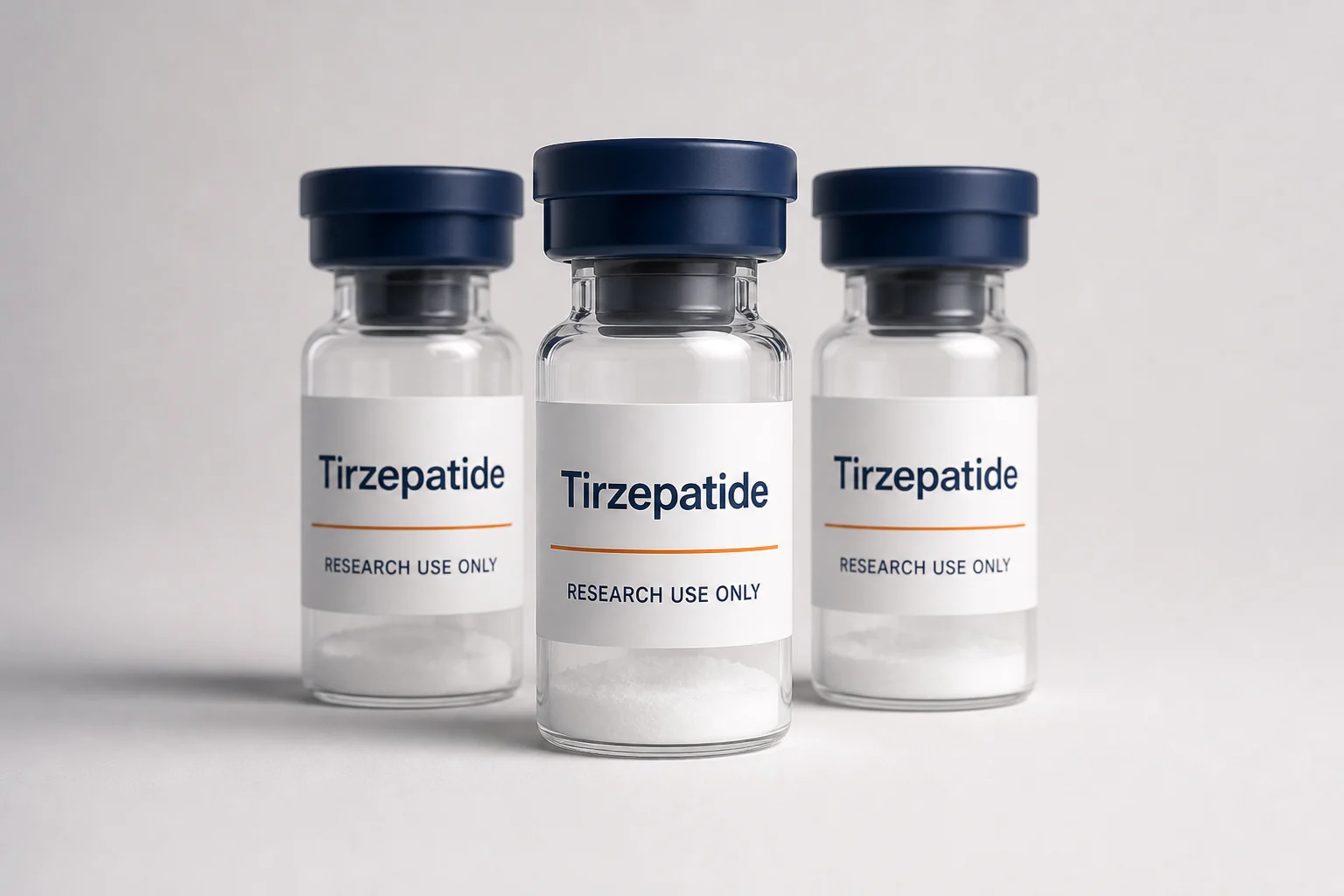 TirzepatideReview catalog identity and specifications; ask about supply, information and project requirements.
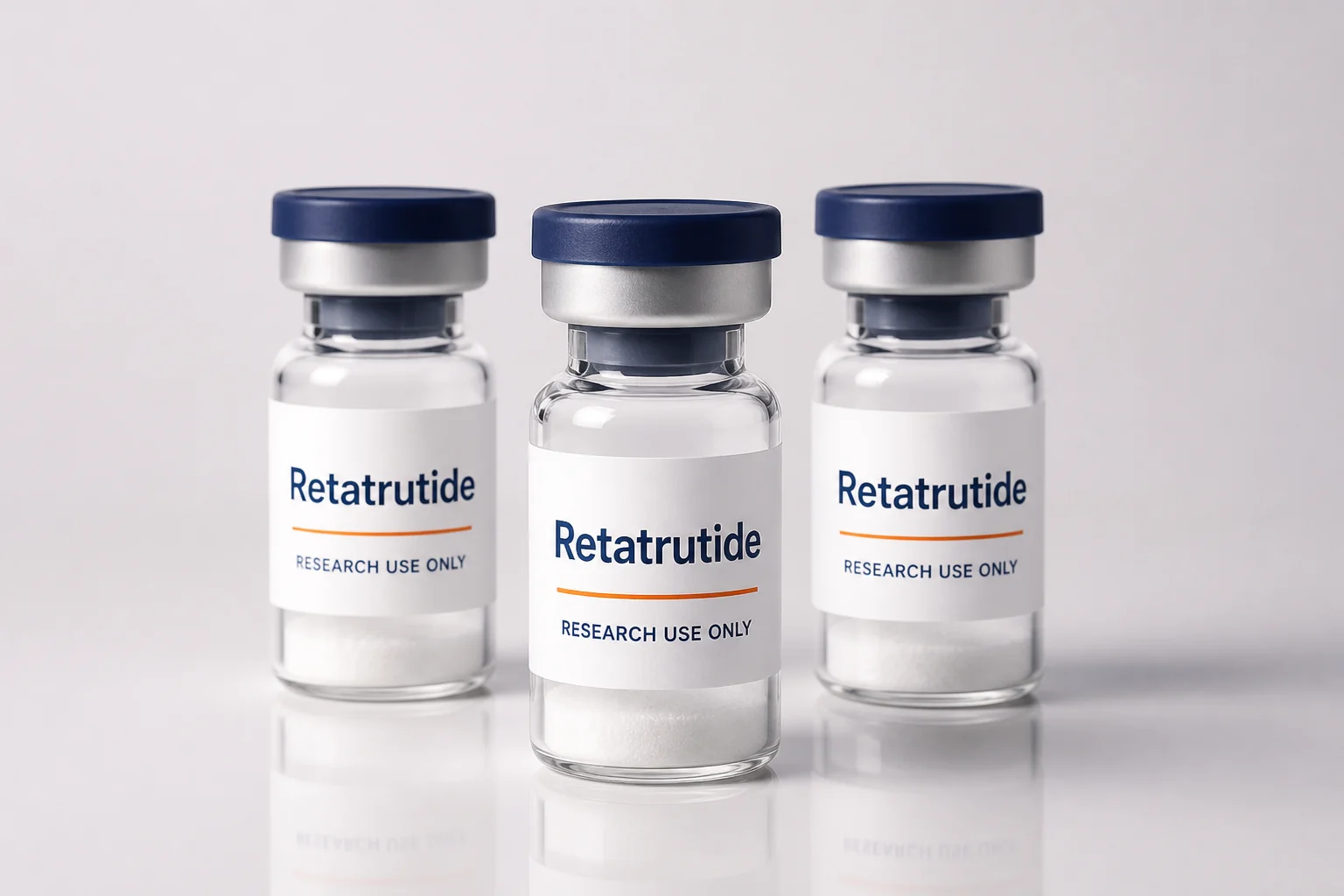 RetatrutideReview catalog identity and specifications; ask about supply, information and project requirements.
Ask about materials and documentation
Research materials and experimental education; no instructions for human use.