


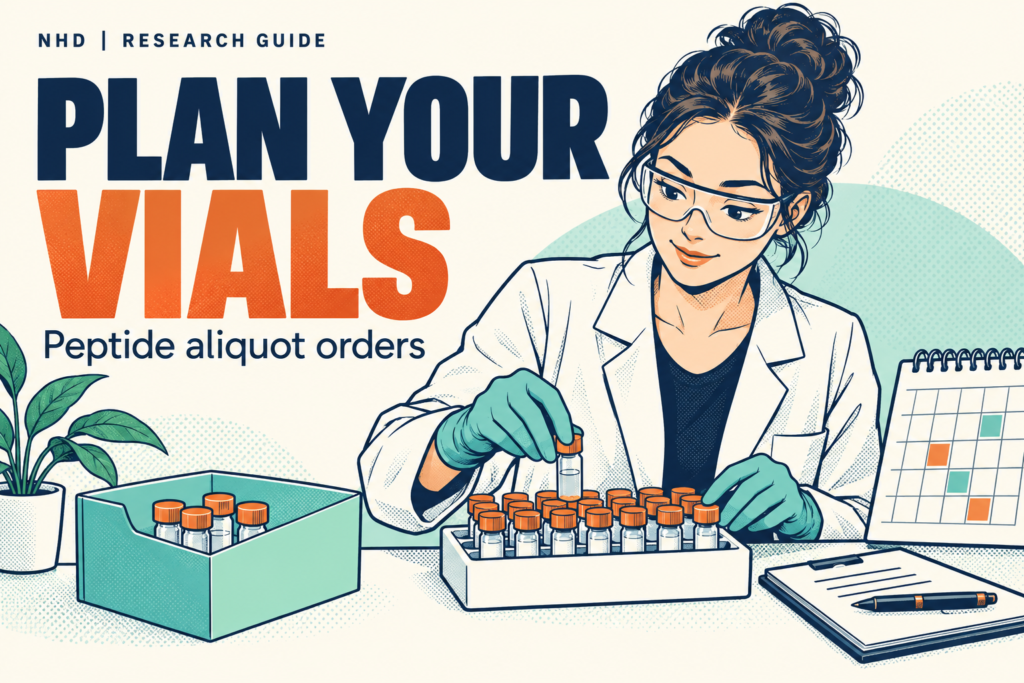
A total quantity is only half the packaging question. You also need to decide how that quantity should be divided. Too few portions may mean repeatedly opening the same vial; too many can add packaging work and make small quantities harder to handle.
Count planned uses and controls separately
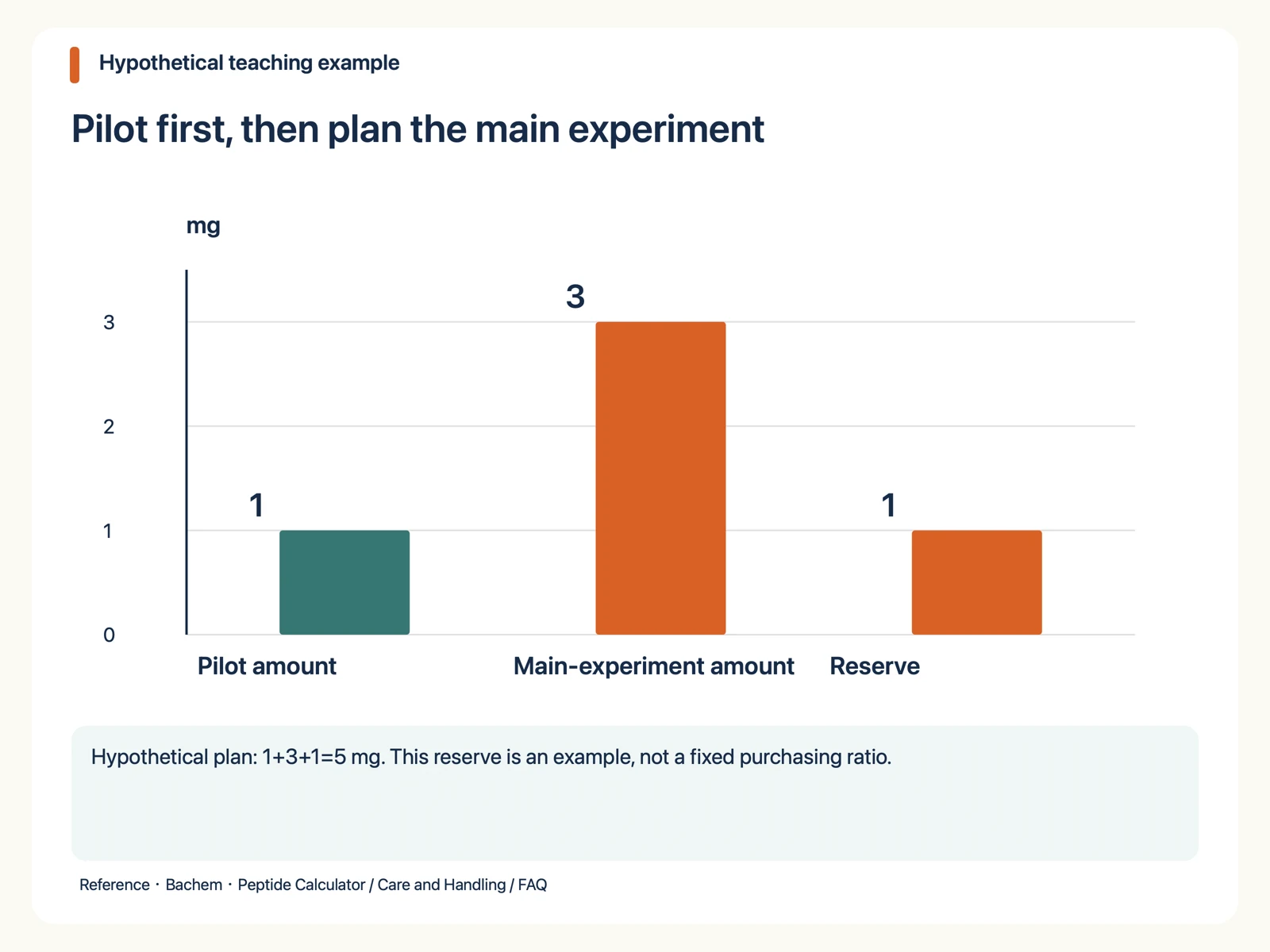
Consider an invented planning example: a study needs 24 single-use portions, plus 4 more for controls or checks. The starting count is 28. This counts portions only. It does not specify an experimental concentration, a dose or how much material each portion needs.
Make any reserve allowance explicit
If you choose a 10% planning reserve, 28 × 1.10 = 30.8 portions. Rounding up gives 31. The 10% is a choice in this example, not a scientific rule or a guarantee that no material will be lost. A laboratory may need a different reserve based on its workflow.
Single-use portions can reduce repeated handling
Thermo Fisher’s handling guidance advises aliquoting solutions for single use when necessary to avoid repeated freeze-thaw cycles. Apply that idea only alongside instructions for the specific material and conditions. It does not establish that every peptide remains stable in every container or storage setting. [1]
Check the minimum practical quantity per vial
A supplier may be able to provide the total requested quantity without being able to guarantee every very small vial quantity in the way you expect. Ask about the quantity basis, filling tolerance, container choice and any handling losses. Keep powder mass and documented peptide amount distinct.
Keep the labels connected to the records
Request identifiers that connect each vial to the product or sequence and the relevant lot records. Send the planned portion count, amount per portion and intended laboratory workflow with an NHD enquiry. Confirm packaging feasibility and terms before assuming that a catalog listing includes the requested vial arrangement.
Useful links
For laboratory research, development and manufacturing only. Not for human or veterinary use.
Sources and examples
Reference records explain the topic; they do not establish NHD stock, a supplied lot’s results or clinical suitability. Examples explicitly labeled as hypothetical are calculations, not test data.
Sources & editorial method
AI-assisted drafting, source checks, translation and generated comic illustration. This is not independent peer review or supplied-lot verification.
2 linked records are listed in the references below. Read the editorial and AI-assistance policy.
How to interpret this article
Reference data and teaching examples are separated from NHD lot results; product specifications and availability require confirmation.
Research-use boundary: Catalog materials discussed on this website are for laboratory research, development and manufacturing use only, not for human or veterinary use. This content is not medical advice and does not provide administration instructions.
Primary records and authoritative sources
- Thermo Fisher: handling and storage instructions for standard peptidesThermo Fisher: handling and storage instructions for standard peptides. Accessed 2026-10-03.
- Care and handling of peptidesCare and handling of peptides
Continue with structured records
Move from this editorial analysis to the product identity, filtered evidence and controlled terminology behind it.




 KPV
 BPC-157
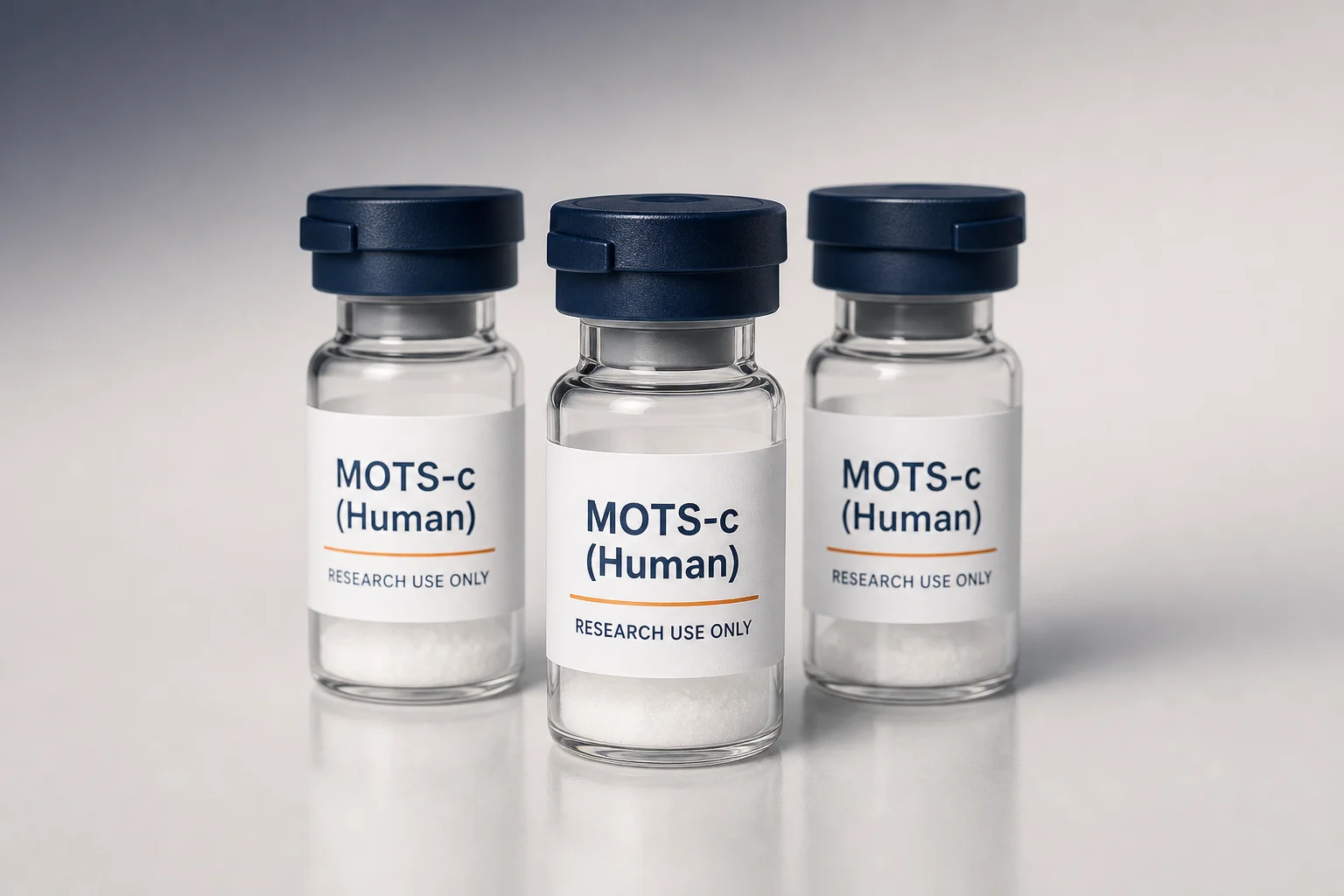 MOTS-c (Human)