


These labels are sometimes read as if they all mean “clean.” They address different questions. Understanding the difference helps a buyer request the evidence needed for the planned laboratory work.
What each test asks
A chemical-purity method examines the chemical mixture under its defined measurement. A sterility test addresses viable microorganisms under specified conditions. An endotoxin assay measures bacterial endotoxin activity. A result from one test does not automatically answer the other two questions.
A report-reading example
Imagine a sample reported as 99% HPLC area purity. If the document lists zero sterility tests and zero endotoxin tests, the chemical figure supplies neither missing result. The zeros describe missing tests, not measured zero contamination. This is a hypothetical documentation example.
Method and sample scope matter
FDA guidance treats microbial contamination and endotoxins as separate considerations in regulated-product testing. For research material, the required scope should follow the actual experiment and its sensitivity. Do not borrow pharmaceutical acceptance criteria without establishing why they apply to the project.
A clearer enquiry
Instead of requesting “very clean peptide,” list identity, chemical purity, content and any microbial or endotoxin requirement separately. Ask which lot-specific records are available. If a required test cannot be provided, keep the gap visible and decide whether another qualified source or an independently arranged test is needed.
Related materials and next steps
Explore the NHD catalogue records for LL-37, BPC-157. Confirm the required molecular form, quantity and lot-document availability before relying on a listing for procurement. A catalogue record does not establish equivalence to a published study material.
Send the product or sequence, quantity and document requirements. For more background, browse the analytical methods guides and research glossary.
Sources and reading scope
- FDA: Pyrogen and Endotoxins Testing, Edition 2
- FDA: production controls, microbial contamination and endotoxin testing
Source links checked 5 October 2026. Research summaries use the accessible original abstract unless a full-text source is explicitly identified. Guidance documents and external supplier explanations are technical references, not NHD batch evidence or a claim of regulatory compliance. Any example introduced as hypothetical or teaching is a calculation, not a measured product result.
NHD catalogue materials are for qualified laboratory research, development and manufacturing enquiries. This article does not provide instructions for human or veterinary use.
Sources & editorial method
AI-assisted writing and source checks; conceptual illustrated cover.
1 linked records are listed in the references below. Read the editorial and AI-assistance policy.
How to interpret this article
Study results and labeled examples are separated. Original-source, arithmetic, readability and internal-link checks; no independent human peer review recorded.
Research-use boundary: Catalog materials discussed on this website are for laboratory research, development and manufacturing use only, not for human or veterinary use. This content is not medical advice and does not provide administration instructions.
Primary records and authoritative sources
- Pyrogen and Endotoxins Testing: Questions and AnswersPyrogen and Endotoxins Testing: Questions and Answers
Continue the documentation review
Each guide answers a different analytical question. Use the complete set before treating one number as a complete quality record.
Open the complete Quality & Documentation HubContinue with structured records
Move from this editorial analysis to the product identity, filtered evidence and controlled terminology behind it.




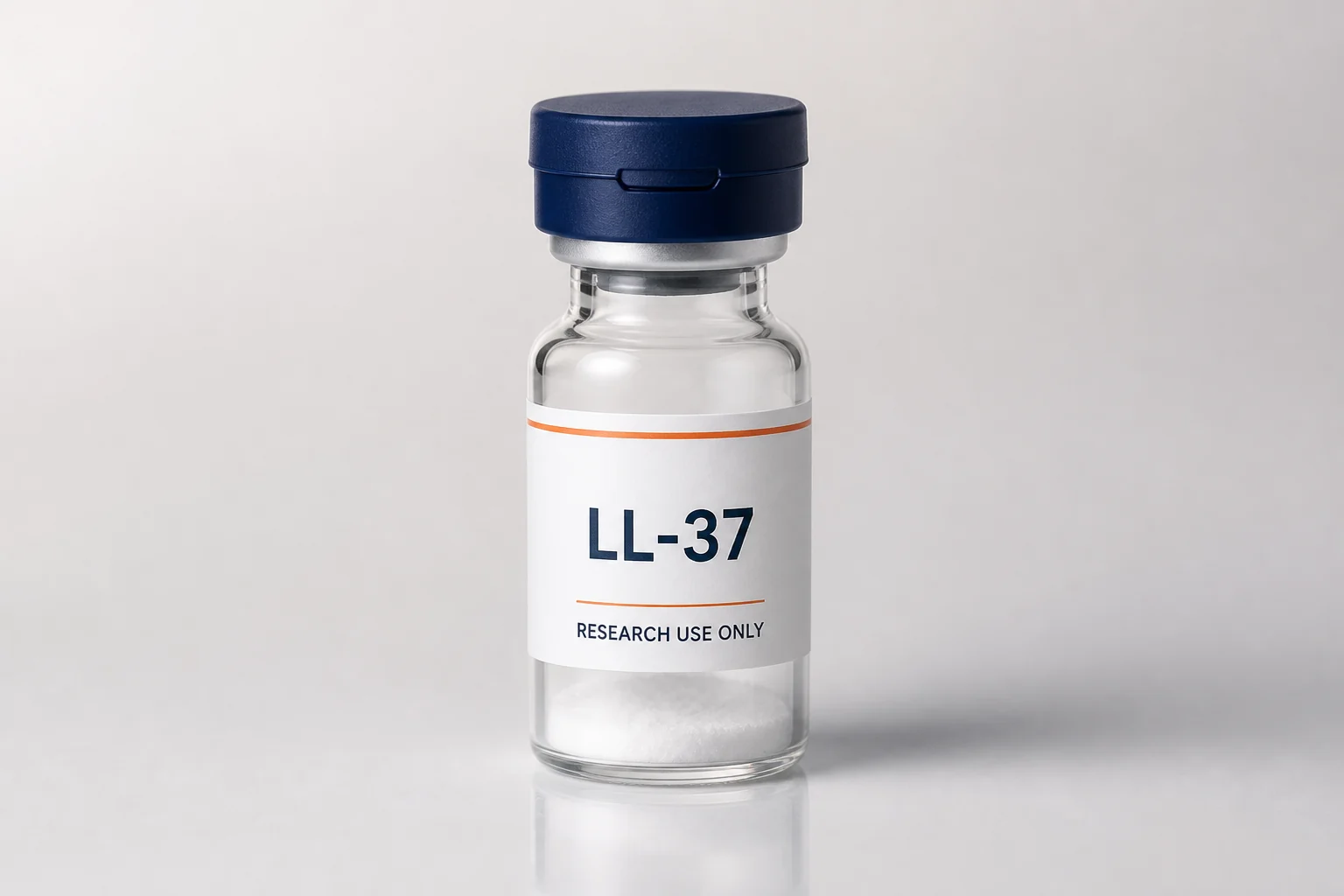 LL-37
 Thymosin Alpha-1